


I disagree with three points made in Chien Hsi-chieh's recent article ("A peaceful road to an independent state exists," July 13, page 8).
First, Chien's comparison with other breakaway states ignores the issue of historical grudges. In the examples Chien gives -- Norway becoming independent from Sweden, and Lithuania, Latvia and Estonia becoming independent from the Soviet Union -- there was no historical resentment between the original and the newly independent country, nor did the original country have any vital interests in the other. This is not the case between Taiwan and China.
Chinese junior-high textbooks have two pages dedicated to explaining the assets that were "stolen" from China by the Chinese Nationalist Party (KMT) when it fled to Taiwan in 1949. The text emphasizes that this "booty" became the foundation of Taiwan's prosperity. The Chinese Civil War has left a troubled legacy that continues in China today, in which all Taiwanese are said to belong to "Chiang Kai-shek's (蔣介石) band of thieves."
Today, China needs Taiwanese investment for the development of its economy, so the Chinese grudgingly accept. But this history is branded deep in the heart of every Chinese. Taiwanese businesspeople are cheated, robbed, extorted and have their assets confiscated, which the Chinese consider merely interest on the property that the KMT took from them. Just think -- with the entire population manipulated by the state-run education system, how could the Chinese ever with peaceful independence for Taiwan?
Second, the issue of Taiwan involves China's resource interests. Only if China governs Taiwan can it confidently and fearlessly contend with the US for resources in the Pacific. Taiwan is key to these areas, so China will make heavy sacrifices or completely destroy Taiwan if it must to achieve that end. Propaganda and military intimidation may be a tactical trick, but with nearly 1,000 missiles pointed at Taiwan, wishful thinking of "peaceful independence" is not very practical.
Third, there is the issue of cultural ideals. As Chien said, we need to have confidence in our own system in order to create a harmonious atmosphere in which old and new immigrants can identify with Taiwan. This warning seems all the more apt coming from one who joined last fall's red-clad anti-corruption protests.
Indeed, the biggest obstacle to Taiwanese independence is that internally there is no harmonious atmosphere or feeling of identification with the land.
Our government, education system and environment still persuade many Taiwanese to identify with China. The people of this land have always lacked self-confidence and dignity, and the word "independence" seems to be almost exclusively used by politicians.
I have always believed that peace relies on strength and this includes the non-violent defense mentioned by Chien. He is an old warrior of social movements and presumably has learned a great deal from his experiences. I hope he will once more raise his flags and appeal to all Taiwanese to identify with this land, and reform the nation's outdated and pedantic education. When I hear that call, I will heed it.
Lee Shang-hsien is director-general of the Taiwan Pik Hap Culture Association.
Translated by Anna Stiggelbout
A gap appears to be emerging between Washington’s foreign policy elites and the broader American public on how the United States should respond to China’s rise. From my vantage working at a think tank in Washington, DC, and through regular travel around the United States, I increasingly experience two distinct discussions. This divergence — between America’s elite hawkishness and public caution — may become one of the least appreciated and most consequential external factors influencing Taiwan’s security environment in the years ahead. Within the American policy community, the dominant view of China has grown unmistakably tough. Many members of Congress, as
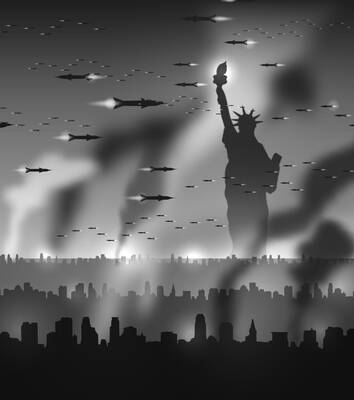
After declaring Iran’s military “gone,” US President Donald Trump appealed to the UK, France, Japan and South Korea — as well as China, Iran’s strategic partner — to send minesweepers and naval forces to reopen the Strait of Hormuz. When allies balked, the request turned into a warning: NATO would face “a very bad” future if it refused. The prevailing wisdom is that Trump faces a credibility problem: having spent years insulting allies, he finds they would not rally when he needs them. That is true, but superficial, as though a structural collapse could be caused by wounded feelings. Something
Former Taipei mayor and Taiwan People’s Party (TPP) founding chairman Ko Wen-je (柯文哲) was sentenced to 17 years in prison on Thursday, making headlines across major media. However, another case linked to the TPP — the indictment of Chinese immigrant Xu Chunying (徐春鶯) for alleged violations of the Anti-Infiltration Act (反滲透法) on Tuesday — has also stirred up heated discussions. Born in Shanghai, Xu became a resident of Taiwan through marriage in 1993. Currently the director of the Taiwan New Immigrant Development Association, she was elected to serve as legislator-at-large for the TPP in 2023, but was later charged with involvement
Out of 64 participating universities in this year’s Stars Program — through which schools directly recommend their top students to universities for admission — only 19 filled their admissions quotas. There were 922 vacancies, down more than 200 from last year; top universities had 37 unfilled places, 40 fewer than last year. The original purpose of the Stars Program was to expand admissions to a wider range of students. However, certain departments at elite universities that failed to meet their admissions quotas are not improving. Vacancies at top universities are linked to students’ program preferences on their applications, but inappropriate admission


 RSS
RSS