


The end of April approaches and the newly elected Chinese Nationalist Party (KMT) Chairman Wu Po-hsiung (
This has always been the characteristic anomaly of the KMT -- a party that claims to be interested in Taiwan but consistently snubs localization. One has the feeling that the KMT's preferential attitude and mindset remains that "If it is good for the PRC, then it is good for Taiwan."
Wu of course only recently got the job as chairman because former chairman Ma Ying-jeou (
Yes, pseudo Mr. Clean Ma is now on trial. We all remember him because in true double standard fashion, with faulty logic thrown in to boot, Ma was the one who insisted that President Chen Shui-bian (
And now that Ma has been indicted, he decides to make a run for the presidency.
However, let us return to Wu, who is following the lead of other pan-blue camp leaders like former KMT chairman Lien Chan (連戰) and People First Party Chairman James Soong (宋楚瑜) to cross the Taiwan Strait to find out what is good for Taiwan.
There is a tremendous irony involved here. Does anyone remember Sun Yat-sen (
He is that distinguished person whose picture adorns most government offices here and who is also allegedly revered in China.
Sun is most known for preaching the Three Principles of the People -- democracy, nationalism and livelihood. Remember those?
It is almost 100 years since Sun began touting those principles, so it is all the more ironic that those who profess to honor Sun are the very ones who have resisted putting those principles into practice. Democracy came to Taiwan not because of the KMT, but in spite of it. Democracy has still not come to the PRC.
The last prediction was that it might come after another 100 years. A more blunt way of saying it is: "Sun's principles of democracy are fine and should be adopted, but not while we are in power."
So Wu will head to China to find out what is good for Taiwan. Remember when Lien and Soong made their pilgrimages back to their (not Taiwan's) motherland? Sun's words about democracy, nationalism and livelihood were strictly taboo, verboten, mention-at-risk-of-getting-kicked-out.
If I were a betting man, I would lay heavy odds that while Wu may bow to some pictures of Sun, he won't dare to mention Sun's principles of democracy.
And Sun? He must be twisting and turning in his grave.
Jerome Keating is a Taiwan-based writer.
A gap appears to be emerging between Washington’s foreign policy elites and the broader American public on how the United States should respond to China’s rise. From my vantage working at a think tank in Washington, DC, and through regular travel around the United States, I increasingly experience two distinct discussions. This divergence — between America’s elite hawkishness and public caution — may become one of the least appreciated and most consequential external factors influencing Taiwan’s security environment in the years ahead. Within the American policy community, the dominant view of China has grown unmistakably tough. Many members of Congress, as
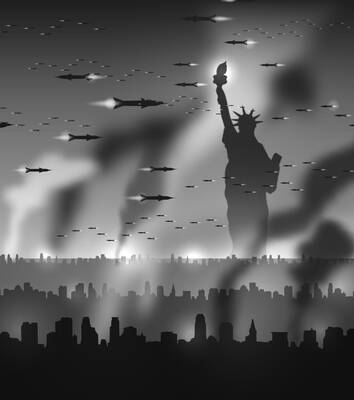
After declaring Iran’s military “gone,” US President Donald Trump appealed to the UK, France, Japan and South Korea — as well as China, Iran’s strategic partner — to send minesweepers and naval forces to reopen the Strait of Hormuz. When allies balked, the request turned into a warning: NATO would face “a very bad” future if it refused. The prevailing wisdom is that Trump faces a credibility problem: having spent years insulting allies, he finds they would not rally when he needs them. That is true, but superficial, as though a structural collapse could be caused by wounded feelings. Something
Former Taipei mayor and Taiwan People’s Party (TPP) founding chairman Ko Wen-je (柯文哲) was sentenced to 17 years in prison on Thursday, making headlines across major media. However, another case linked to the TPP — the indictment of Chinese immigrant Xu Chunying (徐春鶯) for alleged violations of the Anti-Infiltration Act (反滲透法) on Tuesday — has also stirred up heated discussions. Born in Shanghai, Xu became a resident of Taiwan through marriage in 1993. Currently the director of the Taiwan New Immigrant Development Association, she was elected to serve as legislator-at-large for the TPP in 2023, but was later charged with involvement
Out of 64 participating universities in this year’s Stars Program — through which schools directly recommend their top students to universities for admission — only 19 filled their admissions quotas. There were 922 vacancies, down more than 200 from last year; top universities had 37 unfilled places, 40 fewer than last year. The original purpose of the Stars Program was to expand admissions to a wider range of students. However, certain departments at elite universities that failed to meet their admissions quotas are not improving. Vacancies at top universities are linked to students’ program preferences on their applications, but inappropriate admission


 RSS
RSS