


Japan's once-hailed business and social model, now blamed by many for a decade of economic stagnation and years of crony capitalism, is undergoing an overhaul as society tries to modernize.
The media are no exception.
Japan's sole public broadcaster NHK faces the biggest ever crisis in its 56-year-old history. A series of scandals have triggered an intense debate on the fate of one of the world's largest media groups.
NHK has faced months of public criticism after employees were caught stealing viewer fees, using fake receipts and claiming expenses for business trips that were never made.
The controversies led hundreds of thousands of angry households to refuse to pay their viewer fees, which are mandatory but with no penalties for non-payment.
Genichi Hashimoto, who became NHK president last year after his predecessor Katsuji Ebisawa quit in the wake of the scandals, admits that slack management caused the embezzlement and fraud embroiling the mammoth organization.
"Once such scandals come out, our trust collapses," Hashimoto, who is also president of the Asia-Pacific Broadcasting Union (ABU), said in an interview.
"In the long history of the viewers' fee system, there must have been arrogance and irresponsibility in our workers' minds, and we were lacking a sense of public money," he said.
As of March, some 1.2 million households had stopped paying their NHK fees -- ¥14,910 (US$134) for terrestrial broadcasts and ¥25,520 for satellite services per year. Viewer fees account for 96 percent of the broadcaster's income.
The boycott sent annual revenue at NHK -- the Japanese initials for the Japan Broadcasting Corp. -- down by 4.9 percent to ¥634.3 billion for the year to March for the second consecutive annual decline.
"While the Japanese, who tend to follow rules and customs, continued paying the fees like offertory, NHK neglected self-reform, forgot about viewers and got above itself," said Takaaki Hattori, a professor of mass communications law at Rikkyo University in Tokyo.
"NHK is finally paying for its indolence," Hattori said.
NHK remains a top source of news in Japan, with its staid broadcasts notorious for airing lengthy speeches by politicians, shunning the trend in much of the developed world to flashy graphics and light features.
But NHK has not been immune to changes in the Japanese model, where the promise of lifetime employment at one company has been shattered as the country emerges from a decade of economic woes. Earlier this year, NHK announced a reform plan including a reduction of its employees by 1,200, equivalent to around 10 percent of NHK's workforce, over the next three years.
The government, however, is seeking more drastic restructuring and has set up a panel to hammer out proposals to revamp the beleaguered broadcaster, including a cut in the number of channels.
Panelists have recommended that NHK cut at least two channels. The broadcaster currently has eight -- two terrestrial TV channels, three satellite TV and three radio channels.
The panelists agreed that the channels to be eliminated would be selected from among the satellite and radio channels.
NHK, which had has previously said it would not serve the public's interests to slash its radio and television selection, is now showing signs of accepting the plan.
"But these proposals are still insufficient," Professor Hattori said.
"A crucial question remains unanswered -- where on earth is this public broadcaster supposed to go at a time when Japan's social structure is dramatically changing?" he said.
Japan is rapidly graying as the nation's population decreased last year for the first time since World War II. The birthrate has hit a record low -- automatically squeezing NHK's income year by year unless it takes drastic financial measures.
A nationwide survey last year showed that only 28 percent of people believed NHK was really needed, down from 41 percent in a similar study in 1985. The poll covered some 3,600 people of whom 53 percent responded.
"I don't watch NHK quite often because I can watch various kinds of interesting TV programs on other channels," said Asuka Takasaki, a 22-year-old university student, who has not paid NHK viewers' fees since she moved out of her family home and began living alone three years ago.
Some experts point out that NHK, which is required to win parliamentary approval of its annual budget, has tended to form cozy ties with the government and as a result do not respond to viewers.
Liberals denounced NHK last year when reports said the broadcaster toned down a documentary on "comfort women," the Asian women sexually enslaved by imperial Japan, after pressure from a senior politician.
Experts said British Broadcasting Corp, which is also in the midst of restructuring, could be a role model for NHK.
The BBC, run under a license granted by the queen, is closely watched by its board of governors formed by outside experts. Each time the licence is renewed every 10 years, the British media giant comes under intense debates on its management and coverage.
BBC has introduced a mandatory payment system with penalties on those who refuse to pay. In Britain, households that have a TV must pay £126.5 (US$235) annually, with a non-payment fine of up to £1,000. But NHK seems to want to go its own way.
"BBC is like our great senior and we can draw on various things such as the way of thinking of journalism and producing programs," Hashimoto said. "But in terms of management, there can be a different approach."
NHK is now considering appealing to a court to legally demand payment, but is still reluctant to introduce non-payment penalties, which may shift the broadcaster unnecessarily closer to authorities.
Its predecessor began the nation's first radio broadcast service in Tokyo in 1925. As the nation marched into aggression in the region and World War II, NHK had played a major role of propaganda and was strictly censored.
NHK aired late Emperor Hirohito's surrender announcement on August 15, 1945, the first time ordinary people heard the voice of the monarch who was held as divine. NHK was re-established in 1950 and has since led the nation's fourth estate and expanded into a media conglomerate with 34 affiliates and 17,200 employees in total.
Calls are growing for a greater role by NHK in broadcasting Japanese news and programs overseas for the national interest.
Prime Minister Junichiro Koizumi has said NHK should strengthen its overseas services in a bid to make people in other countries better understand Japan and boost Japan's presence in the international community.
Despite its economic strength, Japan has failed in its top goal of winning a permanent seat of the UN Security Council partially due to strong opposition from China over wartime memories.
NHK has promised to provide all programs in English for its two satellite channels overseas by 2010, compared with 56 percent of them currently provided in English.
But Hashimoto said NHK first needs domestic viewers' agreement to spend an extra budget to expand overseas.
KMT Chairwoman Cheng Li-wun’s (鄭麗文) recent visit to Beijing and her upcoming visit to Washington will serve as a high-level test of her diplomatic mettle. In Beijing, Cheng was received with symbolic gestures, a warm reception, and high-level access. In Washington, she will receive far less pomp and far sharper questions about the KMT’s vision for the future of Taiwan. Her challenge will be to persuade Washington that the KMT’s engagement with China can coexist with strong deterrence. Cheng’s April 7-12 visit to mainland China coincided with an intense period of conflict in Iran. Despite the strategic significance of Cheng’s trip,
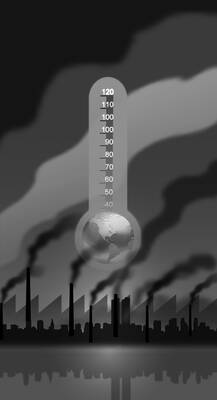
The closure of the Strait of Hormuz has sent the vast Asian chemicals industry into a tailspin. Deprived of the likes of Qatari natural gas and Saudi Arabian oil, the region’s fertilizer and plastics plants are slowing production or even shutting down. Everywhere except China, that is. In petrochemicals, China is unique. As well as a traditional industry that uses oil and gas as feedstock, it has parallel output that relies on its abundant domestic coal. Unsurprisingly, India and other regional powers want to copy and paste the Chinese method. This would not be easy — or climate friendly. The
Indonesian President Prabowo Subianto says he knows how to fix the problems facing Indonesia. Yet his economic mismanagement and authoritarian tendencies are steering the nation toward a familiar mix of currency instability and political chaos. The world’s fourth-most populous nation risks reversing the hard-won democratic and business reforms that came after the Asian Financial Crisis in 1997. At that time, the rupiah collapsed and the political upheaval that followed forced former president Haji Mohamed Suharto from power. Prabowo’s administration is ignoring similar warning signs. That disconnect was apparent in a national address on Wednesday, when Prabowo projected the swagger that has
“Of course you can choose not to be Taiwanese, just do not stay here,” chairwoman of Taipei 101 operator Taipei Financial Center Corp Janet Chia (賈永婕) said in an online interview with local entertainer Tai Chih-yuan (邰智源), triggering intense discussion on social media, with politicians across party lines weighing in. In the interview, which was aired on May 14, Chia and Tai’s discussion over a meal in Taipei 101 covered Chia’s career change from entertainer to chairwoman and US climber Alex Honnold’s free solo climb up the Taipei 101 building. During the interview, Chia said, “Being on this land, we


 RSS
RSS