


Despite the US' preoccupation with Iraq and terrorism, it has now been dawning on Washington that China might become a major problem in the years to come. Admiral William Fallon, head of the US Pacific Command, reportedly said last month that coming to grips with an expanding China would be his country's biggest challenge. He felt "a little bit unhappy" that China's rate of military growth was outstripping its economic growth.
At about the same time, US Deputy Secretary of State Robert Zoellick said in New York that China must address a "cauldron of anxiety" in the US and other parts of the world about its intentions. He told the National Committee on US-China relations that: "Uncertainties about how China will use its power will lead the United States -- and others -- to hedge relations with China."
And, he added, "Many countries hope China will pursue a `peaceful rise,' but none will bet their future on it."
These are strong words. In reporting Zoellick's speech, the Washington Post listed some of these specific concerns: "China should explain its defense spending, intentions, doctrine and military exercises to ease concerns about its rapid military build-up."
China showed "increasing signs of mercantilism," and such actions must cease before its policies undercut US domestic support for open markets. "... It must end its tolerance of `rampant theft of intellectual property and counterfeiting,' if it wanted to be considered a `responsible major global player.'"
It must also do "much more" to allow its currency to adjust to market rates. Without this, it "cannot take its access to the US market for granted."
On the question of democracy, Zoellick said that it was "risky and mistaken" to believe that the Chinese Communist Party's (CCP) monopoly on power could be secured "through emphasizing economic growth and heightened nationalism."
Zoellick's speech is indicative of multiple problems in US-China relations, from concerns about the latter's rapid military build-up to its economic growth model and the policies underpinning it. Washington also seems to have noted that China's communist rulers are working on perpetuating their monopoly on power by making economic growth the only game in town.
As one China scholar has approvingly written, "What we are witnessing ... is a very political form of depoliticization. In this sense, one can indeed say that political reform has been visited upon China."
He explains: "It came, however, not in the form of institutional transformation of the state-based system that swept away the Communist Party, but in a far subtler yet profoundly life-transforming manner. No longer are people enthralled by the political, or even intimidated by it."
In other words, Chinese people have put politics behind them and everybody is now supposedly happy with their economic nirvana; never mind the vast majority of its population of close to a billion people in rural areas and the urban poor who would never be better off, especially economically.
Zoellick has made the very important point that Beijing's obsession to secure the CCP's monopoly on power by over-emphasizing economic growth has its dangers in terms of "heightened nationalism."
In the absence of any over-arching ideology or idealism, apart from making money in any way they can, the only thing left for the communist leadership to do is to recreate China's image as the new Middle Kingdom. They feel somehow duty-bound to restore China's historic glory, trampled upon for a century or more by outside powers, with Japan as the main culprit.
The US, though, is the biggest hindrance to China's ambitions. Beijing feels wronged and hurt that the US is not facilitating its perceived global role. They seem to believe that the world owes China a debt as a civilizing force. Arising from this is a sense of entitlement to take center stage in global affairs. And when it is impeded, as Beijing believes the US is doing, the party creates a national hysteria of sorts.
China thus tends to operate from a perceived state of siege, manically trying to acquire all instruments of power to break out from its "prison" and establish its supremacy. This mix of victimhood and entitlement is a dangerous brew feeding on Chinese nationalism.
It gets even worse because, for China's leadership, the CCP and the nation have become synonymous. There is thus no countervailing political force exercising some moderation of the party-induced national image. At the same time, to maintain its legitimacy of sorts it must keep pushing China's superpower role.
However, China is still not powerful enough to take on the US. Therefore, some diversion is needed now and then to keep the banner of heightened nationalism flying. This is where Japan becomes useful and very handy.
Beijing is very angry with Japan for its lack of contrition over its wartime atrocities as well as its efforts to gloss over it. Their antipathy tends to get serious over their disputed maritime boundary in the East China Sea, sometime bordering on a naval skirmish. The disputed area is said to be rich in oil and gas reserves. China has reportedly established a "reserve vessel squadron" in the East China Sea to cover its exclusive economic zone. This does not bode well.
So far, things are not out of control in the East China Sea. But as and when both sides start oil production in the disputed zone, things could turn nasty. And if things were to get out of control at any stage, the US involvement as Japan's ally cannot be ruled out.
In the same way, any invasion of Taiwan by China is likely to bring in the US in accordance with the Taiwan Relations Act.
The point to make is that by seeking to perpetuate its monopoly over power, the CCP is stoking the fires of nationalism in China. So far it has managed adroitly by easing off nationalist hysteria just when it might have become out of control. But it could easily become a victim of its own rhetoric at some point in time. And that would be a tragedy not only for China but the entire world.
Sushil Seth is a writer based in Australia.
A gap appears to be emerging between Washington’s foreign policy elites and the broader American public on how the United States should respond to China’s rise. From my vantage working at a think tank in Washington, DC, and through regular travel around the United States, I increasingly experience two distinct discussions. This divergence — between America’s elite hawkishness and public caution — may become one of the least appreciated and most consequential external factors influencing Taiwan’s security environment in the years ahead. Within the American policy community, the dominant view of China has grown unmistakably tough. Many members of Congress, as
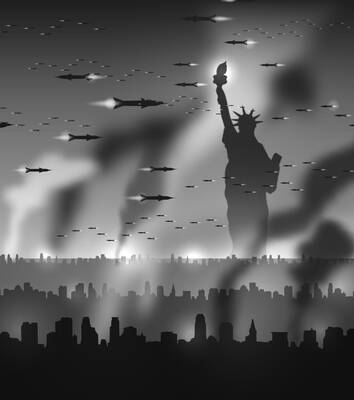
After declaring Iran’s military “gone,” US President Donald Trump appealed to the UK, France, Japan and South Korea — as well as China, Iran’s strategic partner — to send minesweepers and naval forces to reopen the Strait of Hormuz. When allies balked, the request turned into a warning: NATO would face “a very bad” future if it refused. The prevailing wisdom is that Trump faces a credibility problem: having spent years insulting allies, he finds they would not rally when he needs them. That is true, but superficial, as though a structural collapse could be caused by wounded feelings. Something
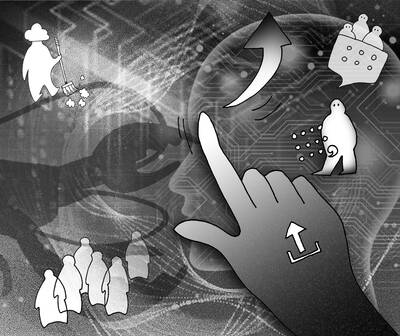
Weeks into the craze, nobody quite knows what to make of the OpenClaw mania sweeping China, marked by viral photos of retirees lining up for installation events and users gathering in red claw hats. The queues and cosplay inspired by the “raising a lobster” trend make for irresistible China clickbait. However, the West is fixating on the least important part of the story. As a consumer craze, OpenClaw — the AI agent designed to do tasks on a user’s behalf — would likely burn out. Without some developer background, it is too glitchy and technically awkward for true mainstream adoption,
Former Taipei mayor and Taiwan People’s Party (TPP) founding chairman Ko Wen-je (柯文哲) was sentenced to 17 years in prison on Thursday, making headlines across major media. However, another case linked to the TPP — the indictment of Chinese immigrant Xu Chunying (徐春鶯) for alleged violations of the Anti-Infiltration Act (反滲透法) on Tuesday — has also stirred up heated discussions. Born in Shanghai, Xu became a resident of Taiwan through marriage in 1993. Currently the director of the Taiwan New Immigrant Development Association, she was elected to serve as legislator-at-large for the TPP in 2023, but was later charged with involvement


 RSS
RSS