


That Ukrainians will vote for their freedom this weekend is a coincidence of true perfection. For our movement is a triumph, not of mobs but of joyous crowds; of protests, not of looting; of clear purpose, not confusion. As a result, something new will color the habits of those who govern Ukraine from now on: respect for individuals, which is the ultimate check on the abuse of power.
Nothing can ever diminish what was at stake -- and the victory that has been won -- on the streets of Kyev. Ukraine's people have renewed their self-respect through courage and resolution. They have reason to be proud. Self-confidence among the governed and caution among the rulers: these are the psychological springs of democracy and true freedom, and they can never again be diverted in our homeland.
Nobody ever doubted that Ukraine had changed vastly in its twelve years of independence. Yet, caught in the sights of a gun barrel, nobody -- not even the brave men and women who camped in their hundreds of thousands in the snow before Ukraine's parliament -- knew with certainty whether those changes had wrenched Ukrainians from the grip of fear and apathy. The success of their defiance shows the power of the idea that bewilders
outgoing President Leonid Kuchma and his acolytes: that democracy means taking res-ponsibility for one's fate into one's own hands.
The regime clearly expected the crowds that protested the fraudulent election of Nov. 21 to scatter in apathy. They did not. This left the regime to choose between using force to quell the growing resistance or cutting its losses. By refusing to leave the streets and squares of Kyev, Ukraine's mass volunteer army of democrats forced our country's gray old men of the past to retreat into the past.
This is a breakthrough that will endure. For 70 cynical years, and for centuries before that, everything done in the name of Ukrainians was done without our consent. Corrupt regimes, through intimidation and bribery, insisted on the loyalty of the bureaucracy, police and armed services. Newspapers and broadcasts were packed with lies. The Kuchma regime's vast wealth, stolen from ordinary Ukrainians, suggested that the reign of thuggery and deceit could go on forever.
But Ukrainians have now given their seal of approval to democracy and an open society. From now on, the force of ideas, not the force of arms, will win the day.
For once, Karl Marx, the mischievous cause of so much of Ukraine's misery, got something right: "The point," he said about the world, "is to change it."
Of course, our movement was created out of opposition: opposition to corruption, opposition to surrendering our national independence, opposition to the rule of the bully. The joy of opposition is its simplicity; Ukrainians understood what we opposed and stood side by side with us.
Now we must lead a nation in which -- thanks to the cynical ploys and hate-filled rhetoric of a discredited regime -- some sections seem to be set against the democracy we seek to build. But no section of Ukraine is our enemy and none will be treated that way. For we need no reminding of what must be Ukraine's priority. We have shouted it from every platform in the country: end corruption and abuse of power for personal and partisan gain. It is a message carved on our hearts.
Thus, our first task is legal and judicial reform, and here we are given hope by the courage of Ukraine's Supreme Court, which in overturning the stolen election of Nov. 21 upheld the law and the liberties of Ukrainians against a regime determined to sweep them away. So we will resist the temptation of revenge and
retribution. That way lays demoralization and new divisions.
Ruling in the national interest, rather than for the benefit of favored sections or clans, we will apply the law equally to our supporters and our opponents. We will be guided, and bound, by the rule of law -- and the spirit of ordered liberty that animates it.
Of course, immense difficulties remain. The first is repairing our country's unity. Yes, Ukraine has Ukrainian speakers and it has Russian speakers; yes, it has Orthodox and Catholics. But those divisions were manipulated with the same sort of cynicism that Slobodan Milosevic and Franjo Tudjman used to pit Serbs, Croats and Bosnians against each other in the former Yugoslavia.
Ukrainians recoil in anger and horror at the very idea of dividing the nation. Our nation's unity is not artificial. We are united as a people and in our shared history of suffering.
Having laid the foundations of genuine democracy, our house will not be divided by anyone. In renewing our liberties, we will renew our unity. We will renew Ukraine.
Yuliya Tymoshenko is a former deputy prime minister of Ukraine and co-chairman with Viktor Yushchenko of Ukraine's opposition.
Copyright: Project Syndicate
A gap appears to be emerging between Washington’s foreign policy elites and the broader American public on how the United States should respond to China’s rise. From my vantage working at a think tank in Washington, DC, and through regular travel around the United States, I increasingly experience two distinct discussions. This divergence — between America’s elite hawkishness and public caution — may become one of the least appreciated and most consequential external factors influencing Taiwan’s security environment in the years ahead. Within the American policy community, the dominant view of China has grown unmistakably tough. Many members of Congress, as
The shifting geopolitical tectonic plates of this year have placed Beijing in a profound strategic dilemma. As Chinese President Xi Jinping (習近平) prepares for a high-stakes summit with US President Donald Trump, the traditional power dynamics of the China-Japan-US triangle have been destabilized by the diplomatic success of Japanese Prime Minister Sanae Takaichi in Washington. For the Chinese leadership, the anxiety is two-fold: There is a visceral fear of being encircled by a hardened security alliance, and a secondary risk of being left in a vulnerable position by a transactional deal between Washington and Tokyo that might inadvertently empower Japan
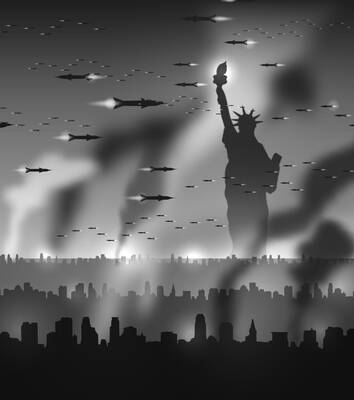
After declaring Iran’s military “gone,” US President Donald Trump appealed to the UK, France, Japan and South Korea — as well as China, Iran’s strategic partner — to send minesweepers and naval forces to reopen the Strait of Hormuz. When allies balked, the request turned into a warning: NATO would face “a very bad” future if it refused. The prevailing wisdom is that Trump faces a credibility problem: having spent years insulting allies, he finds they would not rally when he needs them. That is true, but superficial, as though a structural collapse could be caused by wounded feelings. Something
Former Taipei mayor and Taiwan People’s Party (TPP) founding chairman Ko Wen-je (柯文哲) was sentenced to 17 years in prison on Thursday, making headlines across major media. However, another case linked to the TPP — the indictment of Chinese immigrant Xu Chunying (徐春鶯) for alleged violations of the Anti-Infiltration Act (反滲透法) on Tuesday — has also stirred up heated discussions. Born in Shanghai, Xu became a resident of Taiwan through marriage in 1993. Currently the director of the Taiwan New Immigrant Development Association, she was elected to serve as legislator-at-large for the TPP in 2023, but was later charged with involvement


 RSS
RSS