


The Japanese are polite about it, the Indonesians are laid-back, but Malaysians have begun hitting below the belt.
Across Asia, government efforts to get citizens to stop smoking range from a nudge and a wink to experiments with Western-style shock tactics.
The well-worn threat of an early death having apparently been shrugged off by smokers as a small price to pay for the pleasures of the weed, Kuala Lumpur is targeting their vanity.
Men will become impotent, women will get wrinkles and you'll all get horrible yellow teeth, Malaysia's puffers are told in a news series of newspaper ads.
In Japan, warnings on cigarette packets take a gentler tone: "There is a fear that it can damage your health, so let's be careful not to smoke too much. Let's obey smoking manners."
Despite the soft approach, the percentage of Japanese who light up has been falling for about a decade, to a record low of 30.3 percent, reflecting a worldwide trend towards less smoking in wealthy countries.
But poorer countries in Asia reflect instead a WHO warning that "tobacco and poverty are inextricably linked," with 75 percent of the world's smokers living in developing nations.
In Indonesia, some 70 percent of the population smoke and the government, which raised some US$2.9 billion last year from excise tax -- almost all of it from cigarettes -- does little to discourage them.
Instead it hopes to achieve an increase in excise tax income not from increasing the retail price for cigarettes, but through increased output by the tobacco industry.
Heavy taxation of cigarettes has long been a major weapon used by richer countries to help wean their smokers from the habit, and would have an even greater effect in poor nations.
But while a packet of 20 Marlboro cigarettes costs US$5.60 in Singapore, it costs just US$0.84 in nearby Indonesia.
Huge tobacco tax increases along with a ban on smoking in bars have been credited with cutting the number of adult smokers in New York by 11 percent from 2002 to last year to just 19.3 percent, according to recent city surveys.
But as smoking rates fall throughout the Western world, they are increasing in Asian countries such as China.
Many governments in the region have taken new steps toward discouraging tobacco consumption, but these efforts often do not amount to much more than lip service.
In Pakistan a year-old ban on smoking in public places is rarely observed, despite provision for fines of up to US$1,700 for repeat offenders.
Even the threat of three months in jail for those selling cigarettes to minors -- possibly one of the world's toughest penalties -- is ignored.
India, which has 240 million tobacco users, outlawed smoking in public places this month, but police say they lack the personnel to enforce it.
Instead, restaurants pay off nosy officials, and smokers -- nearly 50 percent of the male population -- are now likely to be given the best seats, with others escorted to "non-smoking areas" at the back.
China, whose 320 million smokers account for about one-quarter of the world's total, makes some effort to stub out the habit.
Measures include banning tobacco advertising in newspapers and on television -- but a non-smoking restaurant would be considered bizarre.
China is the world's largest producer and consumer of tobacco, and last year the industry paid 160 billion yuan (US$19.2 billion) in taxes.
Anti-smoking campaigners argue that such income is offset by the economic price of tobacco use through health-care costs, lost productivity and premature deaths, pointing to the fact that in the same year a million Chinese died from smoking-related illnesses.
The WHO says not only national treasuries but also family budgets are hurt by smoking's costs, with a recent survey in Vietnam showing that smokers spent three times more on tobacco than on education and health care.
In the Philippines, smokers are estimated to spend 20 percent of their household income on tobacco, and the government this year ordered that all tobacco products must carry health warnings and banned celebrities from endorsing cigarettes.
One of the region's poorest countries, Bangladesh, this month ratified the WHO's convention on tobacco control, which commits it to passing a range of anti-smoking legislation.
In the past smoking had been seen as a low priority in a country beset by poverty, but, delighted activists say, the government has recognized that the two often go hand in hand.
Social pressures have kept smoking rates low among women in Asia, where it is often seen as unfeminine, but WHO reports cite evidence suggesting increased smoking among young, affluent urban women in some countries.
Which is apparently why Malaysia's ministry of health has brought wrinkles into its new campaign, quoting research in the United States stating that "women smokers have more facial wrinkling than non-smokers."
Whether this, and the threat to men that they will lose their virility, will be more effective than telling them they will die of cancer remains to be seen.
Experience in the West points to governments picking the pockets of smokers as the best way to get them to quit.
New York health officials say they believe the decline in smoking there has been caused primarily by higher tobacco taxes, not bans or health warnings.
A gap appears to be emerging between Washington’s foreign policy elites and the broader American public on how the United States should respond to China’s rise. From my vantage working at a think tank in Washington, DC, and through regular travel around the United States, I increasingly experience two distinct discussions. This divergence — between America’s elite hawkishness and public caution — may become one of the least appreciated and most consequential external factors influencing Taiwan’s security environment in the years ahead. Within the American policy community, the dominant view of China has grown unmistakably tough. Many members of Congress, as
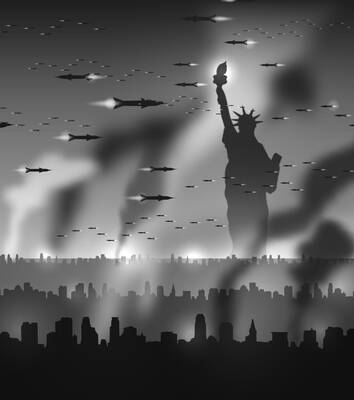
After declaring Iran’s military “gone,” US President Donald Trump appealed to the UK, France, Japan and South Korea — as well as China, Iran’s strategic partner — to send minesweepers and naval forces to reopen the Strait of Hormuz. When allies balked, the request turned into a warning: NATO would face “a very bad” future if it refused. The prevailing wisdom is that Trump faces a credibility problem: having spent years insulting allies, he finds they would not rally when he needs them. That is true, but superficial, as though a structural collapse could be caused by wounded feelings. Something
Former Taipei mayor and Taiwan People’s Party (TPP) founding chairman Ko Wen-je (柯文哲) was sentenced to 17 years in prison on Thursday, making headlines across major media. However, another case linked to the TPP — the indictment of Chinese immigrant Xu Chunying (徐春鶯) for alleged violations of the Anti-Infiltration Act (反滲透法) on Tuesday — has also stirred up heated discussions. Born in Shanghai, Xu became a resident of Taiwan through marriage in 1993. Currently the director of the Taiwan New Immigrant Development Association, she was elected to serve as legislator-at-large for the TPP in 2023, but was later charged with involvement
Out of 64 participating universities in this year’s Stars Program — through which schools directly recommend their top students to universities for admission — only 19 filled their admissions quotas. There were 922 vacancies, down more than 200 from last year; top universities had 37 unfilled places, 40 fewer than last year. The original purpose of the Stars Program was to expand admissions to a wider range of students. However, certain departments at elite universities that failed to meet their admissions quotas are not improving. Vacancies at top universities are linked to students’ program preferences on their applications, but inappropriate admission


 RSS
RSS