


During the past few weeks, Taiwan was prominently on display in the window of the world. Elections are generally exciting fare in any circumstances, but one can imagine that the Taiwanese people could have done with a bit less excitement this time around. Still, it is good to analyze the situation in Taiwan, and see how it looks from the perspective of western Europe.
Before going into the current situation, it is necessary to recall that Taiwan has come a long way from the repressive one-party state of the Chinese Nationalist Party (KMT), which held the nation in its iron grip from the mid-1940s through the end of the 1980s. The democratic transition which took place was primarily due to the hard work of the democratic movement, led by President Chen Shui-bian's (
In any society which goes through a major democratic transition, there are always elements which hark back to the undemocratic"good old days." In Russia and eastern Europe, there are such remnants of the communist parties. In Taiwan, at least a part of the KMT/People First Party (PFP) opposition seem to fall into this category: They cannot accept that Taiwan has become democratic and the DPP has come to power.
In addition to the democratic versus non-democratic dichotomy, there is the Taiwanese-minded orientation of Chen's DPP versus the Chinese-minded orientation of the present leadership of the KMT/PFP. During the 40 years of martial law, political power was virtually exclusively in the hands of the Chinese Mainlanders who came over with Chiang Kai-shek (
Still, Chen and his DPP have emphasized ethnic harmony: Anyone who loves Taiwan is considered Taiwanese, irrespective of ethnic origin. The present leadership in the KMT/PFP, on the other hand, has whipped up ethnic discord by twisting and distorting Chen's position.
Going into the election, the issue of a referendum was a major one. In any democratic society, a referendum is a commonplace mechanism to gauge the views of the population on a particular issue. In Taiwan it became a hot potato because its giant neighbor China doesn't like democracy, and the prospect of the Taiwanese people starting to use democratic means certainly looks blasphemous in the eyes of the communist dictatorship.
The problem was compounded when US President George W. Bush got into the act last December: Eager to placate visiting Chinese Premier Wen Jiabao (
In spite of the fact that the blue camp jumped on the pro-China bandwagon and urged supporters to boycott the referendum (even the watered-down version), some 7.45 million voters expressed themselves in the referendum, with some 91 percent in favor of the purchase of additional weapons to counter China's threat. The fact that the referendum didn't make it was thus due to the high threshold -- 50 percent of the registered voters. With such a threshold most referendums wouldn't make it in western Europe either.
Next is the issue of the closeness of the outcome of the vote. In this, Taiwan is not unique. In many countries there have been close elections. But the essence of democracy is that the loser graciously concedes, and awaits his next turn. In Taiwan, we instead saw the spectacle of KMT Chairman Lien Chan (
Large numbers of international observers, including ourselves, can attest that the election process was orderly and that the counting was scrupulous. If there were reports of irregularities, they were of Lien and his party buying votes on a large scale, in particular paying for the tickets of thousands of China-based businessmen returning home to vote.
And then there was the assassination attempt. In any society this would have led to expressions of deep concern also from the opposition -- for the safety and well-being of the victims. But instead of focusing anger on the fact that such a reprehensible act could take place in Taiwan's traditionally peaceful society, Lien and Soong twisted things around and alleged that the assassination attempt had been staged.
This is simply ludicrous. If one would stage such a thing, then one would not do it in broad daylight, in the middle of a crowded street, with TV cameras rolling. The suggestion itself is testimony to the twisted minds of Lien and his followers.
If there are "clouds of secrecy, manipulation and mistrust" hanging over Taiwan, they are due to the hate campaigns of the pan-blue Lien-Soong ticket. They are simply sore losers who do not have the foggiest idea of what democracy is all about.
Where does Taiwan go from here? Getting back to normal is only possible if the KMT/PFP alliance atones for its mistakes and goes through a speedy reform process in which the old leadership is ditched, so that a new Taiwan-oriented leadership can come to the fore and lead the two parties toward a democratic role in society.
From the European perspective, we congratulate Chen and the DPP on his re-election, and for making democracy work in Taiwan spite of mountainous challenges. That is no small accomplishment, but the work is far from being complete. We wish Taiwan and its people well on the arduous road toward international recognition and a full and equal place as a member of the international family of nations. Many years from now, we will look back at March 2004 and conclude that it was an important watershed in Taiwan's history.
Gerrit van der Wees is editor of Taiwan Communique in the Hague.
A gap appears to be emerging between Washington’s foreign policy elites and the broader American public on how the United States should respond to China’s rise. From my vantage working at a think tank in Washington, DC, and through regular travel around the United States, I increasingly experience two distinct discussions. This divergence — between America’s elite hawkishness and public caution — may become one of the least appreciated and most consequential external factors influencing Taiwan’s security environment in the years ahead. Within the American policy community, the dominant view of China has grown unmistakably tough. Many members of Congress, as
The shifting geopolitical tectonic plates of this year have placed Beijing in a profound strategic dilemma. As Chinese President Xi Jinping (習近平) prepares for a high-stakes summit with US President Donald Trump, the traditional power dynamics of the China-Japan-US triangle have been destabilized by the diplomatic success of Japanese Prime Minister Sanae Takaichi in Washington. For the Chinese leadership, the anxiety is two-fold: There is a visceral fear of being encircled by a hardened security alliance, and a secondary risk of being left in a vulnerable position by a transactional deal between Washington and Tokyo that might inadvertently empower Japan
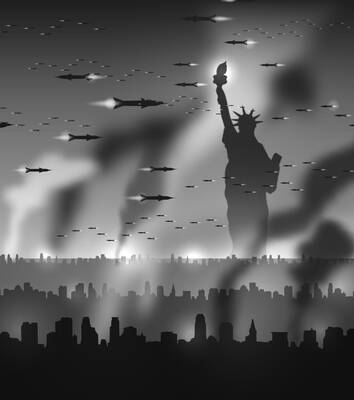
After declaring Iran’s military “gone,” US President Donald Trump appealed to the UK, France, Japan and South Korea — as well as China, Iran’s strategic partner — to send minesweepers and naval forces to reopen the Strait of Hormuz. When allies balked, the request turned into a warning: NATO would face “a very bad” future if it refused. The prevailing wisdom is that Trump faces a credibility problem: having spent years insulting allies, he finds they would not rally when he needs them. That is true, but superficial, as though a structural collapse could be caused by wounded feelings. Something
Former Taipei mayor and Taiwan People’s Party (TPP) founding chairman Ko Wen-je (柯文哲) was sentenced to 17 years in prison on Thursday, making headlines across major media. However, another case linked to the TPP — the indictment of Chinese immigrant Xu Chunying (徐春鶯) for alleged violations of the Anti-Infiltration Act (反滲透法) on Tuesday — has also stirred up heated discussions. Born in Shanghai, Xu became a resident of Taiwan through marriage in 1993. Currently the director of the Taiwan New Immigrant Development Association, she was elected to serve as legislator-at-large for the TPP in 2023, but was later charged with involvement


 RSS
RSS