


The pursuit of press freedom often entails debates over national security. The news media needs to do its duty by revealing government information to fulfill the people's right to know. On the other hand, the government often views documents related to its operations as secret and prevents their release. This frequently leads to conflicts between press freedom and national security and what each term really means.
Certainly, as US Supreme Court Justice Oliver Wendell Holmes said, shouting "Fire!" in a crowded theater does not constitute free speech. Press freedom must be regulated and the press must exercise self-discipline within the parameters of national security. Therefore, when a news report violates national security regulations, the bottom line for press freedom needs to be clearly defined through legislation and interpretation of the law.
In the US, the Privacy Protection Act guarantees press freedom, and the US Supreme Court has tried to ensure that constitutional provisions are in line with press freedom. Even so, disputes over national security and press freedom became inevitable following the Bay of Pigs incident in 1961 and the Pentagon Papers incident in 1971. This demonstrates the difficulty of striking the right balance.
The media needs to weigh how to report on secret budgets used for gathering intelligence, diplomacy and national security when complete exposure of such budgets may compromise the country's security. By becoming the tools of political struggles, the media can mislead the public and inappropriately expose the country's security matters, especially when the National Security Bureau' is afflicted with infighting and interference from various political forces.
However, the NSB cannot use national security as a pretext to protect itself or evade responsibility. The NSB's secretive and inadequate internal control systems could very well be the biggest threat to Taiwan's national security.
Therefore, the government must investigate where the money in each NSB account has gone. It must also drastically reform the NSB's operational structure and stop the mistaken belief that military personnel should be given leading roles. It must also speed up the enactment of laws regulating the disclosure of intelligence information and state secrets. On the one hand, these will define the scope and principles of state secrets. On the other hand, they will encourage the government to disclose information instead of hiding behind the cloak of "national security." Otherwise, national security will become an authoritarian monster that will undermine the progress Taiwan has made in democratization and human rights.
Wang Tuoh is a DPP legislator.
Translated by Francis Huang
A gap appears to be emerging between Washington’s foreign policy elites and the broader American public on how the United States should respond to China’s rise. From my vantage working at a think tank in Washington, DC, and through regular travel around the United States, I increasingly experience two distinct discussions. This divergence — between America’s elite hawkishness and public caution — may become one of the least appreciated and most consequential external factors influencing Taiwan’s security environment in the years ahead. Within the American policy community, the dominant view of China has grown unmistakably tough. Many members of Congress, as
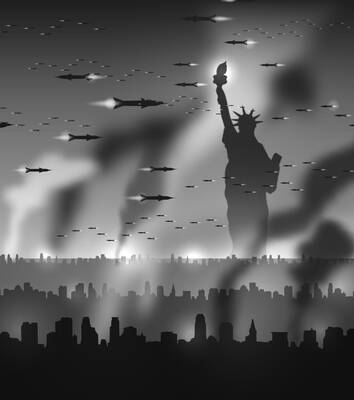
After declaring Iran’s military “gone,” US President Donald Trump appealed to the UK, France, Japan and South Korea — as well as China, Iran’s strategic partner — to send minesweepers and naval forces to reopen the Strait of Hormuz. When allies balked, the request turned into a warning: NATO would face “a very bad” future if it refused. The prevailing wisdom is that Trump faces a credibility problem: having spent years insulting allies, he finds they would not rally when he needs them. That is true, but superficial, as though a structural collapse could be caused by wounded feelings. Something
Former Taipei mayor and Taiwan People’s Party (TPP) founding chairman Ko Wen-je (柯文哲) was sentenced to 17 years in prison on Thursday, making headlines across major media. However, another case linked to the TPP — the indictment of Chinese immigrant Xu Chunying (徐春鶯) for alleged violations of the Anti-Infiltration Act (反滲透法) on Tuesday — has also stirred up heated discussions. Born in Shanghai, Xu became a resident of Taiwan through marriage in 1993. Currently the director of the Taiwan New Immigrant Development Association, she was elected to serve as legislator-at-large for the TPP in 2023, but was later charged with involvement
Out of 64 participating universities in this year’s Stars Program — through which schools directly recommend their top students to universities for admission — only 19 filled their admissions quotas. There were 922 vacancies, down more than 200 from last year; top universities had 37 unfilled places, 40 fewer than last year. The original purpose of the Stars Program was to expand admissions to a wider range of students. However, certain departments at elite universities that failed to meet their admissions quotas are not improving. Vacancies at top universities are linked to students’ program preferences on their applications, but inappropriate admission


 RSS
RSS