


Scandal fuss disturbing
The sex-VCD scandal surrounding Chu Mei-feng (璩美鳳) appears to suggest that society has lost all humanity and sympathy.
Copies of the VCD are everywhere. They have not only been spread on the Internet but are also sold at night markets and bazaars. Even college students watch them. The scandal has become the topic of every conversation.
In my opinion, a person's secrets should not be discussed in public, because that harms the person involved. In addition, the furor reflects a serious voyeuristic tendency on the part of the public and our loss of humanity and sympathy. If the authorities yield to this unhealthy trend, we will lose our right to privacy. Do you want to see that happen?
Tzeng Ming-shyong
Taipei
I am disturbed by my observation of what appears to be the collective Taiwanese reaction towards the Chu Mei-feng (璩美鳳) sex-VCD scandal. This collective appetitive for political and sexual fodder surprises me even as I thought I understood, at least to some extent, the pulse of this island nation.
So far, all I have heard about has been the hotly touted "sex education" VCD that apparently every man, woman and their mothers have "enjoyed." While everyone admits having "learned" much through the religious viewing of the VCD that has been propagated everywhere and consumed by everyone, no one fails to spare a moment to quickly frown upon and condemn the VCD's female star.
All this is without strong evidence either way (yet) on whether Chu is involved in the possible illicit creation and/or subsequent propagation of the graphic VCD that has since inundated Taiwan's every nook and cranny.
What I see is that the rape of an individual's privacy -- which has no culprit until the court identifies one -- has appeared to have united both young and old, men and women, professionals and students, workers and bosses, in a way that no political ideology could.
Considering the VCD will survive long after this media frenzy dies down, this stark reality leads me to ponder whether what I have witnessed is a collision between modern and traditional values, or simply human nature at its most base level.
I cannot help but wonder if this seemingly collective reaction reflects Taiwan's precarious status as a country caught between the modern and the traditional. The collective reaction of the public combines both traditional and modern elements.
On the one hand, there's much chauvinistic scorn toward Chu, who is viewed as a home wrecker and, in some circles, as someone who is getting what she deserves, especially after her slanderous accusations toward DPP Chairman Frank Hsieh (謝長廷) that led to an expensive lawsuit that she eventually lost and from which she admits to having "learned a lesson."
On the other hand, nearly every soul has openly consumed the pornographic images. But then again, perhaps my analysis is amiss. As I readily admit, what I am witnessing may simply be a dichotomy of the human condition: the predisposition to morally scorn, yet have a penchant for, anything involving sex.
Rosie Hsueh
Oakland, California
A gap appears to be emerging between Washington’s foreign policy elites and the broader American public on how the United States should respond to China’s rise. From my vantage working at a think tank in Washington, DC, and through regular travel around the United States, I increasingly experience two distinct discussions. This divergence — between America’s elite hawkishness and public caution — may become one of the least appreciated and most consequential external factors influencing Taiwan’s security environment in the years ahead. Within the American policy community, the dominant view of China has grown unmistakably tough. Many members of Congress, as
The shifting geopolitical tectonic plates of this year have placed Beijing in a profound strategic dilemma. As Chinese President Xi Jinping (習近平) prepares for a high-stakes summit with US President Donald Trump, the traditional power dynamics of the China-Japan-US triangle have been destabilized by the diplomatic success of Japanese Prime Minister Sanae Takaichi in Washington. For the Chinese leadership, the anxiety is two-fold: There is a visceral fear of being encircled by a hardened security alliance, and a secondary risk of being left in a vulnerable position by a transactional deal between Washington and Tokyo that might inadvertently empower Japan
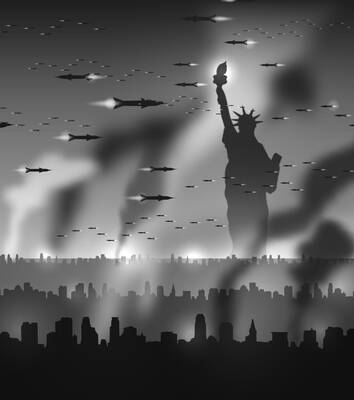
After declaring Iran’s military “gone,” US President Donald Trump appealed to the UK, France, Japan and South Korea — as well as China, Iran’s strategic partner — to send minesweepers and naval forces to reopen the Strait of Hormuz. When allies balked, the request turned into a warning: NATO would face “a very bad” future if it refused. The prevailing wisdom is that Trump faces a credibility problem: having spent years insulting allies, he finds they would not rally when he needs them. That is true, but superficial, as though a structural collapse could be caused by wounded feelings. Something
Former Taipei mayor and Taiwan People’s Party (TPP) founding chairman Ko Wen-je (柯文哲) was sentenced to 17 years in prison on Thursday, making headlines across major media. However, another case linked to the TPP — the indictment of Chinese immigrant Xu Chunying (徐春鶯) for alleged violations of the Anti-Infiltration Act (反滲透法) on Tuesday — has also stirred up heated discussions. Born in Shanghai, Xu became a resident of Taiwan through marriage in 1993. Currently the director of the Taiwan New Immigrant Development Association, she was elected to serve as legislator-at-large for the TPP in 2023, but was later charged with involvement


 RSS
RSS