


The Legislative Yuan has decided temporarily to freeze the budget for the Academia Sinica until its president, Lee Yuan-tseh (李遠哲), comes to the legislature to go over the budget with them in the next session. The move leaves our highest national academic institution in limbo. The opposition parties that plotted this attack obviously regard Lee as their target. But this move is a misfortune for our country, as politics appears to be the only thing on the mind of the legislators, who have no regard for the negative impact on academic research in Taiwan.
At Beijing's Tsinghua University (清華大學) in the winter of 1995, a group of alumni from Taiwan paid a visit to an architecture professor named Peng (彭), whose father once served as a major-general under president Chiang Ching-kuo (蔣經國). Peng left Taiwan to study overseas and had been teaching in Beijing for more than a decade. During a conversation with the alumni, Peng stated, "China has been seriously ill, but it cannot take more chaos ... we must first develop the economy to facilitate a recovery of the nation's health. Moreover, as economic reforms require scientific knowledge, this is an opportunity for the social status of intellectuals to be raised, forging the power of intellectuals."
At Tsinghua University in Beijing last November this writer said at a reception: "The last time we [the Taiwan alumni] were here, a statue of prominent architect Liang Szu-cheng (梁思成) had just been erected in the architecture department building. We are deeply aware that Liang gave his best efforts to safeguard Beijing's city walls and preserve this ancient city's cultural heritage. That is the reason why residents of Beijing today still remember and pay tribute to Liang.
Mei Yi-chi (
We must also say that whether a country or an organization has rosy prospects does not depend on how much financial wealth or land it owns, but on gurus who have solid knowledge and upright character. The future of a country hinges, therefore, upon how those in power treat and make use of intellectuals.
During the 10 turbulent years of the Chinese Cultural Revolution, Beijing's Tsinghua University was criticized as "a small temple full of evil spirits, a shallow pond with too many sharks." The school resembled a "quake-devastated" area in which there were virtually no noted scholars who had been able to escape Beijing's persecution. All the overseas Chinese scholars visiting Beijing at the time were flabbergasted by the devastation. Nobel laureates Yang Chen-ning (楊振寧), Lee Tseng-dao (李政道) and other eminent scholars have since made great contributions to rebuilding the study and research of basic science in China. A good number of Tsinghua University alumni have entered the Chinese technocratic system. In fact, six out of the 25 Politburo members are Tsinghua graduates. Zhu Rongji (朱鎔基) has become a symbol of reform, with Hu Jintao (胡錦濤) poised to take over as the next president of China. Intellectuals have found a crucial niche in society.
When the KMT government retreated to Taiwan in 1949, several Tsinghua alumni, well-known intellectuals at home and overseas, worked for the government. Serving in the military was Sun Li-jen (孫立人). Former Shanghai mayor Wu Kuo-chen (吳國楨) later became Taiwan provincial governor. George Yeh (
Although Chiang and his son Chiang Ching-kuo both claimed to have "restored prosperity to the country on the basis of talent," they in fact trampled on a huge number of intellectuals, thereby failing to rally support from the Chinese academic elite overseas.
"Revitalize the PRC through scientific education" is a policy guideline in China nowadays. What's more, the idea that "scientific technology is the number one productive force" has become the consensus. Beijing is focusing on stimulating the economy. Despite ideological differences, the PRC government has many times accepted proposals from Chinese scholars from foreign countries. To remind the Beijing regime of the need to keep up support for the study of basic science, Nobel laureate Lee Tseng-dao has said: "Basic science is like pure water, applied science is like living fish, and production technology a fish market. All of them are indispensable to China." Moreover, Lee's claim -- "Without science, poverty is inevitable. Without science, it is impossible to realize any human hope" -- aims to illustrate the importance of basic science studies.
Today, our legislators in Taiwan do not have a deep understanding of basic scientific research. They also fail to recognize Academic Sinica's painstaking efforts in promoting serious academic study. They do not know how Lee Yuan-tseh and other scholars toil silently in order to "let science take root in Taiwan" -- an issue that bears inextricable ties to Taiwan's future. At the end of the Ching dynasty, Kung Tzu-chen (龔自珍) gave warnings to society and made proposals to the monarchy, but both turned a deaf ear to him. He was an intellectual resolved to transform his country. His aspirations, however, turned out to be stifled by harsh circumstances. He also described the Ching monarchy as being so corrupt that it was unable to detect the fact that its days were numbered. Similarly, after Lee Yuan-tseh described cross-strait relations as being in "dire straits," the ruling and opposition parties in Taiwan still continue their endless bickering.
Legislators, please learn to have more respect for intellectuals and not let our descendants berate you as "short-sighted bureaucrats ignorant of the fact that a crisis is drawing near."
Chen Jyan-bang is the chairman of the Tsinghua University Alumni Association of Hsinchu City.
Translated by Gatian Wang
A gap appears to be emerging between Washington’s foreign policy elites and the broader American public on how the United States should respond to China’s rise. From my vantage working at a think tank in Washington, DC, and through regular travel around the United States, I increasingly experience two distinct discussions. This divergence — between America’s elite hawkishness and public caution — may become one of the least appreciated and most consequential external factors influencing Taiwan’s security environment in the years ahead. Within the American policy community, the dominant view of China has grown unmistakably tough. Many members of Congress, as
The shifting geopolitical tectonic plates of this year have placed Beijing in a profound strategic dilemma. As Chinese President Xi Jinping (習近平) prepares for a high-stakes summit with US President Donald Trump, the traditional power dynamics of the China-Japan-US triangle have been destabilized by the diplomatic success of Japanese Prime Minister Sanae Takaichi in Washington. For the Chinese leadership, the anxiety is two-fold: There is a visceral fear of being encircled by a hardened security alliance, and a secondary risk of being left in a vulnerable position by a transactional deal between Washington and Tokyo that might inadvertently empower Japan
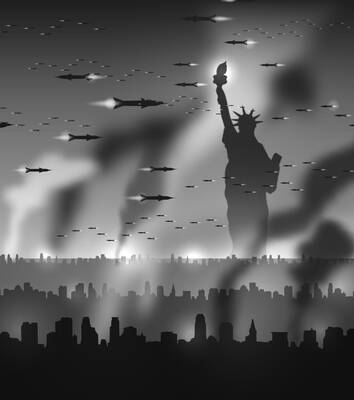
After declaring Iran’s military “gone,” US President Donald Trump appealed to the UK, France, Japan and South Korea — as well as China, Iran’s strategic partner — to send minesweepers and naval forces to reopen the Strait of Hormuz. When allies balked, the request turned into a warning: NATO would face “a very bad” future if it refused. The prevailing wisdom is that Trump faces a credibility problem: having spent years insulting allies, he finds they would not rally when he needs them. That is true, but superficial, as though a structural collapse could be caused by wounded feelings. Something
Former Taipei mayor and Taiwan People’s Party (TPP) founding chairman Ko Wen-je (柯文哲) was sentenced to 17 years in prison on Thursday, making headlines across major media. However, another case linked to the TPP — the indictment of Chinese immigrant Xu Chunying (徐春鶯) for alleged violations of the Anti-Infiltration Act (反滲透法) on Tuesday — has also stirred up heated discussions. Born in Shanghai, Xu became a resident of Taiwan through marriage in 1993. Currently the director of the Taiwan New Immigrant Development Association, she was elected to serve as legislator-at-large for the TPP in 2023, but was later charged with involvement


 RSS
RSS