


The End Child Prostitution Association of Taiwan (
The training is designed to enable mothers to watch over their children's Internet activities as well as to encourage parents to take a greater interest in monitoring online pornography in order to provide their children with a safe cyperspace.
Let's put aside concerns about whether such a program may incite moral paranoia by exaggerating the relationship between children and porn. However, it is worth noting how the launch of such a program during May, the month in which mothers are commemorated, serves to reshape and redefine motherhood.
Commercials for Mother's Day gifts largely depict mothers as selfless and caring, an image targeted at children's sense of guilt and affection. In recent years, however, new images of mothers have begun appearing. Regardless of whether the theme is a mother eager to have a slim and sexy figure, or a mother enjoying different costly services, mothers are now depicted as someone who is conscious of her own body, feelings, identity and desires. Although some have criticized these images as a surrender to commercialized consumption, they have at least broken free from the traditional image of the pathetic selfless woman who lacked a voice, a sense of self-identity and had no time to rest.
On the other hand, the monitoring room projects an image of mothers that is both one-dimensional and traditional. Mothers will be trained to surf the Internet -- not so they might acquire new knowledge for themselves, but to prevent others from coming into contact with new things, to further constrict the human mind.
The legal knowledge provided will not help mothers change their own disadvantageous position in the institution of mar-riage; on the contrary, the know-ledge is used to further consolidate patriarchal dominance and monopoly over the body and bodily pleasures. In short, mothers will be trained to act as informants for "Taiwan's Garrison Command for Sexual Desires"
The most appalling fact is that mothers are asked to steer clear of pornography themselves. In fact, training mothers to take on such an actively hostile attitude toward pornography is to deny the possibility that they may also need pornography. (How many women, estranged from their husbands, have been left to comfort themselves with pornography in their sexless, pleasureless marriages? How many mothers have become revived and exhilarated through erotic conversations on the Net?)
Declaring a war on pornography is declaring a war on mothers who are already reading, writing, and playing with porn on the Internet, turning these mothers into targets of surveillance, shaming them into the self-denial of pleasures. The Internet has brought those mothers, isolated at home, the possibility of taking part in the world.
Yet in the the monitoring project, the mother's world is compressed to that of child-caring. She is also placed in an oppressive position, making her an enemy of her own children. Is this the new motherhood we have in mind for the 21st century?
Ho Chuen-juei is associate professor and coordinator of the Center for the Study of Sexualities at National Central University.
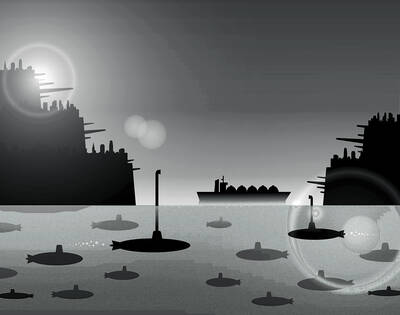
In the event of a war with China, Taiwan has some surprisingly tough defenses that could make it as difficult to tackle as a porcupine: A shoreline dotted with swamps, rocks and concrete barriers; conscription for all adult men; highways and airports that are built to double as hardened combat facilities. This porcupine has a soft underbelly, though, and the war in Iran is exposing it: energy. About 39,000 ships dock at Taiwan’s ports each year, more than the 30,000 that transit the Strait of Hormuz. About one-fifth of their inbound tonnage is coal, oil, refined fuels and liquefied natural gas (LNG),
To counter the CCP’s escalating threats, Taiwan must build a national consensus and demonstrate the capability and the will to fight. The Chinese Communist Party (CCP) often leans on a seductive mantra to soften its threats, such as “Chinese do not kill Chinese.” The slogan is designed to frame territorial conquest (annexation) as a domestic family matter. A look at the historical ledger reveals a different truth. For the CCP, being labeled “family” has never been a guarantee of safety; it has been the primary prerequisite for state-sanctioned slaughter. From the forced starvation of 150,000 civilians at the Siege of Changchun
The two major opposition parties, the Chinese Nationalist Party (KMT) and the Taiwan People’s Party (TPP), jointly announced on Tuesday last week that former TPP lawmaker Chang Chi-kai (張啟楷) would be their joint candidate for Chiayi mayor, following polling conducted earlier this month. It is the first case of blue-white (KMT-TPP) cooperation in selecting a joint candidate under an agreement signed by their chairpersons last month. KMT and TPP supporters have blamed their 2024 presidential election loss on failing to decide on a joint candidate, which ended in a dramatic breakdown with participants pointing fingers, calling polls unfair, sobbing and walking
In recent weeks, Taiwan has witnessed a surge of public anxiety over the possible introduction of Indian migrant workers. What began as a policy signal from the Ministry of Labor quickly escalated into a broader controversy. Petitions gathered thousands of signatures within days, political figures issued strong warnings, and social media became saturated with concerns about public safety and social stability. At first glance, this appears to be a straightforward policy question: Should Taiwan introduce Indian migrant workers or not? However, this framing is misleading. The current debate is not fundamentally about India. It is about Taiwan’s labor system, its


 RSS
RSS