


Lord Clive of India, at his impeachment for gross peculation before the House of Commons in 1774, reminded his cross-examiners of the wealth he could have stolen compared to what he did steal. "By God sir, I feel astonished at my own moderation." So might Taiwan's National Assembly representatives -- known to us all as the "young thieves" to distinguish them from the "old thieves," their geriatric mainland elected forbears ousted in 1991 -- reply to the torrent of criticism that will be poured upon them, here and elsewhere in the next few days, over the breathtaking effrontery of their extending their own term of office by two years until 2002. After all, they could have extended it to almost any date they liked. The government is powerless under the Constitution to check them. They could have done what they liked and the only thing the government could have done about it was launch what in South America is known as an auto golpa, or self-coup. It is a measure through which an elected president overthrows his own
Constitution to dissolve an uncontrollable National Assembly -- Alberto Fujimori of Peru is the deftest practitioner of this political black art.
But the point is, what to do now? Who knows? After all, the Constitution has been amended by the body responsible for amending it. Perhaps the most we can do for now is to ask how this all came about.
The immediate impetus for the term extension is, of course, the desire of the KMT deputies to be able to fleece the nation for another two years without going to all the expense of having to buy votes in another election -- the one that was scheduled for March 2000.
The reason why they got their way, however, was because they were prepared to do a deal with the DPP deputies -- without whose support no constitutional amendment can be passed due to the need for approval among 75 percent of assemblymen. The deal was this: if the term extension was passed, then the KMT would vote for the DPP's pet proposal, that elections to the assembly be abolished and deputies appointed by political parties on the basis of their vote share in legislative elections.
The DPP deputies have until now passed off this measure as a selfless attempt to set the assembly on the road to abolition. Their logic: that deputies who spend a fortune to get elected will never vote themselves out of a job, but carefully selected appointees just might.
Since the National Assembly is the proverbial 500-pound gorilla that does what it likes, we might be thankful for small mercies. Not only did the Assembly extend the period its deputies can stick their snouts into the public trough by a mere two years but, at press time last night, it appeared that a measure to grant the Assembly the right to review its own budget -- which would amount to letting the pigs decide the size of their trough and how often it was filled -- was put on ice.
Here may be a way to rein in the Assembly. Currently its budget is passed by the legislature and the DPP has previously sought to abolish the Assembly in substance if not in name by using its power in the legislature to kill this budget. This measure has, however, always been overturned by the KMT in the past. If budget cancellation is proposed next year, we shall see how serious the KMT is about reforming the Assembly.
But finally it has to be said that the current situation owes much to none other than President Lee Teng-hui (
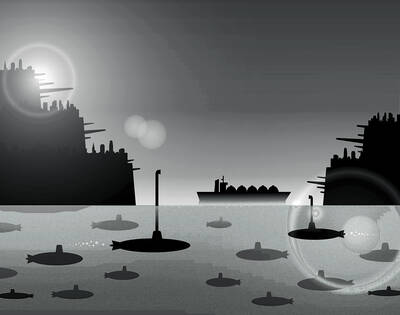
In the event of a war with China, Taiwan has some surprisingly tough defenses that could make it as difficult to tackle as a porcupine: A shoreline dotted with swamps, rocks and concrete barriers; conscription for all adult men; highways and airports that are built to double as hardened combat facilities. This porcupine has a soft underbelly, though, and the war in Iran is exposing it: energy. About 39,000 ships dock at Taiwan’s ports each year, more than the 30,000 that transit the Strait of Hormuz. About one-fifth of their inbound tonnage is coal, oil, refined fuels and liquefied natural gas (LNG),
To counter the CCP’s escalating threats, Taiwan must build a national consensus and demonstrate the capability and the will to fight. The Chinese Communist Party (CCP) often leans on a seductive mantra to soften its threats, such as “Chinese do not kill Chinese.” The slogan is designed to frame territorial conquest (annexation) as a domestic family matter. A look at the historical ledger reveals a different truth. For the CCP, being labeled “family” has never been a guarantee of safety; it has been the primary prerequisite for state-sanctioned slaughter. From the forced starvation of 150,000 civilians at the Siege of Changchun
The two major opposition parties, the Chinese Nationalist Party (KMT) and the Taiwan People’s Party (TPP), jointly announced on Tuesday last week that former TPP lawmaker Chang Chi-kai (張啟楷) would be their joint candidate for Chiayi mayor, following polling conducted earlier this month. It is the first case of blue-white (KMT-TPP) cooperation in selecting a joint candidate under an agreement signed by their chairpersons last month. KMT and TPP supporters have blamed their 2024 presidential election loss on failing to decide on a joint candidate, which ended in a dramatic breakdown with participants pointing fingers, calling polls unfair, sobbing and walking
In the opening remarks of her meeting with Chinese President Xi Jinping (習近平) in the Great Hall of the People in Beijing on Friday, Chinese Nationalist Party (KMT) Chairwoman Cheng Li-wun (鄭麗文) framed her visit as a historic occasion. In his own remarks, Xi had also emphasized the history of the relationship between the KMT and the Chinese Communist Party (CCP). Where they differed was that Cheng’s account, while flawed by its omissions, at least partially corresponded to reality. The meeting was certainly historic, albeit not in the way that Cheng and Xi were signaling, and not from the perspective


 RSS
RSS