


Libyans are shaking off decades of deprivation resulting from iron-fisted socialist rule, international isolation and sanctions to savor the joys of their new market economy.
Gone are the days of having to queue outside gloomy state shops to buy subsidized consumer goods in Libya, which is an OPEC member and Africa’s No. 2 oil producer with reserves estimated to total 42 billion barrels.
Thanks to high oil prices, a promise by flamboyant leader Muammar Qaddafi to give the people a share of the country’s multibillion oil revenues and the government’s economic reforms drive, Libyans have embraced consumerism.
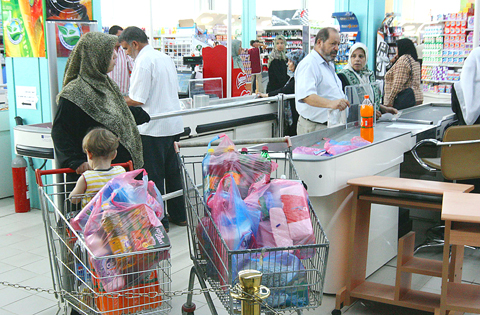
PHOTO: AP
Designer boutiques dot the posh Gargaresh avenue of Tripoli, where Libyans can shop for the latest fashions as well as stop in a US-style fast-food eatery for a late-night slice of pizza.
Amid traffic jams, young Libyan men slip behind the wheel of their four-wheel drive cars or sporty BMW models and cruise the streets until the early hours, music blasting from their car stereos.
“We have suffered enough, especially during the [UN-imposed] embargo,” from 1992 until 2003, said Ahmad, a 35-year-old banker, who declined to give his surname.
“It is time we catch up on those lost years,” he said.
Private investors have tapped into the mood of the country of nearly 6 million inhabitants — which imports 90 percent of its consumer goods — by transforming a dismal state-run market into Tripoli’s first superstore.
The four-story modern temple of consumerism opened last month, drawing a flow of eager customers who pushed and shoved their way into the megastore.
“Finally we can shop like everyone else,” a 40-year-old woman said.
The investors, including a charity run by Qaddafi’s daughter, Aisha, poured US$7 million into the project.
The scheme reflects a decision by the government to shake off Libya’s staunch socialist economy and embrace reforms and globalization since mending its ties with the West.
The turning point came when Qaddafi publicly abandoned the quest for weapons of mass destruction at the end of 2003.
Libya has since 2000 been working to dismantle the central economy adopted in the 1970s and replace it with a market economy, by encouraging privatization to create more jobs and phase out subsidies burdening the economy.
At the same time the government has hiked the salaries of civil servants by 50 percent to bolster purchasing power.
Three years ago credit cards appeared in Libya and banks are offering easy credit terms with preferential rates to private investors.
The result has been a surge in restaurants, shops and apartments.
And on the streets of Tripoli even the omnipresent portraits of Qaddafi have given way to placards advertising a variety of goods and projects.
During a ceremony to mark the 39th anniversary of his overthrow of the Western-backed monarchy early last month, Qaddafi pledged anew a plan to hand out to the people US$37 billion in non-essential government spending.
“Libyans should all be ready to receive a share of the oil revenues starting from the beginning of next year,” Qaddafi said, after promising to scrap most government ministries and hand their budgets directly to the people.
But this over-injection of cash and an increase in demand have sent food prices sky-rocketing.
Inflation rose from 1.4 percent in 2006 to reach 6.2 percent last year, while it hit a record of nearly 12 percent for the first seven month of this year, the central bank said.
Many families are trailing behind, despite state assistance to the poor.
“Life is becoming more and more expensive and families are more demanding,” said Mohammed, who drives a cab at night and teaches English by day to help make ends meet.
“You have to work hard in order to earn a good living and satisfy everyone,” he said.
This father of three complained that Libya was heading from “stifling socialism to wild capitalism.”
“Libyans are begging on the streets,” he said. “This never existed before.”
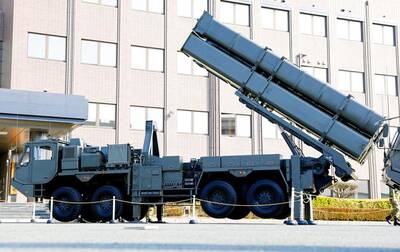
Japan has deployed long-range missiles in a southwestern region near China, the Japanese defense minister said yesterday, at a time when ties with Beijing are at their lowest in recent years. The missiles were installed in Kumamoto in the southern region of Kyushu, as Japan is attempting to shore up its military capacity as China steps up naval activity in the East China Sea. “Standoff defense capabilities enable us to counter the threat of enemy forces attempting to invade our country ... while ensuring the safety of our personnel,” Japanese Minister of Defense Shinjiro Koizumi said. “This is an extremely important initiative for
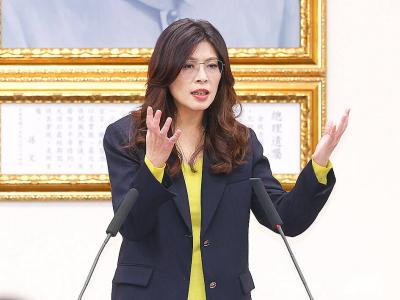
Chinese Nationalist Party (KMT) Chairwoman Cheng Li-wun (鄭麗文) today accepted an invitation from Chinese President Xi Jinping (習近平) to lead a delegation to China next month, saying she hopes to promote the peaceful development of cross-strait relations and bring stability to the Taiwan Strait. “I am grateful and happy to accept this invitation,” Cheng said in a statement from the KMT chairperson’s office. Cheng said she hopes both sides can work together to promote the peaceful development of cross-strait relations, enhance exchange and cooperation, bring stability to the Taiwan Strait and improve people’s livelihoods. At today's news conference, Cheng said any efforts to
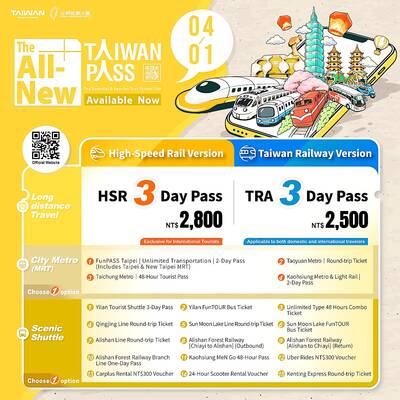
MORE POPULAR: Taiwan Pass sales increased by 59 percent during the first quarter compared with the same period last year, the Tourism Administration said The Tourism Administration yesterday said that it has streamlined the Taiwan Pass, with two versions available for purchase beginning today. The tourism agency has made the pass available to international tourists since 2024, allowing them to access the high-speed rail, Taiwan Railway Corp services, four MRT systems and four Taiwan Tourist Shuttles. Previously, five types of Taiwan Pass were available, but some tourists have said that the offerings were too complicated. The agency said only two types of Taiwan Pass would be available, starting from a three-day pass with the high-speed rail and a three-day pass with Taiwan Railway Corp. The former costs NT$2,800
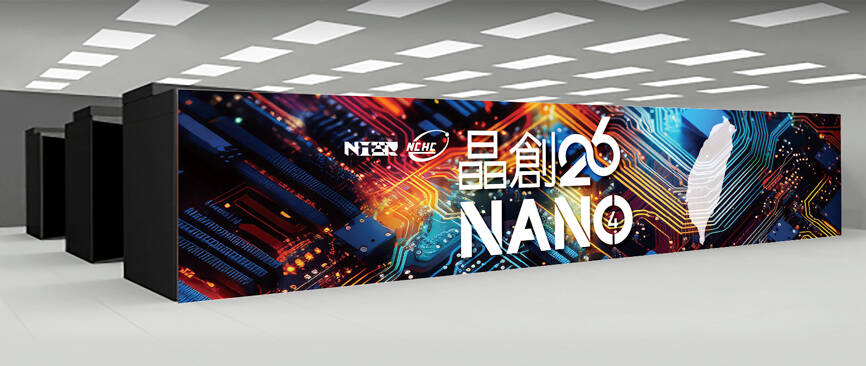
The nation’s fastest supercomputer, Nano 4 (晶創26), is scheduled to be launched in the third quarter, and would be used to train large language models in finance and national defense sectors, the National Center for High-Performance Computing (NCHC) said. The supercomputer, which would operate at about 86.05 petaflops, is being tested at a new cloud computing center in the Southern Taiwan Science Park in Tainan. The exterior of the server cabinet features chip circuitry patterns overlaid with a map of Taiwan, highlighting the nation’s central position in the semiconductor industry. The center also houses Taiwania 2, Taiwania 3, Forerunner 1 and


 RSS
RSS