


You have to feel sorry for the Chinese. Their grand vision to replicate the annual Davos gathering of world economic leaders on Hainan island was such a flop that organizers apologized to attendees.
Instead of featuring substantive discussions and raising China's influence, last weekend's "Davos of Asia" will be remembered more for conspicuous absence of the economic glitterati that visits the Swiss town each year. And for its mishaps and faux pas.
Chinese delegates used the occasion to vent frustration at the competition they're facing from foreign firms as China enters the WTO. Not exactly the impression Beijing hoped to give a world skeptical about China's ability to conform to global standards anytime soon.
A far racier subject was broached by another attendee -- one who runs a Beijing escort agency. The delegate tried to lobby Premier Zhu Rongji to follow Thailand's sex industry and legalize transvestites in China. An unimpressed Zhu dismissed the question as inappropriate. Translation: Transvestites, your time in Beijing hasn't come.
Adding insult to injury was a Taiwan delegate identifying himself as hailing from The Republic of China. The comment raised heckles and embarrassed the forum's organizers.
"We'll have to keep the riff-raff out next year. How dare he flaunt his politics here," Li Qiang, a security guard at the forum held in Boao, said.
Perhaps organizers jinxed themselves by trumpeting the event as a success before it ended. The International Finance Daily, a Beijing-based newspaper, declared that the forum had already surpassed Davos. Too bad the article spelled Davos as "Dawas." Other signs organizers need to work on their English -- the lingua franca for international conference-goers -- gave attendees a chuckle. A China Unicom advertisement for a new mobile-phone network, displayed above the conference media center, said: "May the Boao Forum for Asia Consummate." Another sign said the forum "is for evildoing of all the country in Asia." Speeches by the president of Kazakhstan and the former prime minister of Mongolia, meanwhile, weren't translated. Anyone around here speak Kazakh or Mongol? On a far more serious note, however, China's Davos-wannabe confab seemed a sobering blow to a nation that wants more influence on the geopolitical stage. Given its booming economy and geographic size and location, Beijing figures it deserves a leading role in Asia, if not the world. Last weekend's forum was meant to spotlight China's rising star.
The world's most populous nation had a taste of the recognition it craves last October, when it hosted an APEC meeting in Shanghai. Just as China hoped, the city's booming growth wowed visitors like US President George W. Bush and Japanese Prime Minister Junichiro Koizumi. Journalists were equally seduced.
Since then, questions about whether China's economic miracle is for real have eclipsed the positive spin coming from Beijing.
So much so that Zhu found himself having to defend China's growth statistics to conferees in Boao.
"No one should doubt that China's growth is not below 7 percent per year," Zhu told delegates.
But they do indeed, and doubters are becoming more vocal these days. Even if China is growing at 7 percent, the sources of that output are also being scrutinized as never before. Economists the world over worry that government spending -- deficit spending, actually -- and little else is propelling the nation's 7 percent-plus growth.
To officials in Beijing, the "Boao Forum for Asia" seemed the perfect opportunity to change the subject -- and showcase Chinese hospitality. Organizers flew in usher girls from Beijing, an orchestra from Vienna and a troupe of synchronized swimmers from Ukraine.
But Beijing didn't get a chance to raise its stature. None of the 10 members of ASEAN sent officials with a mandate to commit governments to any trade pacts. Of the 29 ministerial-level delegates at the Boao conference, 11 were former ministers who are already out of active politics.
The whole episode served as a reminder that China has come a long way toward opening its economy and stabilizing it, but much remains to be done. Until China can convince the world that its economy will be a stable and productive force in Asia, it will remain off center stage in the region.
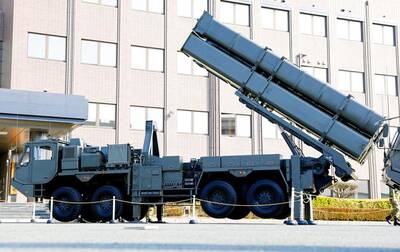
Japan has deployed long-range missiles in a southwestern region near China, the Japanese defense minister said yesterday, at a time when ties with Beijing are at their lowest in recent years. The missiles were installed in Kumamoto in the southern region of Kyushu, as Japan is attempting to shore up its military capacity as China steps up naval activity in the East China Sea. “Standoff defense capabilities enable us to counter the threat of enemy forces attempting to invade our country ... while ensuring the safety of our personnel,” Japanese Minister of Defense Shinjiro Koizumi said. “This is an extremely important initiative for
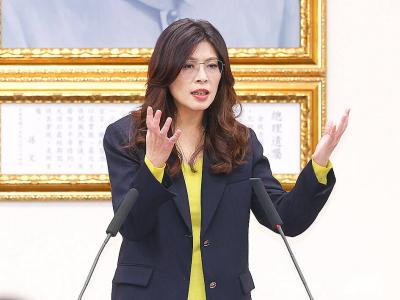
Chinese Nationalist Party (KMT) Chairwoman Cheng Li-wun (鄭麗文) today accepted an invitation from Chinese President Xi Jinping (習近平) to lead a delegation to China next month, saying she hopes to promote the peaceful development of cross-strait relations and bring stability to the Taiwan Strait. “I am grateful and happy to accept this invitation,” Cheng said in a statement from the KMT chairperson’s office. Cheng said she hopes both sides can work together to promote the peaceful development of cross-strait relations, enhance exchange and cooperation, bring stability to the Taiwan Strait and improve people’s livelihoods. At today's news conference, Cheng said any efforts to
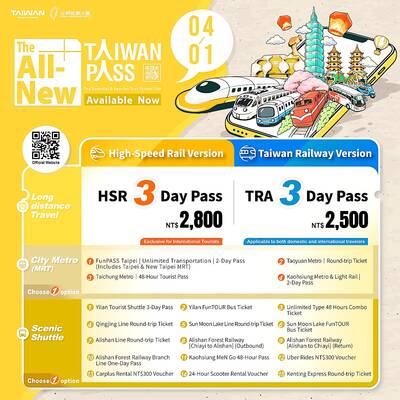
MORE POPULAR: Taiwan Pass sales increased by 59 percent during the first quarter compared with the same period last year, the Tourism Administration said The Tourism Administration yesterday said that it has streamlined the Taiwan Pass, with two versions available for purchase beginning today. The tourism agency has made the pass available to international tourists since 2024, allowing them to access the high-speed rail, Taiwan Railway Corp services, four MRT systems and four Taiwan Tourist Shuttles. Previously, five types of Taiwan Pass were available, but some tourists have said that the offerings were too complicated. The agency said only two types of Taiwan Pass would be available, starting from a three-day pass with the high-speed rail and a three-day pass with Taiwan Railway Corp. The former costs NT$2,800

The nation’s fastest supercomputer, Nano 4 (晶創26), is scheduled to be launched in the third quarter, and would be used to train large language models in finance and national defense sectors, the National Center for High-Performance Computing (NCHC) said. The supercomputer, which would operate at about 86.05 petaflops, is being tested at a new cloud computing center in the Southern Taiwan Science Park in Tainan. The exterior of the server cabinet features chip circuitry patterns overlaid with a map of Taiwan, highlighting the nation’s central position in the semiconductor industry. The center also houses Taiwania 2, Taiwania 3, Forerunner 1 and


 RSS
RSS