


At an age when most people think about retiring and at a time when many younger investment bankers are doing so, Robert Towbin made an unexpected career move after Sept. 11.
Towbin, 66, whose family name has adorned a New York investment bank for 70 years, was contemplating a change when he got a call from Warren Stephens, who runs an investment bank in Little Rock, Arkansas. Stephens sought advice from Towbin, an old acquaintance, on how to contribute to the families of people who died in the World Trade Center attack.
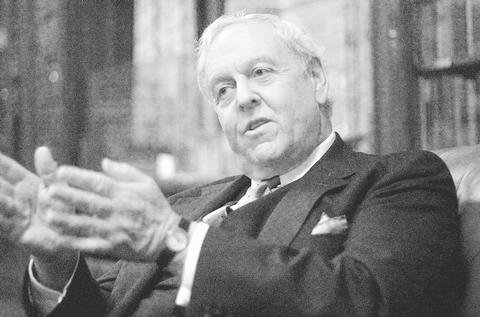
PHOTO: NY TIMES
"We just started talking from there," Stephens recalled. "And it became apparent that he was thinking about making a change, which I really couldn't believe."
After all, Towbin had been a partner of Thomas Unterberg, the chairman of C.E. Unterberg, Towbin, for most of his career. Their names had been connected their whole lives: Unterberg's father, Clarence, and Towbin's brother Belmont formed the first Unterberg Towbin partnership on Wall Street in 1931.
"It's an unusual event for a guy with his name on the door to walk out," Towbin acknowledged in an interview at the New York Yacht Club. "But it was really my brother's name anyway."
Just as unusual may have been Towbin's decision to join Stephens Inc as a managing director and lend his name to a firm that is one of the biggest investment banks in the South but is little-known in New York. Then again, Towbin seems to be full of contradictions.
He describes himself as a boy from Flatbush, Brooklyn, which is what he was when he started working summers on Wall Street as a teenager in the 1950s. But he collects art and owns a 94-foot wooden ketch that he said was built for the British writer Vita Sackville-West.
He appears comfortable buttoned up in a dark three-piece suit in the yacht club's library. But he is an avowed liberal who says he is close to Senator Edward M. Kennedy and talks about using his money to do good.
He has spent almost all of his adult life working for investment banks. But he rhapsodized about the two years he spent in Moscow running the Russian-American Enterprise Fund for the State Department in the early 1990s.
"It was a wonderful time," he said. "I literally would have spent the rest of my life there."
He enjoyed traveling around Russia and meeting everyone from politicians to the proletariat. "I once met Putin when he was deputy mayor of St. Petersburg," he said of Vladimir Putin, who is now Russia's president. Russia was filled with hard-working, freedom-loving people then, he said. Little Rock, which he called "a center of liberalism in America," reminds him of many places he visited in Russia, he said.
While running the fund, he married Jacqueline deChollet. He has three adult children by his first wife, Irene Towbin.
Clearly, he still chafes at having been relieved of his role in Russia by his superiors in Washington. The fund had been criticized for moving too cautiously, investing just US$30 million in Russian businesses while Towbin ran it. He said he appealed to Strobe Talbott, then deputy secretary of state, to no avail.
"I said, `I don't want to go back to Wall Street. I gave up a pretty good career to take this job,'" he recounted. He earned US$1 million annually before he went to Moscow, he said.
His last job on Wall Street before leaving for Russia had been at Lehman Brothers, where he was a managing director and co-head of technology investment banking. He and Unterberg joined Lehman in 1987 after a falling-out with their bosses at L.F. Rothschild & Co, a securities firm that merged with the original C.E. Unterberg, Towbin 10 years earlier.
Towbin and Unterberg had opposed their partners' plan to expand L.F. Rothschild's bond sales and trading operations. Before they departed, they established a reputation for taking promising technology companies public. In the early 1980s, L.F. Rothschild, Unterberg, Towbin was the leading underwriter of new stocks on Wall Street, surpassing Lehman, Goldman Sachs and Morgan Stanley. Among their clients were Intel, Cray Research, Cetus Corp, biotechnology pioneer.
Unterberg, now 71, left Lehman in 1990 and formed a partnership named C.E. Unterberg Towbin. When Towbin decided to return to Wall Street, he said, Unterberg persuaded him to reunite.
The firm prospered in the boom in new stock offerings in the late 1990s, but the depressed market for new stocks has taken a toll lately. Unterberg Towbin cut more than 30 of about 160 jobs last month.
"Tommy and I had a perfectly honest disagreement" about the firm's direction, Towbin said. He added that he did not want to be "second-guessing a partner of 40 years."
Unterberg did not return phone calls.
So, Towbin had started leaning toward retirement when Stephens called about making a donation. Towbin called H. Carl McCall, the New York state comptroller who was a classmate at Dartmouth College, and McCall recommended the Twin Towers Fund set up by Mayor Rudolph Giuliani. Stephens said his firm, which is looking for office space in Manhattan, is still deciding on a contribution and on how big a presence it wants to have in New York.
"We'll definitely have a much larger presence in terms of people but also, with someone of Bob's stature, a higher profile," he said.
R. Stephens said his family-owned firm would continue to concentrate on a few sectors, including biotechnology and new energy sources, and to specialize in investing its own capital in private companies in those sectors.
Among Towbin's goals is to find a replacement for himself in a few years. "I'm like a three-year bond -- with a low interest rate," he joked.
Meanwhile, he said, he will try to make money for Stephens and himself, so he can continue living well and trying to do good.
One of Towbin's heroes, he said, was Avery Fisher, who gave millions to Lincoln Center for the maintenance of Philharmonic Hall, which was renamed for him. Towbin said he once donated money to the Metropolitan Museum of Art to buy uniforms for its security guards.
"I've very much enjoyed having money but I've never had the kind of money that some of my friends have," he said.
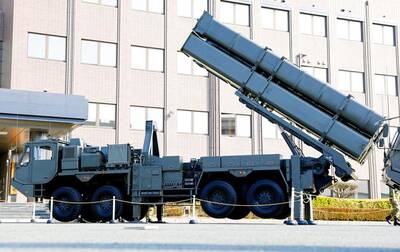
Japan has deployed long-range missiles in a southwestern region near China, the Japanese defense minister said yesterday, at a time when ties with Beijing are at their lowest in recent years. The missiles were installed in Kumamoto in the southern region of Kyushu, as Japan is attempting to shore up its military capacity as China steps up naval activity in the East China Sea. “Standoff defense capabilities enable us to counter the threat of enemy forces attempting to invade our country ... while ensuring the safety of our personnel,” Japanese Minister of Defense Shinjiro Koizumi said. “This is an extremely important initiative for
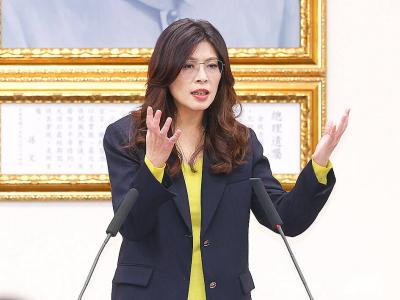
Chinese Nationalist Party (KMT) Chairwoman Cheng Li-wun (鄭麗文) today accepted an invitation from Chinese President Xi Jinping (習近平) to lead a delegation to China next month, saying she hopes to promote the peaceful development of cross-strait relations and bring stability to the Taiwan Strait. “I am grateful and happy to accept this invitation,” Cheng said in a statement from the KMT chairperson’s office. Cheng said she hopes both sides can work together to promote the peaceful development of cross-strait relations, enhance exchange and cooperation, bring stability to the Taiwan Strait and improve people’s livelihoods. At today's news conference, Cheng said any efforts to
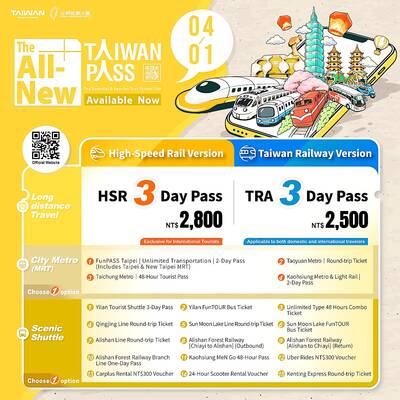
MORE POPULAR: Taiwan Pass sales increased by 59 percent during the first quarter compared with the same period last year, the Tourism Administration said The Tourism Administration yesterday said that it has streamlined the Taiwan Pass, with two versions available for purchase beginning today. The tourism agency has made the pass available to international tourists since 2024, allowing them to access the high-speed rail, Taiwan Railway Corp services, four MRT systems and four Taiwan Tourist Shuttles. Previously, five types of Taiwan Pass were available, but some tourists have said that the offerings were too complicated. The agency said only two types of Taiwan Pass would be available, starting from a three-day pass with the high-speed rail and a three-day pass with Taiwan Railway Corp. The former costs NT$2,800
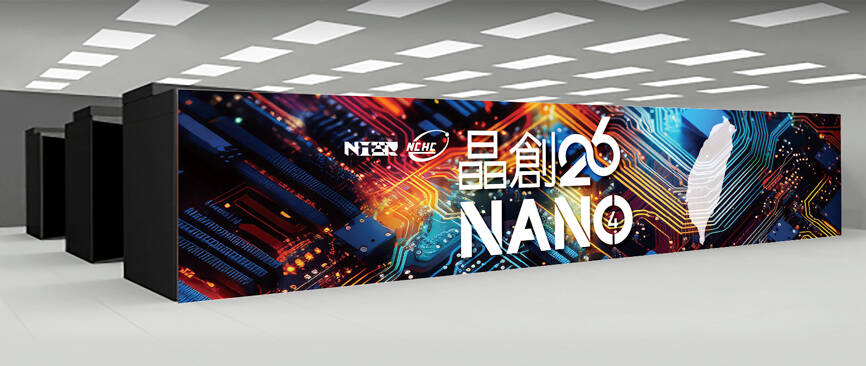
The nation’s fastest supercomputer, Nano 4 (晶創26), is scheduled to be launched in the third quarter, and would be used to train large language models in finance and national defense sectors, the National Center for High-Performance Computing (NCHC) said. The supercomputer, which would operate at about 86.05 petaflops, is being tested at a new cloud computing center in the Southern Taiwan Science Park in Tainan. The exterior of the server cabinet features chip circuitry patterns overlaid with a map of Taiwan, highlighting the nation’s central position in the semiconductor industry. The center also houses Taiwania 2, Taiwania 3, Forerunner 1 and


 RSS
RSS