


Spend a half hour downloading a single video file from the World Wide Wait and you'll know why broadband stocks are today's market darlings.
Though it has just 10,500 subscribers, investors value broadband cable access provider GigaMedia at US$3.32 billion -- or roughly US$316,000 per customer. That may seem expensive, but the market is betting the world will prefer the lightening downloads that broadband offers to the pedestrian pace of traditional dial-up access.
So there's little wonder, then, why the enthusiasm surrounding broadband access has spread to equipment makers. In recent weeks, Taiwanese investors have piled into the shares of hardware manufacturers seen benefitting most from the broadband boom.
Askey Computer (亞旭電腦), a maker of 56k modems that's shifting into the cable and asymmetric digital subscriber line (ADSL) markets, closed at NT$106 Friday, up 57 percent since early February. Zinwell Corp (兆赫電子), which makes set-top boxes for cable and satellite companies, finished at NT$319, up 38.7 percent.
Meanwhile, the TAIEX has dipped 6.1 percent over the same period of time.
Another big mover has been ZyXEL Communications (
ZyXEL finished Friday at NT$160, up 57.6 percent since early February.
"They're all small caps. It's easy for this group to move," said Steve Lin, equities analysts at National Securities Corp.
This has been especially so in the last two weeks, as investors -- frustrated with the overall market's low liquidity -- turned their attention to stocks with small floats, which rise easily on little volume.
But investors have also been bidding up broadband equipment makers because of the industry's growth prospects.
"At least for the next two or three years, the whole industry is expected to grow 30 or 40 percent annually," Lin said.
According to US research firm Cahners In-Stat Group, the number of broadband subscribers worldwide is expected to reach almost 9 million by the end of this year. By 2003, the number is expected to reach roughly 49 million.
Also driving the growth at home is the coming liberalization of the telephone market which, in addition to Askey, Zinwell and ZyXEL, is expected to benefit telecom equipment makers such as Foxlink (
"These companies will benefit from the fixed-line issue," said Jackie Chen, equities analysts at National Securities Corp.
Later this month, the Ministry of Transport and Communications (
Because the winners face a powerful incumbent, analysts expect them to first concentrate their billions in investment in developing high-speed data delivery networks -- an area of high growth and where Chunghwa is the weakest.
But Chunghwa isn't about to let a couple of start-ups eat its lunch. To help alleviate a six-month waiting list for its high-speed services, the phone carrier is building out its ADSL services.
Earlier this month, Chunghwa announced Askey and ZyXEL would be providing it with ADSL equipment, with a large portion of the contract going to ZyXEL.
"They got about 70 percent of that bid," Chen estimated, adding that Chunghwa alone could account for up to NT$800 million of ZyXEL's revenue this year.
Prior to the contract announcement, National had estimated the company would rake in NT$2.3 billion in sales this year.
But not everyone is bullish on broadband equipment makers.
"This is the hardware business," said Jovi Chen, equities analyst at China Securities. "It's not worth paying such a high P/E multiple."
In addition, Chen noted that while Askey's foray into cable modems has investors excited, the product line is expected to account for just 10 percent of sales this year, up from 5 percent last year.
"That doesn't really justify the share price," Chen said.
Furthermore, much of the equipment making work is still going to the big players such as Alcatel and Cisco, who have the R&D clout to define where the industry is going. Alcatel and Cisco today command an estimated 50 percent share of the ADSL modem market.
"They don't have that kind of dominant position," Chen said of Askey and ZyXEL. "In the end, they have to follow the big guys ... At the current price, we don't recommend buying."
Chen said an appropriate price for ZyXEL would be between NT$100 and NT$120. For Askey, about NT$100 would be a fair price, he said.
On Zinwell, Chen didn't offer a price range, but he did say the company's prospects are promising.
"Their product mix is quite impressive, and they've got good customer partnerships," Chen said.
And the segment of the broadband market Zinwell is in looks ready to explode. While satellite multimedia services was just a US$100 million industry in 1997, some estimates put the market at US$37 billion by 2007.
Over the long-run, satellite services could account for between 5 percent and 10 percent of the broadband market.
As a maker of set-top boxes for the satellite industry, Zinwell stands to benefit.
Chen also said he liked Zinwell for its strong R&D team, whose players are often poached from satellite equipment maker Microelectronics Technology (
But for that matter, National's Jackie Chen said she liked ZyXEL for the same reason. According to her estimates, ZyXEL spends approximately 10 percent of its revenues on research and development each year.

Japan has deployed long-range missiles in a southwestern region near China, the Japanese defense minister said yesterday, at a time when ties with Beijing are at their lowest in recent years. The missiles were installed in Kumamoto in the southern region of Kyushu, as Japan is attempting to shore up its military capacity as China steps up naval activity in the East China Sea. “Standoff defense capabilities enable us to counter the threat of enemy forces attempting to invade our country ... while ensuring the safety of our personnel,” Japanese Minister of Defense Shinjiro Koizumi said. “This is an extremely important initiative for

Chinese Nationalist Party (KMT) Chairwoman Cheng Li-wun (鄭麗文) today accepted an invitation from Chinese President Xi Jinping (習近平) to lead a delegation to China next month, saying she hopes to promote the peaceful development of cross-strait relations and bring stability to the Taiwan Strait. “I am grateful and happy to accept this invitation,” Cheng said in a statement from the KMT chairperson’s office. Cheng said she hopes both sides can work together to promote the peaceful development of cross-strait relations, enhance exchange and cooperation, bring stability to the Taiwan Strait and improve people’s livelihoods. At today's news conference, Cheng said any efforts to

MORE POPULAR: Taiwan Pass sales increased by 59 percent during the first quarter compared with the same period last year, the Tourism Administration said The Tourism Administration yesterday said that it has streamlined the Taiwan Pass, with two versions available for purchase beginning today. The tourism agency has made the pass available to international tourists since 2024, allowing them to access the high-speed rail, Taiwan Railway Corp services, four MRT systems and four Taiwan Tourist Shuttles. Previously, five types of Taiwan Pass were available, but some tourists have said that the offerings were too complicated. The agency said only two types of Taiwan Pass would be available, starting from a three-day pass with the high-speed rail and a three-day pass with Taiwan Railway Corp. The former costs NT$2,800
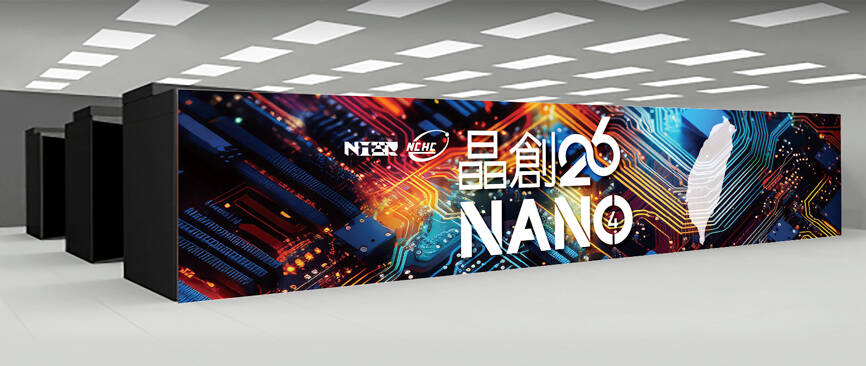
The nation’s fastest supercomputer, Nano 4 (晶創26), is scheduled to be launched in the third quarter, and would be used to train large language models in finance and national defense sectors, the National Center for High-Performance Computing (NCHC) said. The supercomputer, which would operate at about 86.05 petaflops, is being tested at a new cloud computing center in the Southern Taiwan Science Park in Tainan. The exterior of the server cabinet features chip circuitry patterns overlaid with a map of Taiwan, highlighting the nation’s central position in the semiconductor industry. The center also houses Taiwania 2, Taiwania 3, Forerunner 1 and


 RSS
RSS