

Nvidia Corp chief executive officer Jensen Huang (黃仁勳) expects to sell twice as many chips in the coming year, fueled by the spread of artificial intelligence (AI) across different industries.
AI is of great benefit to a variety of sectors, Huang told reporters on the sidelines of an event convened by King Charles III in Scotland on Thursday. Nvidia is the top seller of AI accelerators, chips used to develop and run AI models.
Huang is maintaining his bullish stance at a time when concerns are growing about AI. Industry leaders have discussed slowing down development of the technology over fears that it might be potentially dangerous. Huang said that companies need to take responsibility and make sure their AI software and services are safe before releasing them.
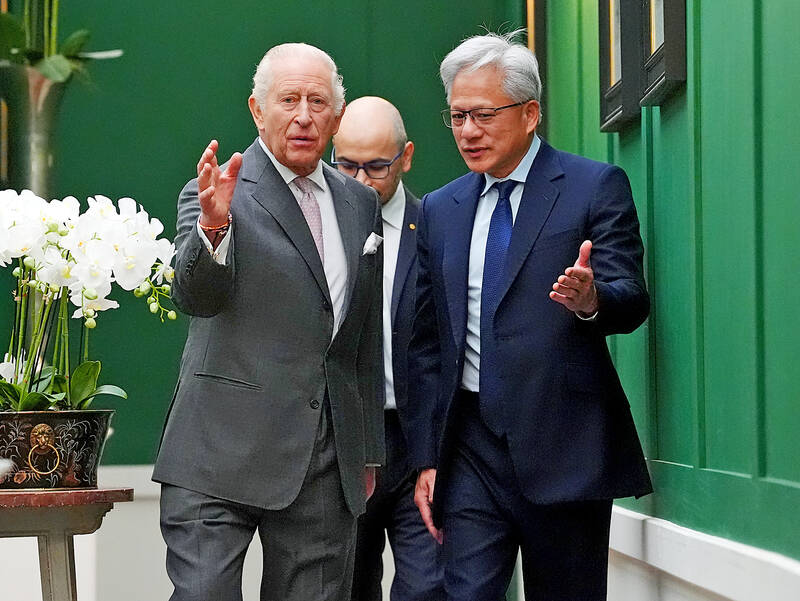
Photo: AP
Last month, Nvidia projected sales growth of 70 percent in its next fiscal year. It said at the time that revenue could double if the company had enough supply to meet surging demand.
King Charles III convened technology leaders and other influential figures for a summit focused on the mounting risks of AI, a topic that has captivated the globe this week. While the executives there did not publicly commit to any changes, some addressed the safety concerns directly.
“Those of us building AI must test systems rigorously,” Huang said in brief remarks at the royal event on Thursday. “When a product is not safe enough, we should hold it back.”
Joining Huang in Scotland were OpenAI’s chief financial officer Sarah Friar and Google DeepMind cofounder Demis Hassabis. Anthropic PBC public affairs chief Tino Cuellar also joined the AI forum at Dumfries House, along with leaders from other technology companies, nonprofits and educational institutions, including Beijing’s Tsinghua University.
“Those in our world who value our humanity and its vital moral component are anxiously seeking your reassurance that we will not lose control of our destiny,” the King said in his opening remarks. The gathering was designed to discuss how the technology could be “harnessed in ways to benefit society and the natural world,” Buckingham Palace said in a statement.
The event is timely. Anthropic CEO Dario Amodei triggered a global debate about the escalating risks of AI in a weekend essay calling for a slowdown in frontier model development. OpenAI CEO Sam Altman agreed with the essay’s conclusions, while Hassabis described it as the “right path forward.” Meanwhile, Nvidia’s Huang disagreed with a slowdown or further regulation. Over the past week, two AI researchers quit Google DeepMind and Anthropic, claiming that the technology could be lethal.
Those concerns have caused jitters among lawmakers and the wider public internationally.
At the summit, King Charles posed two key questions: “First, how can we harness the benefits of AI, with safety at its heart. And, second, how can we build international cooperation and consensus to achieve this, so no nation is left behind — and the future of mankind protected?”
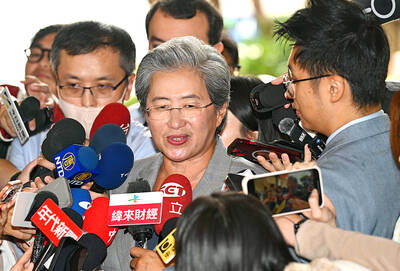
SILICON ISLAND: When asked about geopolitical tensions, Lisa Su said that ‘Taiwan is absolutely critical to the semiconductor supply chain, and very, very critical for AMD’ Advanced Micro Devices Inc (AMD) CEO Lisa Su (蘇姿丰) yesterday said the company plans to “substantially” increase manufacturing capacity next year through its Taiwanese supply chain, particularly with Taiwan Semiconductor Manufacturing Co (TSMC, 台積電), as surging demand for artificial intelligence (AI)-related processors continues to outstrip supply. “It is a very exciting time right now for all kinds of compute, and especially on the CPU [central processing unit] side,” Su said during a visit to Taiwan. “The overall market has increased a lot in 2026, and so we have also increased our own supply and capacity in 2026, but I can

INFRINGEMENT: The investigation comes after a complaint from Vicor Corp, with the company seeking a limited exclusion order as well as cease-and-desist orders, the ITA said The US International Trade Commission (USITC) has launched a Section 337 investigation naming Taiwanese technology companies, including Hon Hai Precision Industry Co (鴻海), Delta Electronics Inc (台達電) and Quanta Computer Inc (廣達), as respondents. The Ministry of Economic Affairs (MOEA) pledged assistance if needed. The USITC said on Friday in a statement that it had voted to institute an investigation under Section 337 of the US Tariff Act of 1930 into certain vertical power delivery systems, related components and computing devices incorporating such systems. The investigation covers 20 companies from Taiwan, China, Germany and the US, the commission said, adding that it
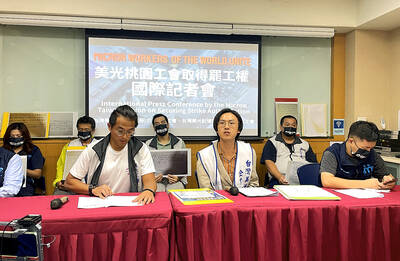
INDUSTRY STANDARD: Most global semiconductor companies have tied employee bonuses directly to corporate profits, the union said, urging Micron to do the same Micron Memory Taiwan Co’s (台灣美光) Taoyuan union secured strike authorization yesterday after a six-day vote, ramping up pressure on management to build a reasonable profit-sharing mechanism. Before the strike, the Taoyuan union “encourages” members to join a protest in Taipei on Oct. 19, union chairman Jerry Lin (林哲瑞) told a news conference in Taipei. The union did not rule out staging a snap strike, Lin said. The union has 2,258 registered members, with 88.3 percent backing the strike, he said. The vote comes as Micron’s board of directors is meeting today and tomorrow in the US. The union expects the board to respond
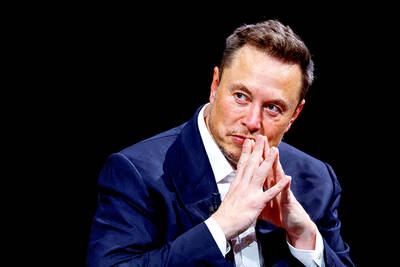
Elon Musk said his business empire would build and operate Terafab independently, quashing speculation about industry leader Taiwan Semiconductor Manufacturing Co (TSMC, 台積電) swooping in to run his ambitious chipmaking venture. Based in Texas, the Terafab project is Musk’s effort to break into the business of fabricating chips, in service of his companies Tesla Inc and SpaceXAI. While Musk had said that he was in discussions with TSMC, the trillionaire clarified in an X post yesterday that the only matter under consideration is for TSMC potentially leasing some part of the planned site and would not involve any operational role. “Maybe TSMC


 RSS