

Advanced Micro Devices Inc (AMD) CEO Lisa Su (蘇姿丰) yesterday said the company plans to “substantially” increase manufacturing capacity next year through its Taiwanese supply chain, particularly with Taiwan Semiconductor Manufacturing Co (TSMC, 台積電), as surging demand for artificial intelligence (AI)-related processors continues to outstrip supply.
“It is a very exciting time right now for all kinds of compute, and especially on the CPU [central processing unit] side,” Su said during a visit to Taiwan. “The overall market has increased a lot in 2026, and so we have also increased our own supply and capacity in 2026, but I can say that the demand is even higher than our supply, so we continue to ramp up supply.”
Su’s trip was aimed at securing more capacity from AMD’s local supply chain partners — including TSMC, backend providers and substrate suppliers — to expand overall supply.
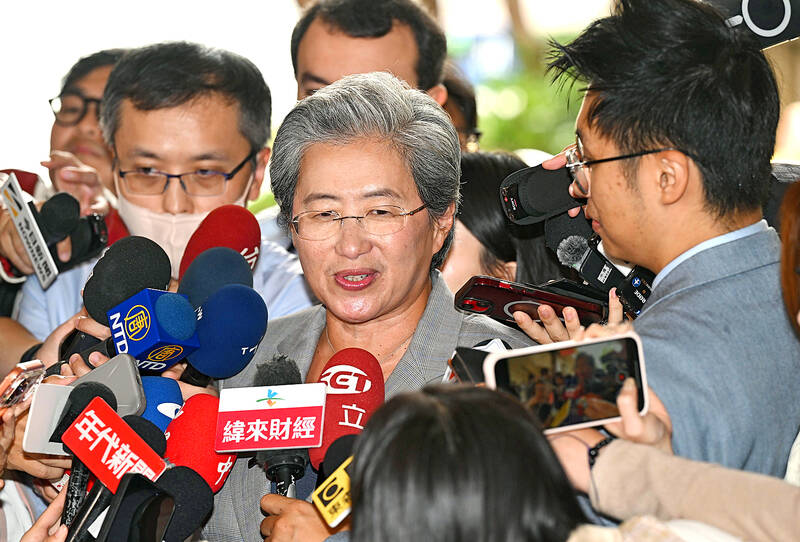
Photo: CNA
“We have been able to increase our supply as we have gone through 2026, and we’re going to substantially increase our supply in 2027,” Su said. “But we can definitely use more, and so that’s one of the reasons that I’m here is to make sure that our entire supply chain ramps up their capability on CPUs, GPUs [graphics processing units], and all of the AI demand.”
AMD used to plan for one or two years ahead, but now it must look to three, four or five years into the future to ensure “all of the capacity comes up at the same time,” Su said.
“TSMC has worked with all of us, and we are very close partners. There’s very, very high demand for the next several years. We can see very high demand, and so we need more advanced wafer capacity,” she said.
TSMC’s US facility in Arizona has done extremely well for AMD, and the company looks forward to more capacity worldwide to meet high demand, she added.
Asked if Powertech Technology Inc’s (力成科技) fan-out panel-level packaging could serve as an alternative to TSMC’s supply-constrained chip-on-wafer-on-substrate (CoWoS) technology, Su said that “CoWoS and advanced packaging are absolutely critical for our high-performance computing [portfolio] moving forward.”
“We’re always looking at packaging innovation across the supply chain and how we bring more capacity on board,” she added.
Chip packaging service provider Powertech in July said that it would start shipping AI chips utilizing its advanced PLP technology for AMD in the second half of next year.
Asked about AMD’s contingency plans for possible supply disruptions due to the Taiwan Strait tensions, Su said that “Taiwan is absolutely critical to the semiconductor supply chain, and very, very critical for AMD.”
AMD encourages all partners to have geographic diversity, she said.
As demand for AMD’s chips continues rising, the company would invest more in Taiwan’s supply chain partners, Su said.
In May, AMD made a US$10 billion investment commitment to ensure the availability of advanced packaging technology capacity over the next three years.
The company’s local elevated fan-out bridge ecosystem partners include Powertech and chip testing and packaging service providers ASE Technology Holding Co (日月光投控) and its subsidiary, Siliconware Precision Industries Co (矽品精密).
Substrate suppliers Unimicron Technology Corp (欣興電子), Nan Ya Printed Circuit Board Corp (南亞電路板) and Kinsus Interconnect Technology Corp (景碩) are also part of the ecosystem.
Su visited TSMC, Acer Inc (宏碁), Asustek Computer Inc (華碩), Hon Hai Precision Industry Co (鴻海精密) and Quanta Computer Inc (廣達) yesterday.

Bankers in Hong Kong skipped the summer break as an artificial intelligence (AI)-fueled rush for capital sent share sales to a record, defying a bruising selloff in the city’s stocks. Initial public offerings (IPOs), placements and block trades raised US$47.5 billion in July to last month, the biggest haul ever for the period, data compiled by Bloomberg showed. That pushed fundraising this year above US$92 billion and within reach of the US$112.5 billion record set in 2021. AI has been at the heart of Hong Kong’s deal revival, but this summer brought a new level of intensity. Chinese companies raised ever-larger sums
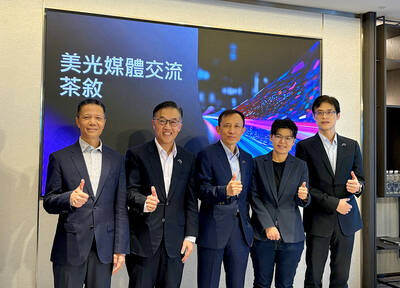
BOOMING BUSINESS: Memory supply constraints would be even more severe in 2027 and 2028, prompting customers to sign long-term supply agreements, Micron said Micron Memory Taiwan Co (台灣美光) yesterday said it is accelerating memorychip capacity expansion amid growing artificial intelligence (AI)-driven demand, with its accumulated investment in Taiwan reaching NT$1.6 trillion (US$50.2 billion) as of June. The company’s investment in Taiwan has surged over the past four years, with recent spending equaling the total invested over the past 25 years, Micron Taiwan chairman Donghui Lu (盧東暉) told a media briefing in Taipei. “The launch of ChatGPT and the outbreak of COVID triggered increasing demand for memory chips. Since then, demand has gathered pace rapidly, with only a brief pause in 2023 when a major downturn”
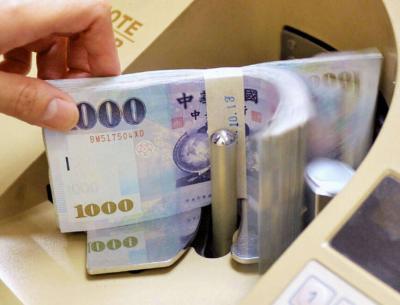
Taiwan ranked fifth worldwide in net financial assets per capita at the end of last year, averaging 164,470 euros (US$186,219), a report released this week by Germany-based Allianz Research said. Taiwan's ranking remained unchanged from the previous year, trailing only the US, Switzerland, Denmark and Singapore, Allianz’s Global Wealth Report said. In the report, Allianz assessed household assets and liabilities in nearly 60 countries, finding that global household wealth reached a record high last year, while the rise of artificial intelligence and market gains made asset ownership increasingly important in determining who benefits from wealth creation. Global financial assets reached a record 268.4

Apple Inc is set to sell about 6 million units of the iPhone Duo this year, Counterpoint Research said, offering the first estimate for how the company’s inaugural foldable device would fare. The figure, more typical of the niche foldable segment than Apple’s usual smartphone sales, is contingent on how well the company ramps up production of the new hardware, Counterpoint senior analyst Ivan Lam (林科宇) said. Priced at US$1,999 and set for a release this month, the iPhone Duo sits atop the Apple lineup and carries industry wide hopes for stoking greater interest and sales of foldables. Market researcher IDC Corp


 RSS
RSS