

The US International Trade Commission (USITC) has launched a Section 337 investigation naming Taiwanese technology companies, including Hon Hai Precision Industry Co (鴻海), Delta Electronics Inc (台達電) and Quanta Computer Inc (廣達), as respondents. The Ministry of Economic Affairs (MOEA) pledged assistance if needed.
The USITC said on Friday in a statement that it had voted to institute an investigation under Section 337 of the US Tariff Act of 1930 into certain vertical power delivery systems, related components and computing devices incorporating such systems.
The investigation covers 20 companies from Taiwan, China, Germany and the US, the commission said, adding that it has not made any decision on the merits of the case.
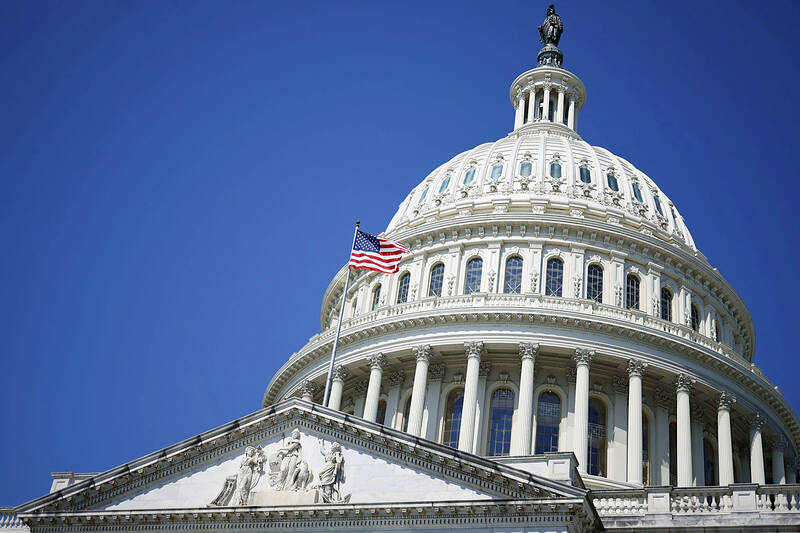
Photo: Bloomberg
The probe involves power delivery technology used in artificial intelligence servers, MOEA International Trade Administration (ITA) said.
In addition to the three Taiwanese companies, China-based Luxshare Precision Industry Co (立訊精密) and Foxconn Industrial Internet Co (工業富聯) are also named as respondents, it said.
The ITA said the investigation stems from a complaint filed by Massachusetts-based power technology company Vicor Corp on Sept. 9, with a supplemental filing submitted the following day.
Vicor alleges that vertical power delivery systems, related components and computing devices incorporating the technology infringe its patents when imported into or sold in the US. The company is seeking a limited exclusion order to bar imports of the accused products, as well as cease-and-desist orders to prevent their sale in the US.
The ITA said Section 337 investigations typically take 12 to 16 months to complete. If the complainant prevails, the USITC can issue exclusion and cease-and-desist orders restricting the affected products from entering or being sold in the US market.
The agency described the case as a patent dispute between private companies being handled under US Section 337 procedures. It said the government respects the legal process and would continue to monitor developments, maintain contact with the affected companies and provide assistance if necessary.
The USITC said the case would be assigned to an administrative law judge, who is to hold a hearing and issue an initial determination on whether Section 337 has been violated before the commission conducts its own review.
The commission said it would set a target date for completing the investigation within 45 days after instituting the probe.
Any remedial orders issued would take effect immediately and become final after 60 days unless disapproved by the US Trade Representative, it added.
Delta Electronics said it places great importance on intellectual property rights and compliance with laws in all jurisdictions, and would respond to the investigation through legal procedures to safeguard its rights and interests.
The company declined to comment further because the case is now in legal proceedings, but said its products are not currently affected by the investigation.
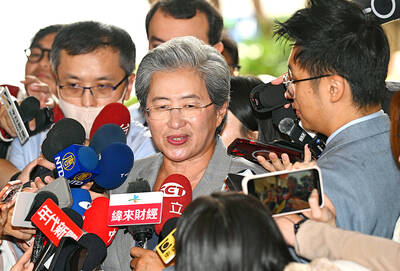
SILICON ISLAND: When asked about geopolitical tensions, Lisa Su said that ‘Taiwan is absolutely critical to the semiconductor supply chain, and very, very critical for AMD’ Advanced Micro Devices Inc (AMD) CEO Lisa Su (蘇姿丰) yesterday said the company plans to “substantially” increase manufacturing capacity next year through its Taiwanese supply chain, particularly with Taiwan Semiconductor Manufacturing Co (TSMC, 台積電), as surging demand for artificial intelligence (AI)-related processors continues to outstrip supply. “It is a very exciting time right now for all kinds of compute, and especially on the CPU [central processing unit] side,” Su said during a visit to Taiwan. “The overall market has increased a lot in 2026, and so we have also increased our own supply and capacity in 2026, but I can
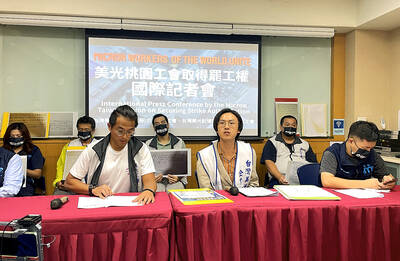
INDUSTRY STANDARD: Most global semiconductor companies have tied employee bonuses directly to corporate profits, the union said, urging Micron to do the same Micron Memory Taiwan Co’s (台灣美光) Taoyuan union secured strike authorization yesterday after a six-day vote, ramping up pressure on management to build a reasonable profit-sharing mechanism. Before the strike, the Taoyuan union “encourages” members to join a protest in Taipei on Oct. 19, union chairman Jerry Lin (林哲瑞) told a news conference in Taipei. The union did not rule out staging a snap strike, Lin said. The union has 2,258 registered members, with 88.3 percent backing the strike, he said. The vote comes as Micron’s board of directors is meeting today and tomorrow in the US. The union expects the board to respond

Elon Musk said his business empire would build and operate Terafab independently, quashing speculation about industry leader Taiwan Semiconductor Manufacturing Co (TSMC, 台積電) swooping in to run his ambitious chipmaking venture. Based in Texas, the Terafab project is Musk’s effort to break into the business of fabricating chips, in service of his companies Tesla Inc and SpaceXAI. While Musk had said that he was in discussions with TSMC, the trillionaire clarified in an X post yesterday that the only matter under consideration is for TSMC potentially leasing some part of the planned site and would not involve any operational role. “Maybe TSMC

JUMPING STOCKS: Chipmaker TSMC accounts for about 41 percent of the TAIEX’s weighting, and its gain alone contributed about 595 points to the index’s advance Taiwanese stocks surged to a record high yesterday, buoyed by a rebound in US technology shares after surprisingly weak US jobs data reduced expectations for another US Federal Reserve rate hike, analysts said. The benchmark TAIEX rose 1,236.3 points, or 2.55 percent, to close at 49,712.04, extending its record-closing streak. Trading value expanded to NT$1.151 trillion (US$36.2 billion), signaling strong buying momentum, with heavyweight shares such as Taiwan Semiconductor Manufacturing Co (TSMC, 台積電) leading the gains. The rally followed data released on Friday showing US nonfarm payrolls increased by just 29,000 last month, far below the expected 84,000, while the


 RSS
RSS