

Cable and connector maker Wonderful Hi-Tech Co (萬泰科技) yesterday said it expects revenue this year to exceed its NT$10 billion (US$316.1 million) target, driven by demand for high-speed cables for artificial intelligence (AI) servers, low Earth orbit (LEO) satellite products and other high-margin products.
The optimism comes as the company reported revenue in the first half of the year grew 21.4 percent year-on-year to NT$5.47 billion, and it has seen progress in customers’ certification of its high-speed, power and leak-detection cables for AI servers, Wonderful Hi-Tech said.
The company has monthly production capacity of about 10 million meters of bare high-speed cables used in AI servers, with PCIe 6.0 cables as its core products, Wonderful Hi-Tech chief executive officer Steve Chang (張程雅) said during an earnings conference in Taipei.

Photo: Meryl Kao, Taipei Times
AI rack upgrades continue to drive faster data transmission and higher copper cable spending per rack, suggesting optical and copper connectivity would grow in parallel rather than one replacing the other, a trend expected to support the company’s growth, Chang said.
Customers in Southeast Asia and India have been inquiring about high-current power cables for 800 volt DC architectures and small-diameter flexible rubber cables used inside bus bars, he said.
For liquid cooled applications, the company has developed leak-detection cables that can be wrapped around coolant pipes to detect minor leaks and trigger immediate alerts to prevent damage to server motherboards and printed circuit boards, Chang said.
Mass shipments of all AI server-related cable products are expected to begin by year-end, he said.
The company is expanding its high-end copper cable applications into physical AI, particularly robots and drones, which require high-speed vision, network, actuator and control cables, he added.
The company also supplies AC power cords, router cables and other network cables used in ground equipment for LEO satellites, Chang said.
Satellite cables are expected to double their revenue contribution from last year and account for about 7 percent of total revenue this year, he said.
Wonderful Hi-Tech has budgeted about NT$400 million for capital expenditure this year, with NT$250 million earmarked for the third-phase expansion of high-speed cable production in Thailand. Operations should begin in April next year, Chang said.
The company reported net profit in the first half of the year rose 37.1 percent year-on-year to NT$249 million. Earnings per share increased to NT$1.35 from NT$1.10 a year earlier.

Silicon photonics would play a dominant role next year and make chip-level co-packaged optics (CPO) packaging possible, Taiwan Semiconductor Manufacturing Co (TSMC, 台積電) said yesterday. “For years, critics questioned the reliability of CPO. The doubts are being thoroughly dismantled by real-world data and market validation,” TSMC vice president of advanced packaging technology development K.C. Hsu (徐國晉) said at a SEMI forum in Taipei. The company is on track to enter production of CPO later this year, Hsu said in another forum arranged by Imec in Taipei yesterday, about four months after TSMC announced its progress in CPO development in May.
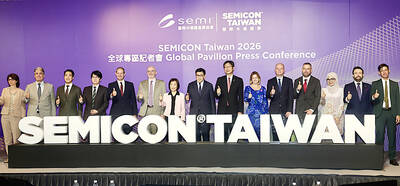
EXPANDING: Firms are accelerating commercialization of the technologies as the industry moves beyond chip-level speeds to upgrading rack-to-rack links, SEMI said Silicon photonics and copackaged optics (CPO), technologies seen as critical to meeting the surging bandwidth demands of artificial intelligence (AI) infrastructure, would be among the main themes at the Semicon Taiwan trade show, which opens on Wednesday, event organizer SEMI said yesterday. The forum runs until Friday at the Taipei Nangang Exhibition Center, with technical forums beginning today. The event is expected to set a record in terms of the number of participants, SEMI said, projecting more than 1,300 exhibitors from 65 countries across 4,300 booths and more than 100,000 attendees. Optical interconnects underpinning AI infrastructure would be one of the highlights, with

In China’s hilly Guizhou Province, a cluster of European-style buildings complete with clock tower and multi-arched bridge emits a low, permanent hum — a clue to its unexpected identity as tech giant Huawei’s largest data center. The town-like complex is unique in design, but not in its placement. Dozens of data centers have been constructed in the southwestern province in the past few years. They are part of a government strategy that has seen much of the digital infrastructure for breakneck artificial intelligence (AI) development across China’s eastern seaboard established in the country’s less populated, rural west. The build-out is ongoing. China
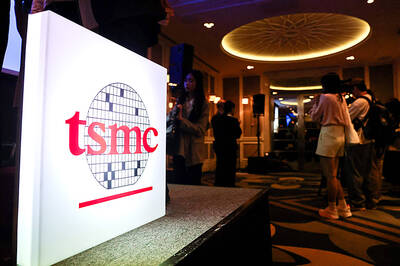
Taiwan Semiconductor Manufacturing Co (TSMC, 台積電) has increased its second-quarter employee bonuses by more than 50 percent from a year earlier, as the world’s largest contract chipmaker posted record earnings in the three-month period. TSMC distributed its second-quarter bonuses to employees on Friday. Employee bonuses for the April-to-June period totaled NT$36 billion (US$1.14 billion), the chipmaker’s financial data showed. During the period, TSMC posted NT$706.56 billion in net profit, up 77.4 percent from a year earlier and 23.4 percent from a quarter earlier. Second-quarter earnings per share (EPS) rose to NT$27.25, compared with NT$15.36 a year earlier and NT$22.08 in the first


 RSS
RSS