

The idyllic beaches of the Greek islands have long been a draw for European holidaymakers, but now a new wave of US tourists is waking up to their charms, driven by stars such as Madonna, Katy Perry and Justin Bieber.
Madonna celebrated her 68th birthday on Corfu, sharing a whirl of parties and boat trips against the backdrop of the island’s landscape with her 20 million Instagram followers — earning her rapturous thanks from Greek Prime Minister Kyriakos Mitsotakis.
Experts say the huge popularity of Christopher Nolan blockbuster The Odyssey would only fuel the trend — although holidaymakers would be hoping for an easier trip home than the one endured by Matt Damon’s eponymous hero.

Photo: Reuters
While Madonna partied in Corfu, singer Bieber took his family to the Peloponnese. Perry and her partner, former Canadian prime minister Justin Trudeau, sampled the delights of Mykonos.
All of them chronicled their holidays on social media, giving the Greek tourism industry a massive hit of free advertising.
“Celebrities are voting for the Greek summer,” public broadcaster ERT said on Friday, devoting a report to these stars from across the Atlantic.
The newspaper To Vima hailed this “new wave” which “helps raise the country’s international profile.” It cited British singer and actress Rita Ora, who shared her holidays with “her millions of followers” on social media.
Paris Tsartas, professor of tourism development at Harokopio University in Athens, said the deluge of celebrity endorsements gave Greece a powerful boost as a summer destination — particularly with the lucrative US market.
After a decade of financial woes following the debt crisis of 2009, and the devastation of the COVID-19 pandemic, Greece has pumped money into the sector, which accounts for about 30 percent of GDP, according to the Association of Greek Tourism Enterprises (SETE).
About 1.55 million Americans visited Greece last year. They represent the third-largest source of tourism income, behind Germans and Britons, with an average spend per tourist of 1,120 euros (US$1,308), the SETE said.
To answer growing demand, the main US airlines have significantly stepped up services, American Airlines increasing its total available seat capacity by 30 percent compared with summer last year. This year Greece has had its highest-ever number of direct flights, with 103 connections a week between Athens and the US.
Some of the new enthusiasm is driven by the phenomenon of “set-jetting” — people traveling to a destination after seeing it in a movie or TV series.
In a study for online travel giant Expedia, 13 percent of American travelers said they had booked a trip after seeing a destination on screen. Greece is well acquainted with the trend, after hit musical Mamma Mia, filmed on the island of Skopelos, triggered a jump in US visitors.
Tsartas predicted The Odyssey would have a similar impact. Key parts of Nolan’s film, recounting the travails of Damon’s Odysseus as he seeks to return home from the Trojan war to his wife Penelope, played by Anne Hathaway, were shot in the Peloponnese region of Greece. According to EasyJet Holidays, cited by ,
Bookings to Greece increased by 18 percent in the weeks following the film’s international release in last month, the Greek newspaper Kathimerini cited EasyJet Holidays as saying.
There is more small-screen exposure for Greece’s charms to come: Netflix had chosen the country for the sixth season of hit series Emily in Paris.
Lead actress Lily Collins and the rest of the production team were spotted this spring in Mykonos, Paros and Santorini.
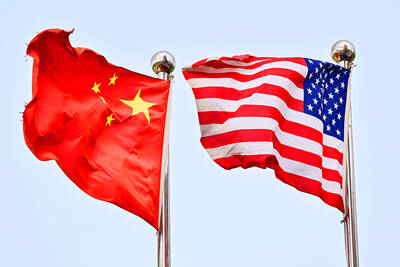
RIVAL BLOCS: Kazakhstan has signed on to the US’ and China’s AI frameworks; a US official said it was difficult to see how a country can be trusted while in a competing pact The US is preparing to tell dozens of countries they must pick sides in the artificial intelligence (AI) race with China, warning they would be excluded from a US-led AI coalition if they also sign up for Beijing’s competing framework, according to a US official and an internal draft reviewed by Reuters. Washington last year launched the Pax Silica initiative aimed at securing supply chains for AI models, semiconductors and critical minerals, amid a fierce technology rivalry with Beijing. About two dozen countries have joined, including Kazakhstan, a key potential source of critical minerals that has also joined China’s coalition,
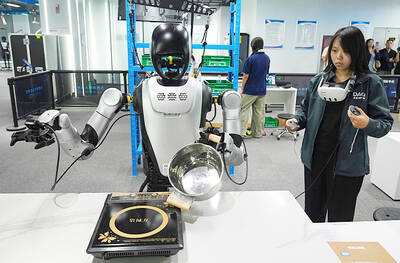
Taiwan and other technology democracies have a "golden but narrowing" three-to-five-year window to lay the foundations for an advanced robotics supply chain outside China, particularly for humanoid robots, a Taiwan-based researcher said yesterday. A report released on Monday by the Research Institute for Democracy, Society and Emerging Technology (DSET) examines China-West competition in physical artificial intelligence (AI) and Taiwan’s potential role in developing alternatives to Chinese robot supply chains. Humanoid robots remain unproven, meaning China’s lead in shipments currently has a limited impact on the real economy, Nathanael Cheng (鄭秉信), a policy analyst in the DSET Economic Security Program, said in a

Shares in King Slide Works Co (川湖科技), a supplier of rail kits used in servers, rose by the 10 percent daily limit to close at a record high of NT$13,750 yesterday, making the company’s founder and chairman Lin Tsung-chi (林聰吉) Taiwan’s richest person for the time being. According to Forbes’ real-time billionaires list, Lin’s net worth increased by US$1.8 billion to US$19.5 billion yesterday, surpassing Yageo Corp (國巨) founder and chairman Pierre Chen (陳泰銘), who has a net worth of US$17.4 billion, to become the richest person in Taiwan and rank 140th globally. The stock’s rally came as the company on Friday
Outbound investments approved by Taiwan’s government surged more than 200 percent from the year before during the January to July period largely due to Taiwan Semiconductor Manufacturing Co (TSMC, 台積電) spending heavily overseas, the Ministry of Economic Affairs reported on Monday. The Department of Investment Review approved US$61.26 billion of outbound investment in 395 applications during the first seven months of this year, up 208.43 percent from a year earlier, the ministry said in a statement. Significant growth came after TSMC, the world’s largest contract chipmaker, secured approval to raise capital investments by US$20 billion in its US subsidiary TSMC Arizona Corp,


 RSS
RSS