

Outbound investments approved by Taiwan’s government surged more than 200 percent from the year before during the January to July period largely due to Taiwan Semiconductor Manufacturing Co (TSMC, 台積電) spending heavily overseas, the Ministry of Economic Affairs reported on Monday.
The Department of Investment Review approved US$61.26 billion of outbound investment in 395 applications during the first seven months of this year, up 208.43 percent from a year earlier, the ministry said in a statement.
Significant growth came after TSMC, the world’s largest contract chipmaker, secured approval to raise capital investments by US$20 billion in its US subsidiary TSMC Arizona Corp, which runs the company’s wafer fab operations in Arizona, and to invest US$30 billion in the Cayman Islands-registered TSMC Global Ltd, which is in charge of the chipmaker’s financial investments worldwide, the ministry said.
Photo: Liao Chia-ning, Taipei Times
The growth also reflected a decision by DRAM chip supplier Nanya Technology Corp (南亞科技) to raise investments by US$1 billion in its Cayman Islands-incorporated subsidiary and another plan by power management solution provider Lite-On Technology Corp (光寶科技) to invest US$919 million into its US unit, the ministry added.
Meanwhile, foreign direct investment (FDI) into Taiwan over the same period rose 78.13 percent from a year earlier to US$13.92 billion, largely due to Singapore-registered Micron Semiconductor Asia Pte Ltd, a subsidiary of Micron Technology Ltd, obtaining the green light to invest US$7.45 billion in Taiwan, the ministry said.
In addition, Netherlands-based MIT Hai Long Wind Power BV secured approval to invest US$1.05 billion in Taiwan for green power development, it said.
The ministry said Singapore ranked as the largest foreign investor in Taiwan from January to last month, investing US$8.66 billion, or 62.23 percent of FDI, ahead of the Netherlands with US$1.22 billion, the British Virgin Islands and the Cayman Islands with US$1.19 billion combined, the US with US$781 million and the UK with US$630 million.
The ministry added that the local electronics component industry was the largest destination for these foreign investors, accounting for 56.27 percent of total approved FDI, before the financial and insurance industry, which made up 16.9 percent of total.
For China-bound investments, Taiwanese investors secured approval for US$572 million of applications during the seven-month period, down 25.87 percent from a year earlier, the ministry said.
The Chinese retail and wholesale, electronics component, financial and insurance businesses were the top three destinations for Taiwanese investors during that time, it said.
Over the same period, the government approved 12 applications filed by Chinese investors wishing to invest US$4.07 million in Taiwan, diving 95.97 percent from a year earlier, it added.

E.Sun Financial Holding Co (玉山金控) is to formally merge with Mercuries Life Insurance Co (三商美邦人壽) on Sept. 1, creating Taiwan’s fifth-largest listed financial holding company by assets and paving the way for capital injections totaling NT$22 billion (US$683.91 million) to shore up the insurer’s finances, top executives said yesterday. “The first priority after the merger will be to bring the insurer back to health through capital injections,” E.Sun Financial chairman Joseph Huang (黃男州) told a news conference in Taipei ahead of a company earnings call. E.Sun would inject NT$16 billion into Mercuries Life next month, followed by another NT$6 billion next year,
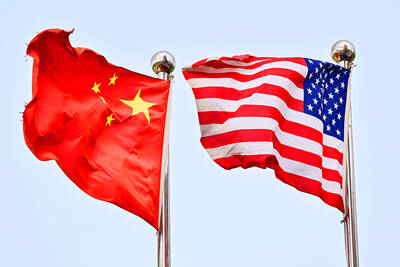
RIVAL BLOCS: Kazakhstan has signed on to the US’ and China’s AI frameworks; a US official said it was difficult to see how a country can be trusted while in a competing pact The US is preparing to tell dozens of countries they must pick sides in the artificial intelligence (AI) race with China, warning they would be excluded from a US-led AI coalition if they also sign up for Beijing’s competing framework, according to a US official and an internal draft reviewed by Reuters. Washington last year launched the Pax Silica initiative aimed at securing supply chains for AI models, semiconductors and critical minerals, amid a fierce technology rivalry with Beijing. About two dozen countries have joined, including Kazakhstan, a key potential source of critical minerals that has also joined China’s coalition,
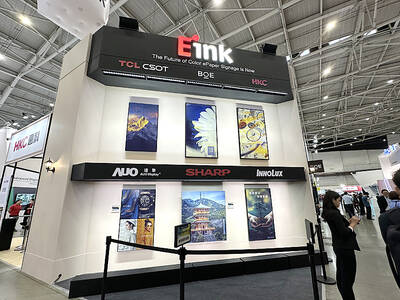
E-PAPER TRANSITION: Increasing memory prices have caused customers to postpone new product launches, with the firm expecting a later peak season this year E Ink Holdings Inc (元太科技), the world’s biggest e-paper display supplier, yesterday revised downward its revenue growth forecast for this year to between 10 and 15 percent, from the 20 to 25 percent it previously estimated, as surging memory prices are hurting demand for its e-readers and e-notes. The company had expected a transition from monochrome color e-paper displays to color displays used in e-readers and e-notes to continue this year. However, rapidly increasing memory prices have caused customers to postpone new product launches, while demand for models from previous generations has also dwindled due to higher prices, E Ink said. That created

China’s top foundry, Semiconductor Manufacturing International Corp (SMIC, 中芯), yesterday said that artificial intelligence (AI)-related demand would continue to underpin orders for its production and that it had raised prices for its most sought-after capacity. SMIC co-chief executive officer Zhao Haijun (趙海軍) said on an earnings call that the firm raised prices following negotiations with customers in the first quarter and that it would charge more for wafers processed in the third quarter. “We believe we’ve reached top-tier industry standards in these areas,” Zhao said. “Since there’s still a big gap between industry-leading wafer prices and SMIC’s current prices, we need to


 RSS
RSS