

Taiwan Power Co (Taipower, 台電) yesterday said higher natural gas prices caused by the Middle East conflict could increase its fuel costs by more than NT$120 billion (US$3.76 billion) this year.
The estimated cost increase comes as CPC Corp, Taiwan (台灣中油) has raised natural gas prices for power generators aggressively this year, with hikes of about 50 percent in April and May and another hike of 10 percent this month, Taipower vice president Tsai Chih-meng (蔡志孟) said during a news conference in Taipei.
Taipower’s data showed that the average purchasing price of natural gas in the first seven months of this year stood at NT$16.2910 per cubic meter, up from the average of NT$13.8013 per cubic meter last year.
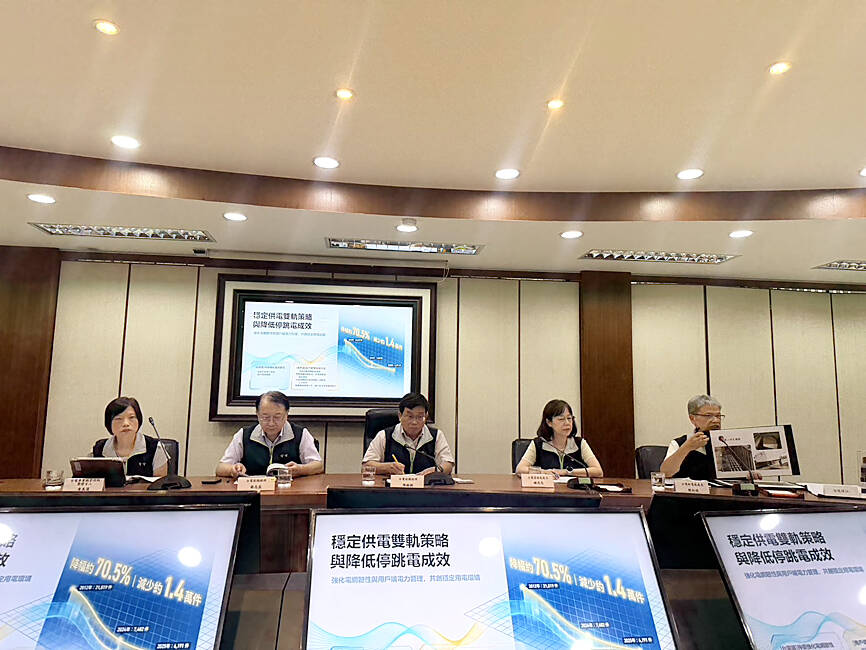
Photo: Lin Jing-hua, Taipei Times
Every NT$1 increase in natural gas per cubic meter adds about NT$25 billion to Taipower’s annual fuel costs, company data showed.
If natural gas prices remain at this month’s level through the end of this year, Taipower’s fuel costs could rise by an additional NT$15 billion a month, pushing the full-year increase above NT$120 billion, Tsai said.
The state-run utility’s fuel costs in the first half of the year increased by more than NT$42 billion from pre-war levels, Taipower spokesperson Huang Mei-lien (黃美蓮) said.
Taipower posted a first-half loss of NT$25.7 billion, bringing accumulated losses to NT$376.4 billion, she said, adding that the utility needs the government’s support to improve its finances and stabilize electricity prices for households and industry.
Taipower plans to submit its fuel and operating cost data to a government-convened electricity price review committee next month, which would decide whether electricity rates should be adjusted in October, Huang said.
Separately, Taipower plans to spend NT$5 billion over the next two years to replace aging underground power cables in 18 districts across the six special municipalities, as growing urban electricity demand increases the risk of equipment failures, Taipower vice president Chen Ming-shu (陳銘樹) said.
Underground cable replacement brings major challenges, including limited underground space, cable damage from frequent public construction works, and construction constraints due to narrow roads, excavation bans and permit requirements, Taipower said.
While replacing aging cables, Taipower would build new conduits and backup lines in stages to reduce disruptions during construction and strengthen grid resilience, it said.
For long-term urban grid planning, Taipower is promoting shared utility conduits, with about 130 projects under way nationwide to ease future expansion and maintenance of underground infrastructure, the company said.
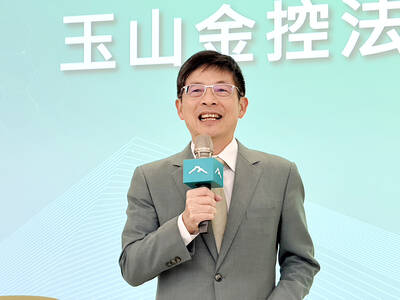
E.Sun Financial Holding Co (玉山金控) is to formally merge with Mercuries Life Insurance Co (三商美邦人壽) on Sept. 1, creating Taiwan’s fifth-largest listed financial holding company by assets and paving the way for capital injections totaling NT$22 billion (US$683.91 million) to shore up the insurer’s finances, top executives said yesterday. “The first priority after the merger will be to bring the insurer back to health through capital injections,” E.Sun Financial chairman Joseph Huang (黃男州) told a news conference in Taipei ahead of a company earnings call. E.Sun would inject NT$16 billion into Mercuries Life next month, followed by another NT$6 billion next year,
RIVAL BLOCS: Kazakhstan has signed on to the US’ and China’s AI frameworks; a US official said it was difficult to see how a country can be trusted while in a competing pact The US is preparing to tell dozens of countries they must pick sides in the artificial intelligence (AI) race with China, warning they would be excluded from a US-led AI coalition if they also sign up for Beijing’s competing framework, according to a US official and an internal draft reviewed by Reuters. Washington last year launched the Pax Silica initiative aimed at securing supply chains for AI models, semiconductors and critical minerals, amid a fierce technology rivalry with Beijing. About two dozen countries have joined, including Kazakhstan, a key potential source of critical minerals that has also joined China’s coalition,
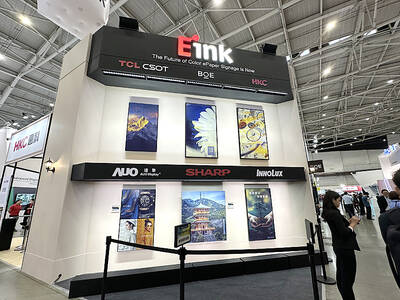
E-PAPER TRANSITION: Increasing memory prices have caused customers to postpone new product launches, with the firm expecting a later peak season this year E Ink Holdings Inc (元太科技), the world’s biggest e-paper display supplier, yesterday revised downward its revenue growth forecast for this year to between 10 and 15 percent, from the 20 to 25 percent it previously estimated, as surging memory prices are hurting demand for its e-readers and e-notes. The company had expected a transition from monochrome color e-paper displays to color displays used in e-readers and e-notes to continue this year. However, rapidly increasing memory prices have caused customers to postpone new product launches, while demand for models from previous generations has also dwindled due to higher prices, E Ink said. That created

China’s top foundry, Semiconductor Manufacturing International Corp (SMIC, 中芯), yesterday said that artificial intelligence (AI)-related demand would continue to underpin orders for its production and that it had raised prices for its most sought-after capacity. SMIC co-chief executive officer Zhao Haijun (趙海軍) said on an earnings call that the firm raised prices following negotiations with customers in the first quarter and that it would charge more for wafers processed in the third quarter. “We believe we’ve reached top-tier industry standards in these areas,” Zhao said. “Since there’s still a big gap between industry-leading wafer prices and SMIC’s current prices, we need to


 RSS
RSS