

Work to build Google’s planned Indian data center hub is in full swing, with a hillside above the site stripped to red earth and terraced into steps, but mounting opposition from environmentalists is creating hurdles for the US tech giant’s US$15 billion project.
The southern state of Andhra Pradesh, governed by an ally of Indian Prime Minister Narendra Modi who has hailed the project as historic and transformational, has denied allegations that the project was fast-tracked without weighing risks to water supplies and wildlife.
However, the growing opposition could become an early test for Google’s biggest-ever investment in India, which is facing several legal challenges over its impact on water supplies and proximity to a wildlife sanctuary that is home to leopards and pangolins.
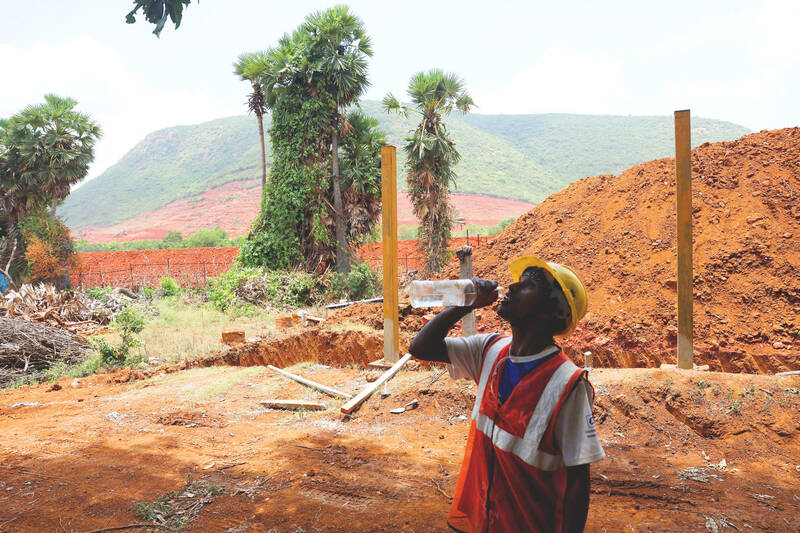
Photo: Reuters
In the past few weeks, activists and children have marched in Visakhapatnam city, holding banners saying “We cannot drink DATA” and painting handcuffs on the Google logo, social media posts show.
On Sunday last week, Reuters attended a public gathering where activists chalked out plans for holding door-to-door awareness campaigns and beach protests in coming days.
“Development should not be at the cost of livelihood of the people,” Raja Rama Mohan Roy, founder of non-profit Green Visakha said at the event where he presented statistics on Visakhapatnam’s stressed water supply and demand. The government says the city receives 410 million liters of water a day from its reservoirs and rivers, against a requirement of 480 million. Rationing of water supplies is common in the city with a population of 2.5 million people. Rapid data center buildouts are facing pushback around the world for using huge quantities of water to cool servers and of electricity. The potential impact is even more pronounced in a developing nation such as India. In the US, opponents held 142 protests across 42 states in July raising similar concerns.
The state’s top court on Monday asked the government to defend against allegations levelled by activist group Jal Biradari (Water Community), which says the project would strain water availability by putting stress on a nearby reservoir.
The Andhra Pradesh High Court would next hear the public interest litigation on August 24.
The state in its statement to Reuters called activists’ concerns about the project incorrect and misleading, but added it is open to feedback.
“Such protests are their democratic right. In case any of these claims are legitimate, government is committed to engage and provide factual clarifications and suitable redressal,” it said.
Google in a statement to Reuters said its project would be developed in line with applicable laws and it would implement “advanced air cooling to protect vital local water resources.” Work was well underway when Reuters visited on Monday, earthmovers still working the exposed ground.
The tech giant has partnered with Indian billionaire Gautam Adani’s group which would build the marquee project which is seen creating up to 188,000 jobs. Adani did not respond to queries.
The public interest litigation in Andhra Pradesh High Court also raises concerns that heavy construction and noise impact the Kambalakonda Wildlife Sanctuary located just 860m away.
Asked about the site’s proximity to the sanctuary, the state said it was farther away than the law requires. Google added it would be implementing sound-dampening measures to ensure “we are a quiet, unobtrusive neighbor.”
The project also faces three more cases filed at India’s environmental court by the Human Rights Forum, demanding a halt. They say that the state cleared the project without properly assessing the impact of drawing supply from a rural drinking-water scheme, court documents show.
The state added that no water for rural or residential purposes would be used for the upcoming data centers, and the water reservoir nearby would also not be used. During the Sunday event, Green Visakha said it was concerned about the government’s promise of “guaranteed” water supplies for 20 years to the project as the city already faces shortages.
“Who will be the sufferers? The people,” Roy said.

When rival hedge funds face catastrophic losses, billionaire investor Ken Griffin has a habit of identifying opportunities and showing up with a checkbook. Citadel’s founder last week reprised his role as one of Wall Street’s rescue buyers, stepping in to salvage California hedge fund Situational Awareness as it buckled under souring bets on artificial intelligence (AI) stocks. Amid market rumblings that at least one firm was in trouble, Griffin, 57, assembled his top lieutenants to investigate, five people with knowledge of the matter said. By Wednesday morning, Citadel executives had reached out to Situational Awareness, and Griffin spoke directly with Leopold Aschenbrenner,
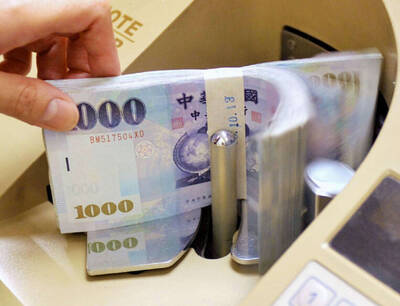
TURBULENCE: Many Taiwanese exporters took advantage of a weaker NT dollar to sell US dollars, while the central bank stepped in late to smooth volatility, dealers said The New Taiwan dollar fell sharply against the US dollar yesterday to move past NT$32.4 due to large fund outflows, dealers said. The NT dollar dropped NT$0.146 to close at NT$32.438 against the US dollar after reaching an intraday low of NT$32.490. Combined turnover on the Taiwan Foreign Exchange and the Cosmos Foreign Exchange totaled US$3.92 billion. The US dollar initially weakened against the NT dollar as the US dollar index, which tracks the greenback against the currencies of six major trading partners, declined, dealers said. However, after the US dollar dipped to the day’s low, the currency rebounded as
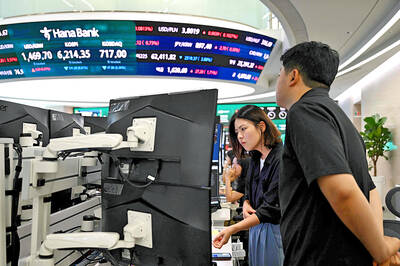
South Korea’s retail traders have long built a reputation for embracing risk. Yet last month’s punishing reversal in the KOSPI has rattled even this hardened group, reaching the limits of their tolerance for volatility. Some, such as Kim Han-kyung, a Seoul resident in her 30s, have resolved never to invest again, while others are comparing the US$3.9 trillion market to a casino. Retail investors sold a record amount of KOSPI shares on Friday despite a stunning 18 percent rebound. The gauge still capped a 22 percent loss for the month, the steepest since the global financial crisis. Signs of frustration are everywhere

Artificial intelligence (AI) is reshaping competition in the semiconductor industry, shifting the focus beyond transistor scaling to advanced packaging, materials and system-level integration, experts said at a Taiwan-Japan semiconductor technology forum yesterday. Taiwan Semiconductor Research Institute (TSRI) deputy director-general Tsai Hann-huei (蔡瀚輝) said advances in process-node technology were slowing while AI-driven demand for bandwidth continued to surge. “Leadership will come from system-level co- optimization, not transistor scaling alone,” Tsai said at the forum in Taipei. Future semiconductor systems will increasingly need to combine computing, sensing, power management and connectivity for applications such as automobiles, humanoid robots, AI glasses and drones, according to his


 RSS
RSS