

Hot air balloons fly at the Bristol international balloon festival in England yesterday.

Photo: AFP
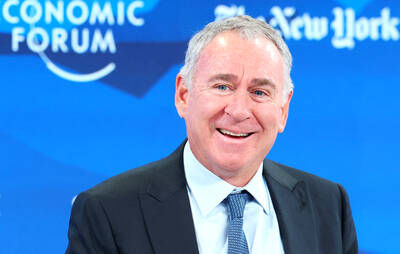
When rival hedge funds face catastrophic losses, billionaire investor Ken Griffin has a habit of identifying opportunities and showing up with a checkbook. Citadel’s founder last week reprised his role as one of Wall Street’s rescue buyers, stepping in to salvage California hedge fund Situational Awareness as it buckled under souring bets on artificial intelligence (AI) stocks. Amid market rumblings that at least one firm was in trouble, Griffin, 57, assembled his top lieutenants to investigate, five people with knowledge of the matter said. By Wednesday morning, Citadel executives had reached out to Situational Awareness, and Griffin spoke directly with Leopold Aschenbrenner,
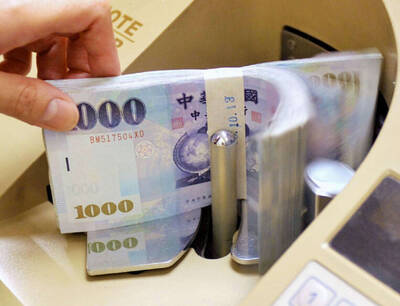
TURBULENCE: Many Taiwanese exporters took advantage of a weaker NT dollar to sell US dollars, while the central bank stepped in late to smooth volatility, dealers said The New Taiwan dollar fell sharply against the US dollar yesterday to move past NT$32.4 due to large fund outflows, dealers said. The NT dollar dropped NT$0.146 to close at NT$32.438 against the US dollar after reaching an intraday low of NT$32.490. Combined turnover on the Taiwan Foreign Exchange and the Cosmos Foreign Exchange totaled US$3.92 billion. The US dollar initially weakened against the NT dollar as the US dollar index, which tracks the greenback against the currencies of six major trading partners, declined, dealers said. However, after the US dollar dipped to the day’s low, the currency rebounded as
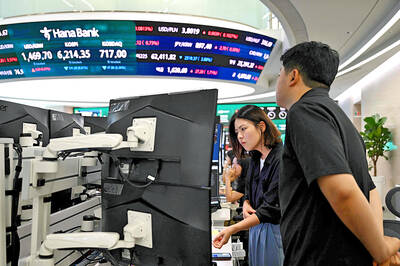
South Korea’s retail traders have long built a reputation for embracing risk. Yet last month’s punishing reversal in the KOSPI has rattled even this hardened group, reaching the limits of their tolerance for volatility. Some, such as Kim Han-kyung, a Seoul resident in her 30s, have resolved never to invest again, while others are comparing the US$3.9 trillion market to a casino. Retail investors sold a record amount of KOSPI shares on Friday despite a stunning 18 percent rebound. The gauge still capped a 22 percent loss for the month, the steepest since the global financial crisis. Signs of frustration are everywhere
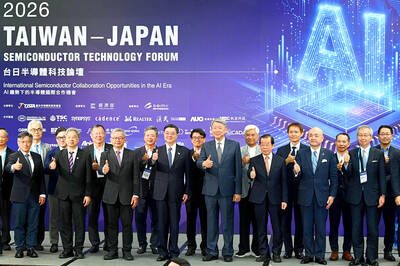
Artificial intelligence (AI) is reshaping competition in the semiconductor industry, shifting the focus beyond transistor scaling to advanced packaging, materials and system-level integration, experts said at a Taiwan-Japan semiconductor technology forum yesterday. Taiwan Semiconductor Research Institute (TSRI) deputy director-general Tsai Hann-huei (蔡瀚輝) said advances in process-node technology were slowing while AI-driven demand for bandwidth continued to surge. “Leadership will come from system-level co- optimization, not transistor scaling alone,” Tsai said at the forum in Taipei. Future semiconductor systems will increasingly need to combine computing, sensing, power management and connectivity for applications such as automobiles, humanoid robots, AI glasses and drones, according to his


 RSS
RSS