

Delta Electronics Inc (台達電) yesterday said it plans to step up investment in microgrid solutions over the next few years as it expands its energy infrastructure business.
Delta had mainly focused on improving the energy efficiency of individual products, but it has shifted toward optimizing energy efficiency at the system level in the past few years, company chairman Ping Cheng (鄭平) said at the company’s 55th sustainability summit in Taoyuan.
Rising electricity demand from artificial intelligence data centers, factories and other buildings is making power supply and demand increasingly complex, underscoring the importance of microgrids, which help optimize electricity usage and boost supply resilience, Cheng said.
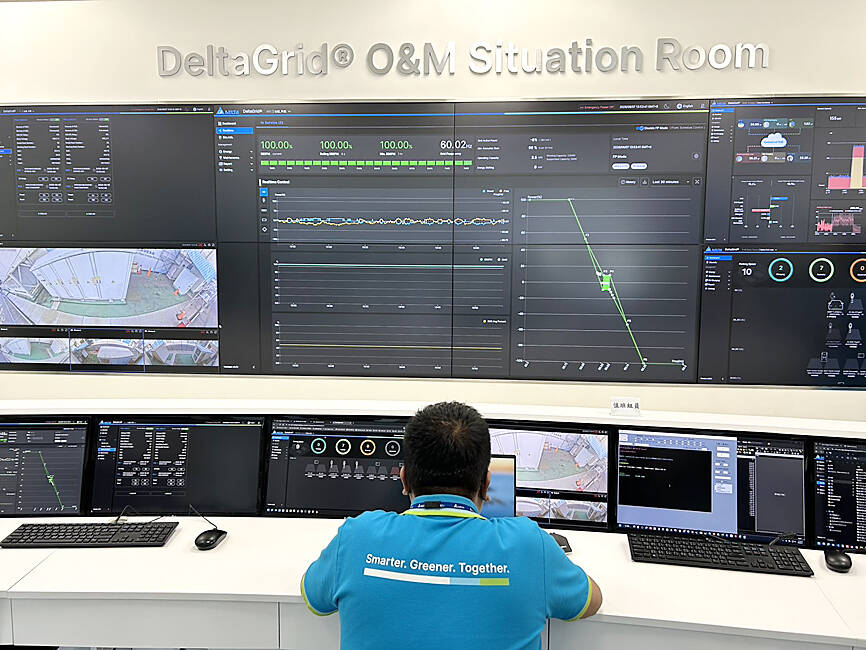
Photo: Meryl Kau, Taipei Times
A microgrid is a localized power system that integrates power generation, energy storage and energy management systems to supply and manage electricity for facilities such as data centers and factories. It can operate alongside the main power grid while helping users manage peak demand, improve power stability and maintain operations during grid disruptions.
Delta has begun providing power grid-related services to power plants in Taiwan and overseas, said Guo Shan-shan (郭珊珊), Delta’s chief brand officer and vice chairwoman of the Delta Electronics Foundation.
As large-scale AI data center operators in the US are required to build in-house power plants, demand for microgrids would increase from that market, Guo said.
The key challenges are to determine what supporting infrastructure is needed for microgrid deployment, she said.
For example, solid-state transformers (SSTs) can significantly reduce the number of voltage conversion stages in a power system, but require a different power architecture from conventional systems, she added.
Adoption could accelerate once the benefits of such technologies outweigh the costs and barriers of upgrading power infrastructure, Guo said.
SSTs have already been widely adopted in China, where Delta has shipped products to several customers, as newly built infrastructure makes it easier to adopt new power architectures, she said.
Major cloud service providers in the US are also testing SSTs, with more progress expected next year, she said.
Power stability and resilience remain key challenges for AI data centers, which could increasingly integrate SSTs, hydrogen fuel cells, energy storage and energy management systems, Delta general manager of Taiwan sales Daniel Chang (張立業) said.
As AI infrastructure expands, computing capacity and power supply would need to be planned together, taking into account power availability, quality and resilience, Delta Data Center Segment Business Unit general manager Richard Chan (詹智強) said.
Microgrids can support on-site power generation and power management for data centers while improving supply stability and reducing transmission and distribution losses by managing energy closer to where it is consumed, Chan said.
Such applications could also extend to other power-intensive facilities, including an AI data center that Delta helped an IC design company build in Miaoli County’s Tongluo Township (銅鑼), with the facility having about 18 megawatts of capacity, Chang said.
Delta yesterday also unveiled an AI liquid-cooling validation center, a 3,306m2 laboratory with 7-megawatt testing capacity for liquid-to-liquid and liquid-to-air cooling systems, as well as a centralized control center that monitors customers’ energy storage systems around the clock to ensure stable operation of microgrid projects.
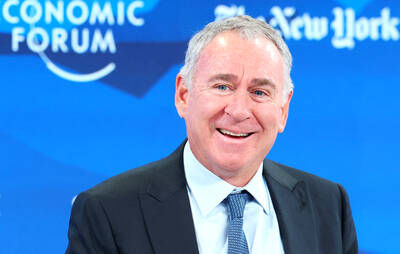
When rival hedge funds face catastrophic losses, billionaire investor Ken Griffin has a habit of identifying opportunities and showing up with a checkbook. Citadel’s founder last week reprised his role as one of Wall Street’s rescue buyers, stepping in to salvage California hedge fund Situational Awareness as it buckled under souring bets on artificial intelligence (AI) stocks. Amid market rumblings that at least one firm was in trouble, Griffin, 57, assembled his top lieutenants to investigate, five people with knowledge of the matter said. By Wednesday morning, Citadel executives had reached out to Situational Awareness, and Griffin spoke directly with Leopold Aschenbrenner,
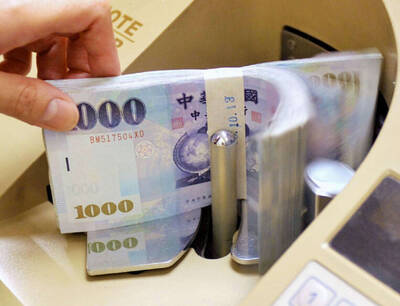
TURBULENCE: Many Taiwanese exporters took advantage of a weaker NT dollar to sell US dollars, while the central bank stepped in late to smooth volatility, dealers said The New Taiwan dollar fell sharply against the US dollar yesterday to move past NT$32.4 due to large fund outflows, dealers said. The NT dollar dropped NT$0.146 to close at NT$32.438 against the US dollar after reaching an intraday low of NT$32.490. Combined turnover on the Taiwan Foreign Exchange and the Cosmos Foreign Exchange totaled US$3.92 billion. The US dollar initially weakened against the NT dollar as the US dollar index, which tracks the greenback against the currencies of six major trading partners, declined, dealers said. However, after the US dollar dipped to the day’s low, the currency rebounded as
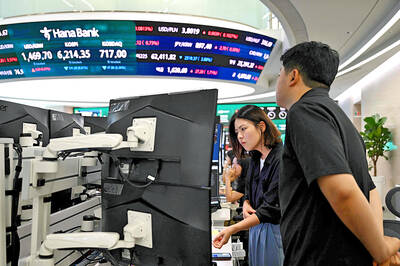
South Korea’s retail traders have long built a reputation for embracing risk. Yet last month’s punishing reversal in the KOSPI has rattled even this hardened group, reaching the limits of their tolerance for volatility. Some, such as Kim Han-kyung, a Seoul resident in her 30s, have resolved never to invest again, while others are comparing the US$3.9 trillion market to a casino. Retail investors sold a record amount of KOSPI shares on Friday despite a stunning 18 percent rebound. The gauge still capped a 22 percent loss for the month, the steepest since the global financial crisis. Signs of frustration are everywhere
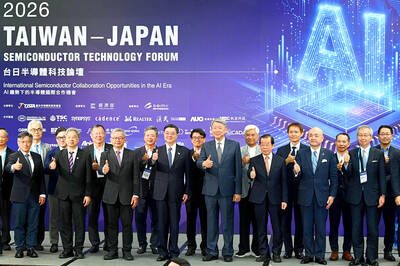
Artificial intelligence (AI) is reshaping competition in the semiconductor industry, shifting the focus beyond transistor scaling to advanced packaging, materials and system-level integration, experts said at a Taiwan-Japan semiconductor technology forum yesterday. Taiwan Semiconductor Research Institute (TSRI) deputy director-general Tsai Hann-huei (蔡瀚輝) said advances in process-node technology were slowing while AI-driven demand for bandwidth continued to surge. “Leadership will come from system-level co- optimization, not transistor scaling alone,” Tsai said at the forum in Taipei. Future semiconductor systems will increasingly need to combine computing, sensing, power management and connectivity for applications such as automobiles, humanoid robots, AI glasses and drones, according to his


 RSS
RSS