


Taiwan Semiconductor Manufacturing Co’s (TSMC, 台積電) American depositary receipts (ADRs) rose over 4 percent in the US overnight, but its spot in the global market capitalization rankings fell one notch to No. 7, according to data released by companiesmarketcap.
The data showed shares in aerospace firm Space Exploration Technologies Corp (SpaceX) jumped almost 20 percent to overtake TSMC for sixth place on Monday in the second trading session following its initial public offering (IPO), the biggest-ever in the world.
On Monday, TSMC’s ADRs rose 4.12 percent to close at US$441.40 with its market cap rising to US$2.289 trillion on the announcement of a peace deal between the US and Iran slated to be signed on Friday as well as continued optimism over artificial intelligence development.
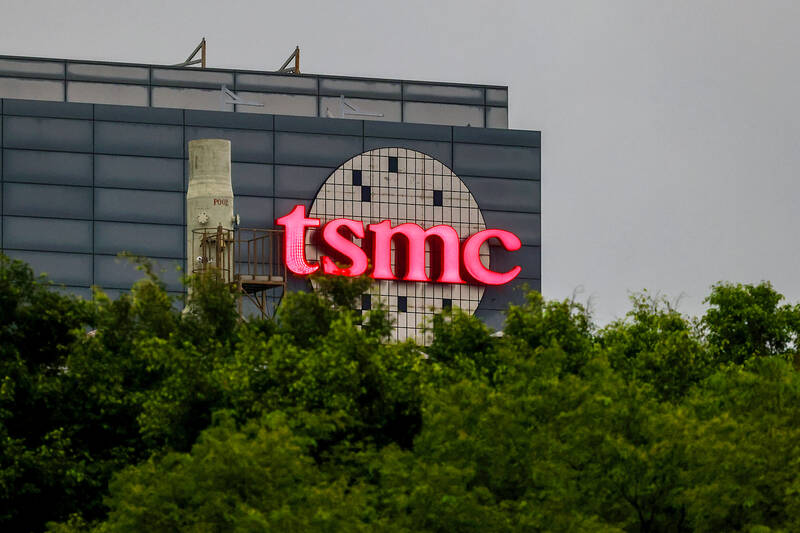
Photo: EPA
SpaceX launched its IPO on Friday last week, raising about US$75 billion in the largest public offering on record. Its shares surged 19.22 percent on the first day of trading and gained another 19.6 percent on the second day to close at US$192.50, boosting the company’s market capitalization to US$2.519 trillion.
That pushed SpaceX ahead of TSMC and within striking distance of fifth-ranked Amazon.com Inc, which had a market capitalization of US$2.646 trillion, according to the data.
In Taipei, TSMC shares continued an uptrend, rising 1.05 percent to close at the day’s high of NT$2,400 (US $76.05) yesterday, serving as a driver of the local main board, which gained 0.94 percent.
Meanwhile, Fubon Financial Holding Co (富邦金控) said in an announcement posted on the Taiwan Stock Exchange over the weekend that its wholly-owned subsidiary Fubon Life Insurance Co (富邦人壽)spent US$6.75 million or US$135 per share — not including trading commissions, related tax payments and other fees — to subscribe 50,000 common shares of SpaceX, which issued a total of 555.6 million shares for its IPO.
According to Fubon Financial, Fubon Life used its own funds to invest in SpaceX.
On Tuesday last week, Fubon Financial said in a filing to the exchange that it had planned to subscribe up to US$600 million worth of SpaceX shares. However, the real spending was much lower as the IPO was 5-6 times oversubscribed, analysts said.
Currently, Fubon Financial is the only listed company to disclose that its life insurance unit participated in SpaceX’s IPO.
Fubon Financial chairman Richard Tsai (蔡明興) told reporters after the annual general meeting on Friday that SpaceX is developing low-orbit satellite communications and space data centers, indicating the stock has great potential to grow.
Taiwan Semiconductor Manufacturing Co (TSMC, 台積電) yesterday reported record revenue of NT$416.975 billion (US$13.17 billion) for last month, putting the world’s largest contract chipmaker on track to set a record for quarterly revenue. Last month’s figure surpassed March’s record NT$415.19 billion and represented increases of 1.5 percent from April and 30.1 percent from a year earlier. For the first five months of the year, TSMC generated NT$1.96 trillion in revenue, up 30 percent year-on-year, it said in a statement. TSMC has forecast second-quarter revenue of between US$39 billion and US$40.2 billion, representing sequential growth of about 10 percent and year-on-year growth of about
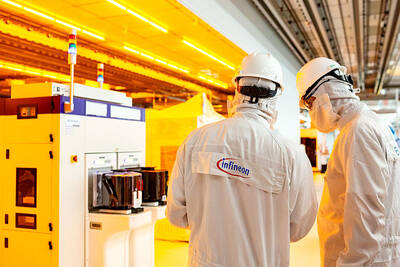
Infineon Technologies AG is preparing to open its largest single investment, a 5 billion euro (US$5.8 billion) semiconductor factory built with the help of EU subsidies, as the bloc seeks to boost chip production. The power chip fab, which is an extension of the German company’s Dresden campus, is scheduled to open on July 2, Infineon chief operating officer Alexander Gorski said this week at the site. The project is a major recipient of EU Chips Act funds, receiving about 1 billion euros in subsidies. The new plant represents a rare success for the bloc’s flagship semiconductor law, which was drawn up during
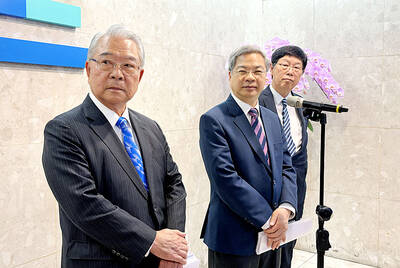
PATENT PROBE: US lawmakers called for a ban on imports of chips made by TSMC if they are found to infringe on US patents, with a preliminary ruling expected soon Minister of Economic Affairs Kung Ming-hsin (龔明鑫) yesterday expressed confidence in Taiwan Semiconductor Manufacturing Co’s (TSMC, 台積電) compliance with patent regulations after reports linked the company to a patent infringement lawsuit in the US. US Representative Ryan Zinke, and US senators Tim Sheehy, Roger Marshall and Bernie Moreno urged the US International Trade Commission in a May 22 letter to ban imports of chips made by TSMC if they are found to infringe on US patents, Axios reported on Wednesday. An administrative law judge is expected to issue a preliminary ruling this month, with the commission potentially making a final decision in
Taiwanese authorities are considering much stricter export controls on artificial intelligence (AI) chip sales to China to further align with US measures, according to people familiar with the matter, an effort to address semiconductor smuggling that risks drawing a rebuke from Beijing. The idea is to give authorities more legal tools to address diversion of advanced hardware, like AI servers with Nvidia Corp chips, from Taiwan to China. Such sales are already banned under US regulations unless companies get Washington’s permission, per curbs the US first imposed in 2022 to prevent Beijing from using advanced Nvidia processors to gain a military


 RSS
RSS