


Alphabet Inc’s Google has agreed to pay Elon Musk’s Space Exploration Technologies Corp (SpaceX) US$920 million a month for computing power as part of a cloud services deal that runs through mid-2029, its second such agreement with an artificial intelligence (AI) competitor in a matter of weeks.
Google would pay SpaceX the monthly fee from October this year through June 2029, SpaceX said in a regulatory filing on Friday. That amounts to about US$30 billion through the time of the agreement.
If SpaceX fails to deliver access to Nvidia Corp chips as part of the deal by Sept. 30, Google has the right to terminate the contract, with a one-month grace period, the filing showed.
Photo: AFP
A Google Cloud spokesperson said the deal would help the company meet demand for its AI services. In its most recent earnings report, Alphabet said Google Cloud’s backlog — the measure of contracted work that has not been recorded as revenue yet — nearly doubled from the prior quarter to more than US$460 billion.
“This is a short-term, timely agreement to ensure we have bridge capacity to meet surging customer demand for our agent platform, Gemini Enterprise, which has been even higher than we expected,” the Google spokesperson said in a statement.
SpaceX previously signed a similar agreement with Anthropic PBC. The Musk-led company, through its xAI subsidiary, has been looking to shore up revenue and transform its AI business into a compute infrastructure provider — the key business the company has been touting as part of its initial public offering (IPO).
The contract gives Google access to 110,000 of Nvidia’s graphics processing unit chips, as well as central processing unit chips, memory chips and other related components. Based on the capacity of Nvidia’s H200 chips, that might represent more than 100 megawatts of computing power — or enough power to energize 75,000 homes at any given moment.
The cloud deal is not the only pact that Google and SpaceX have been engaged in talks over. The two companies had been discussing launching the search company’s test products for orbital data centers, a person familiar with the matter said last month. Google previously said it was exploring deals with other launch providers for what the company called Project Suncatcher.
Under the pact disclosed on Friday, either party also has the right to terminate the arrangement with 90 days’ notice — the same feature as in Anthropic’s deal.
The deal comes as SpaceX prepares to make its debut on NASDAQ under the symbol SPCX on Friday. The Texas-based company is offering about 555.6 million shares at US$135 each in a deal that could value it at about US$1.8 trillion and mark the biggest IPO in history.


Taiwanese firms have increased investment in the Philippines in recent years as Manila’s ties with Washington deepen and global supply chains continue to shift away from China, an expert at the Chung-Hua Institution for Economic Research (CIER, 中華經濟研究院) said yesterday. The Philippines had not been among Taiwanese investors’ top choices in Southeast Asia, CIER Taiwan ASEAN Studies Center director Kristy Hsu (徐遵慈) said at a seminar in Taipei. However, Taiwan’s investment in the country has grown significantly since the COVID-19 pandemic, reaching US $257 million last year, a high in recent years, she said. Although Taiwan’s total investment in the Philippines still lags
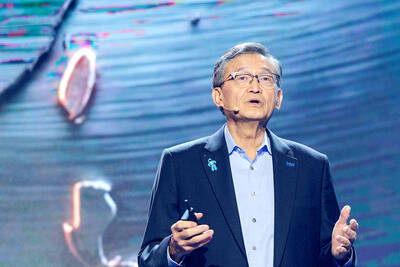
Intel Corp regards Taiwan Semiconductor Manufacturing Co (TSMC, 台積電) as a longstanding partner, as the US chipmaker would continue outsourcing production of advanced chips to TSMC, Intel chief executive officer Lip-Bu Tan (陳立武) said yesterday. “I don’t look at people as competitors. I look at the collaboration... Nvidia is also, you know, a good friend,” Tan told a news conference following his keynote speech at the Computex trade show in Taipei. “It’s a very trusted partnership for us... We are a big, top customer for them, and we’re going to continue doing that,” he said, referring to TSMC, the world’s largest foundry

Hon Hai Precision Industry Co (鴻海精密) yesterday said it would work with US chipmaker Intel Corp to jointly develop and deploy next-generation artificial intelligence (AI) infrastructure and intelligent computing platforms in a move to capture booming demand for AI computing systems. Hon Hai, also known as Foxconn Technology Group (富士康), said in a statement that the partnership would combine its global manufacturing scale, system integration expertise and AI data center deployment capabilities with Intel’s strengths in processor architecture, silicon technologies and software ecosystem. The companies said they plan to work on equipment used in AI data centers, including server racks powered by

Artificial intelligence (AI) agents would supplant smartphones as the center of people’s digital lives, fundamentally reshaping personal devices and driving a major computing upgrade cycle, Qualcomm Inc CEO Cristiano Amon said yesterday. In his keynote speech for this year’s Computex trade show in Taipei, Amon said that the rise of "agentic AI" — AI systems capable of reasoning, planning and carrying out tasks autonomously — would transform how people interact with technology across phones, PCs, vehicles and wearable devices. Describing the technology as the next major evolution in computing, Amon said that "2026 is the year of agents.” For decades, smartphones have sat


 RSS
RSS