


Super Micro Computer Inc plans to begin shipping its “Data Center Building Block Solutions” (DCBBS) based on Nvidia Corp’s Vera Rubin NVL72 platform in the second half of this year, after delivering about 8,000 GB300-based systems in the first quarter of this year, the company said yesterday.
The company’s DCBBS offers significant advantages in time-to-market and deployment speed, supported by a development cycle of about 20 months from concept and innovation through design, manufacturing and delivery, Super Micro Computer cofounder and CEO Charles Liang (梁見後) told a news conference in Taipei.
The company has delivered the products to more than 30 customers worldwide, including some of the world’s largest gigawatt-scale data centers, he said.
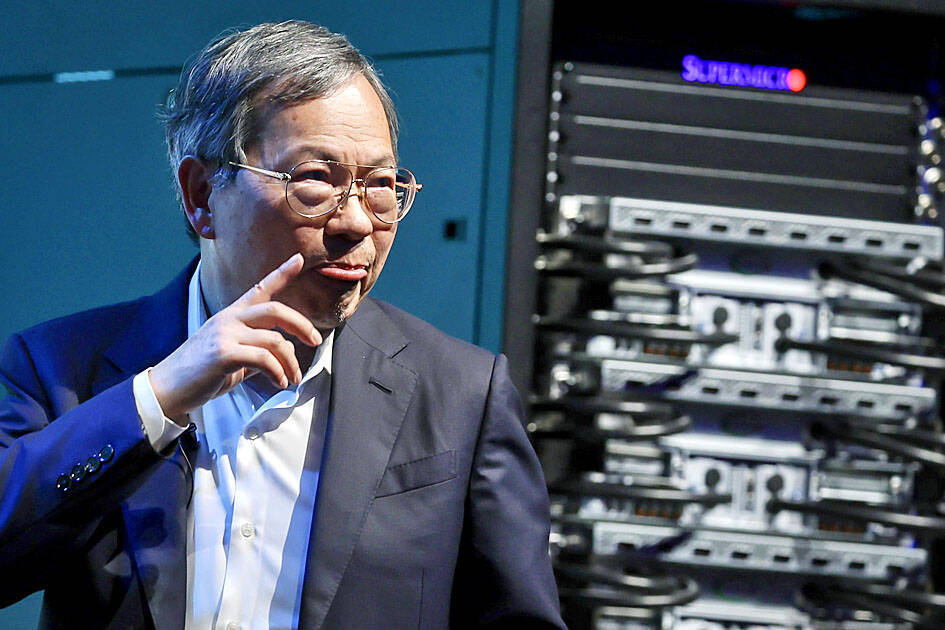
Photo: CNA
Super Micro Computer offers a broad product portfolio, spanning large AI data centers to small enterprise AI systems, Liang said.
The company also invests in software tools to help customers develop agentic AI applications and has expanded capacity to meet customers’ needs, he said.
Over the past seven months, Super Micro Computer has added eight production facilities in the US, Liang said.
In Taiwan, a new facility is to begin operations in October, followed by another that is expected to be completed before summer next year to support demand in Taiwan, Asia and Europe, he said.
The company runs a facility in Malaysia that serves customers in Southeast Asia and parts of Europe, and could also support production of system-level and rack-scale solutions for the US market, he said.
In addition, the company continues to expand its operations in the Netherlands to provide system-level, rack-scale and data-center-scale direct liquid cooling solutions for Europe, Liang added.
With its capacity expansion, the company expects to maintain strong growth over the next several years, after posting about 80 percent annual revenue growth in the past few years, he said.
The AI hardware market is expected to maintain annual growth of more than 50 percent over the next several years, as AI applications expand beyond large-scale data centers to smaller data centers, on-site AI systems and even standalone AI devices, Liang said.
Demand for agentic AI and inference computing is expected to spread across industries, including education, finance, manufacturing and transportation, he said.
Amid robust growth in agentic AI applications, the company’s competitive advantages lie in lower power consumption, reduced water usage and faster deployment capabilities, Liang said.

Cairo’s new monorail slices across the city skyline, running above the familiar chaos of blaring horns and aging buses’ exhaust fumes that mark rush hour below. The US$4.5 billion monorail, opened this month, is among Egypt’s most prominent new transport projects, part of a debt-funded infrastructure drive criticized for sapping state finances while bringing limited benefits to most of the country’s 109 million people. “It feels like you’re in a different country,” said Ramy Sayed, a restaurant manager, aboard a driverless Innovia 300 train. “No noise, no traffic, we’re not used to this.” The eastern line runs 56km from the bustling middle-class
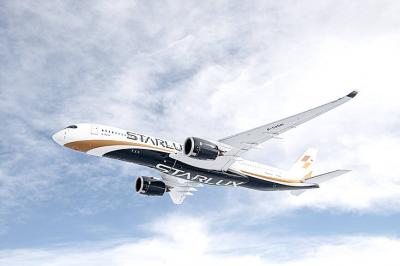
Starlux Airlines Co (星宇航空) today unveiled a long-haul network expansion plan at a shareholders’ meeting in Taipei, including direct flights to Barcelona, Spain, and Zurich, Switzerland, as well as a service connecting Taipei, Sydney and New Zealand. Starlux is to become the first Taiwanese carrier to offer non-stop services to the two European cities, while the inaugural oceanic route is expected to expand transit opportunities within the Australia-New Zealand market, Starlux said. Flight services to Chicago, Dallas, Washington and New York are under evaluation, the airline added. Prior to the shareholders’ meeting, the airline earlier this year announced that it would be
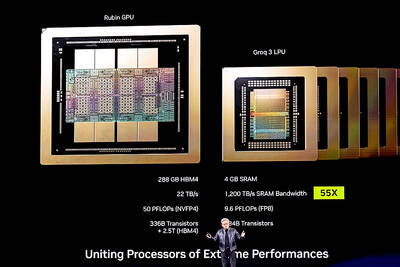
Taiwanese prosecutors suspect that three people successfully smuggled at least one shipment of Nvidia Corp artificial intelligence (AI) chips to China after first exporting them to Japan, people familiar with the matter said. The trio was detained last week by the Keelung District Prosecutors’ Office for allegedly falsifying documents related to exports of Super Micro Computer Inc servers containing advanced Nvidia chips, which the US has barred from sale to China without a license from Washington. The move marked Taiwan’s first public crackdown on AI chip diversion after years of pressure from the US to take a more active role in curtailing
Taiwan Semiconductor Manufacturing Co (TSMC, 台積電) employee bonuses are likely to grow more than 30 percent this year, in line with the past few years as the company’s profits continue to set new records, an anonymous source cited TSMC chairman C.C. Wei (魏哲家) as saying yesterday. TSMC, the world’s largest contract chipmaker, is committed to taking care of its workers, the source said, citing Wei’s meeting with employees yesterday morning. Wei also expressed gratitude to employees for their contribution to the company’s improving bottom line, the source added. Since 2023, TSMC’s employee bonuses have grown at an annual rate of


 RSS
RSS