


Hon Hai Precision Industry Co (鴻海精密), the world’s largest contract server maker, yesterday said it is targeting to grow its annual revenue by 36 percent to NT$11 trillion (US$350.5 billion) this year, driven by robust demand for artificial intelligence (AI) server racks given heavy expenditures from global cloud service providers.
Last year, demand for AI servers grew significantly, driving a major shift in Hon Hai’s revenue structure, chairman Young Liu (劉揚偉) told the company’s annual general meeting in New Taipei City’s Tucheng District (土城).
Cloud and networking products accounted for about 40 percent of the company’s total revenue of NT$8.1 trillion last year, replacing smartphones as Hon Hai’s largest business segment. The cloud and networking products are to contribute an even bigger share this year, Liu said.
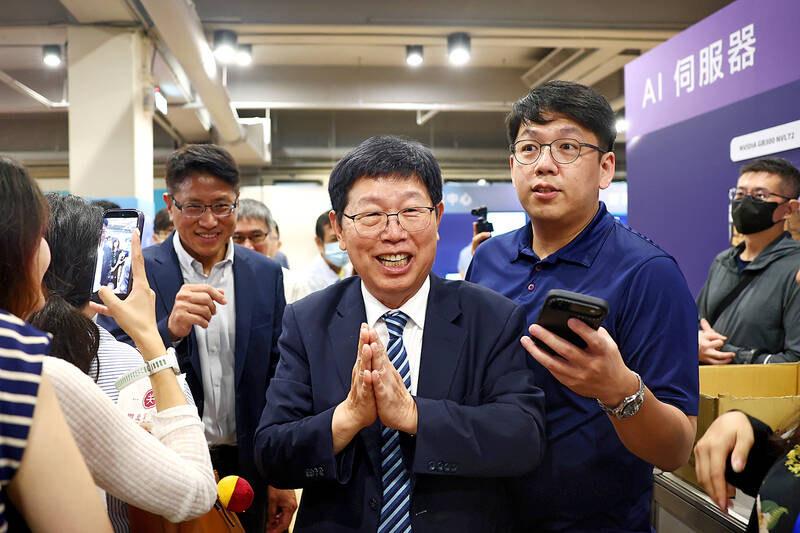
Photo: CNA
With rapid growth in AI-related business, Hon Hai’s revenue and profit are expected to continue growing strongly in the coming years, he said.
The four major cloud service providers (CSPs) in the US are expected to spend more than US$700 billion on capital expenditure this year and to spend even more next year, he said.
The company is optimistic about its performance in the second half of the year after delivering a strong first-quarter result, he said. Revenue rose 29 percent year-on-year to NT$2.12 trillion in the first quarter, a record high for the period.
Each generation of new AI server platforms would create new opportunities for Hon Hai to win new customers and orders, he said. Hon Hai now commands more than 40 percent of the global AI server market, Liu added.
Hon Hai’s server rack shipments are expected to more than double this year, with shipments increasing quarter-on-quarter and growth momentum extending through to the end of the year, he said.
Hon Hai is “highly positive” about the shipment schedule and momentum of Nvidia Corp’s next-generation Vera Rubin AI server platform, with second-half shipments expected to proceed smoothly, he said.
In response to a question about whether Hon Hai would be one of the first suppliers to mass-produce Nvidia’s Vera Rubin platform, Liu said if “you look at how many Hon Hai components are inside the machine, you can probably guess.”
Hon Hai supplies key components used in AI servers — including connectors, cables, cooling modules, optical switches and related parts — through its vertically integrated operations, Liu said.
Hon Hai is also cooperating with other graphics processing unit, central processing unit and application-specific integrated circuit chipmakers, Liu said.
Edge computing devices would become Hon Hai’s second major growth drivers such as electric vehicles and robotics, Liu said.
Hon Hai expected limited impact from memory chip shortages through the end of this year as most of its clients focus on high-end products, Liu said.
Hon Hai has also expanded into the co-packaged optics (CPO) sector and is set to ship about 10,000 CPO switches this year, Liu said. Shipments are expected to grow several-fold next year, he added.
To support the rapid expansion amid the AI boom, Hon Hai plans to increase capital expenditure by more than 30 percent this year from NT$170 billion last year, Liu said.
The investment is aimed at expanding production capacity and automation, he said.
Shareholders yesterday approved proposals to distribute cash dividends of NT$7.2 per share, the highest ever, representing a payout ratio of 52.9 percent based on the company’s earnings per share of NT$13.61 last year.
The company has made earnings equal to its share capital for five consecutive years, Liu said. The company’s long-term goal is to make annual earnings equal to twice the company’s share capital, Liu said.
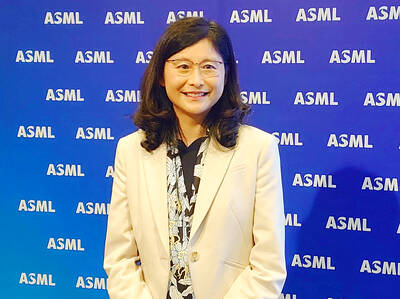
Netherlands-based semiconductor equipment supplier ASML Holding NV yesterday said that it is planning to hire an additional 1,000 people in Taiwan this year in response to growing demand from clients. ASML had previously planned to recruit 600 people this year, but that the plan has been adjusted upward, ASML vice president and ASML Taiwan general manager Grace Wang (汪佳慧) told reporters. ASML has a workforce of more than 4,500 in Taiwan, accounting for about 10 percent of its global total, Wang said. This year’s recruitment campaign would focus on adding people in the customer support, manufacturing and supply chain domains to assist ASML
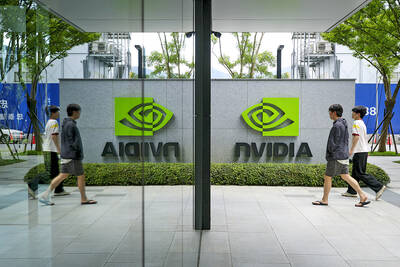
UNDER MICROSCOPE: Taiwan detained three people who allegedly conspired to buy servers in Taiwan and export them using fraudulent documentation, prosecutors said Nvidia Corp chief executive officer Jensen Huang (黃仁勳) on Saturday urged Super Micro Computer Inc to tighten up on compliance after Taiwan detained three people this week for allegedly making fraudulent declarations about artificial intelligence (AI) servers made by its US partner. The development marked the nation’s first crackdown on semiconductor smuggling, which grew after the US slapped restrictions on exports of high-end chips such as Nvidia AI accelerators to China. Nvidia is “rigorous” in explaining regulations to all of its partners, Huang told reporters after arriving in Taipei. “Ultimately Super Micro has to run their own company,” he said in response to

Nvidia Corp yesterday announced that CEO Jensen Huang (黃仁勳) would attend an employee meeting in Taipei tomorrow to celebrate the launch of the company’s Taiwan headquarters project. Huang would attend a gathering at the site of Nvidia’s planned headquarters in Beitou Shilin Technology Park (北投士林科技園區), the company said in a statement. After arriving in Taiwan on Saturday last week, Huang told reporters that he plans to meet with Quanta Computer Inc (廣達) chairman Barry Lam (林百里) and Taiwan Semiconductor Manufacturing Co (TSMC, 台積電) chairman C.C. Wei (魏哲家), and would attend the groundbreaking ceremony for Nvidia’s Taiwan headquarters tomorrow. Nvidia has not yet applied

Huawei Technologies Co (華為) said it has come up with a new pathway to shorten its gap with industry leader Taiwan Semiconductor Manufacturing Co (TSMC, 台積電), potentially achieving a breakthrough in making advanced semiconductors without cutting-edge equipment. Right now there is about a five-year gap between what TSMC is capable of and what Huawei, together with its manufacturing partner Semiconductor Manufacturing International Corp (中芯), can produce. Huawei is to start making 1.4-nanometer chips by 2031 with its own “LogicFolding” technology, Huawei semiconductor chief He Tingbo (何庭波) said in a rare public appearance during a chip conference yesterday, while TSMC has


 RSS
RSS