


A change in leadership at the US Federal Reserve could usher in significant shifts in monetary policy and communication strategy, underscoring mounting market scrutiny over how new Fed Chairman Kevin Warsh might redefine the role of the world’s most influential central bank, Taiwan’s central bank said on Facebook on Thursday.
Taiwan’s central bank outlined four key policy changes that could emerge under Warsh, who succeeded Jerome Powell after Powell’s term as Fed chair expired yesterday.
The leadership transition could reshape the Fed’s approach to policy communication, inflation assessment, balance-sheet management and the scope of the institution’s mandate, the post said.
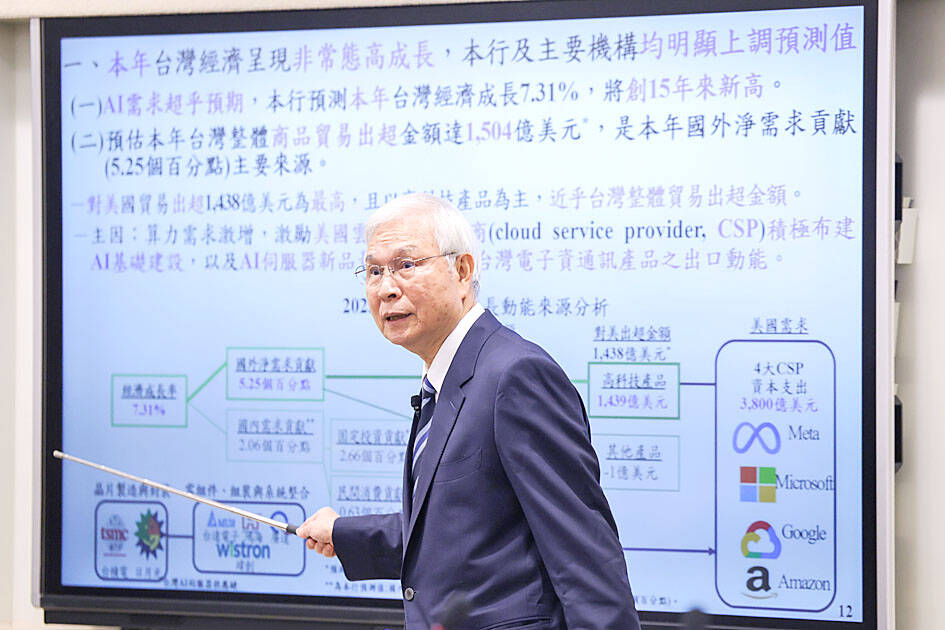
Photo: CNA
The US Senate confirmed Warsh in a narrow 54-45 vote, highlighting deep divisions in Washington over the direction of monetary policy.
Powell has indicated he would remain on the Fed’s Board of Governors after stepping down as chairman — the first such arrangement in nearly eight decades — potentially complicating the internal balance of influence at the Fed and raising questions over policy continuity.
Warsh’s views on monetary tools and governance could carry broad implications for global financial markets, warranting close attention from policymakers and investors worldwide, Taiwan’s central bank said.
Among the most closely watched changes is Warsh’s criticism of the Fed’s “dot plot” system, introduced in 2012 to provide policymakers’ projections for interest rates.
Warsh has argued that heavy reliance on forward guidance can constrain policy flexibility and amplify market volatility, advocating the elimination of the dot plot and even a review of the Fed’s routine post-meeting news conferences.
Warsh has also questioned the Fed’s use of the core personal consumption expenditures (PCE) index, its preferred inflation gauge that excludes food and energy prices.
While core PCE remains a key benchmark for policymakers, Warsh has said it can be distorted by short-term price swings.
He has instead expressed support for alternative measures such as trimmed-mean or median inflation indicators, which he believes better reflect underlying price trends and could provide a more stable basis for policy decisions.
On policy tools, Warsh has called for shrinking the Fed’s balance sheet, and reducing reliance on quantitative easing and other large-scale asset purchases.
He has said that the Fed’s vast holdings of long-term US Treasury bonds amount to a form of quasi-fiscal policy that risks inflating asset prices and widening wealth inequality.
By contrast, Warsh has said interest rates remain a broader and more effective tool for steering economic activity without distorting financial markets.
Warsh has also said that the Fed should refocus on its core mandates of maintaining price stability and supporting maximum employment.
While acknowledging the need for coordination with the White House and the US Congress, he has said that the Fed should avoid expanding too deeply into nonmonetary issues such as climate policy and should preserve what he described as “independence within government.”
The commentary from Taiwan’s central bank came as global investors reassess the potential trajectory of US monetary policy, and its potential spillover effects on global capital flows, currencies and asset markets.
Shares of contract chipmaker Taiwan Semiconductor Manufacturing Co (TSMC, 台積電) came under pressure yesterday after a report that Apple Inc is looking to shift some orders from the Taiwanese company to Intel Corp. TSMC shares fell NT$55, or 2.4 percent, to close at NT$2,235 on the local main board, Taiwan Stock Exchange data showed. Despite the losses, TSMC is expected to continue to benefit from sound fundamentals, as it maintains a lead over its peers in high-end process development, analysts said. “The selling was a knee-jerk reaction to an Intel-Apple report over the weekend,” Mega International Investment Services Corp (兆豐國際投顧) analyst Alex Huang
Taiwan Semiconductor Manufacturing Co (TSMC, 台積電) is expected to remain Apple Inc’s primary chip manufacturing partner despite reports that Apple could shift some orders to Intel Corp, industry experts said yesterday. The comments came after The Wall Street Journal reported on Friday that Apple and Intel had reached a preliminary agreement following more than a year of negotiations for Intel to manufacture some chips for Apple devices. Taiwan Institute of Economic Research (台灣經濟研究院) economist Arisa Liu (劉佩真) said TSMC’s advanced packaging technologies, including integrated fan-out and chip-on-wafer-on-substrate, remain critical to the performance of Apple’s A-series and M-series chips. She said Intel and Samsung
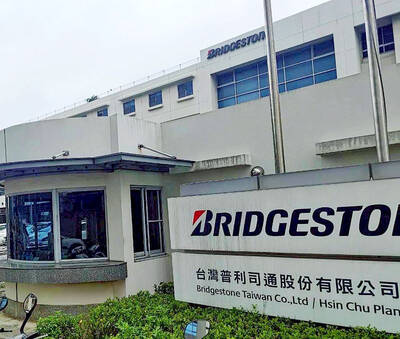
TRANSITION: With the closure, the company would reorganize its Taiwanese unit to a sales and service-focused model, Bridgestone said Bridgestone Corp yesterday announced it would cease manufacturing operations at its tire plant in Hsinchu County’s Hukou Township (湖口), affecting more than 500 workers. Bridgestone Taiwan Co (台灣普利司通) said in a statement that the decision was based on the Tokyo-based tire maker’s adjustments to its global operational strategy and long-term market development considerations. The Taiwanese unit would be reorganized as part of the closure, effective yesterday, and all related production activities would be concluded, the statement said. Under the plan, Bridgestone would continue to deepen its presence in the Taiwanese market, while transitioning to a sales and service-focused business model, it added. The Hsinchu
Taiwan Semiconductor Manufacturing Co (TSMC, 台積電) has approved a capital budget of US$31.28 billion for production expansion to meet long-term development needs during the artificial intelligence (AI) boom. The company’s board meeting yesterday approved the capital appropriation plan for purposes such as the installation of advanced technology capacity and fab construction, the world’s largest contract chipmaker said in a statement. At an earnings conference last month, TSMC forecast that its capital expenditure for this year would be at the higher end of the US$52 billion to US$56 billion range it forecast in January in response to robust demand for 5G, AI and


 RSS
RSS