


Taiwan’s cooling housing market is diverging sharply from the buoyant stock market, as tighter mortgage restrictions and government measures aimed at curbing speculation weigh on buyer confidence and prompt developers to scale back new projects in the greater Taipei area, My Housing Monthly (住展雜誌) said yesterday.
New residential project launches in Taipei and New Taipei City totaled NT$108.1 billion (US$3.43 billion) in the first four months of this year, down 53.7 percent from a year earlier, a survey by the publication showed.
The number of new projects unveiled fell to 40 from 90 a year earlier, with both cities seeing supply and projected sales values about halved.
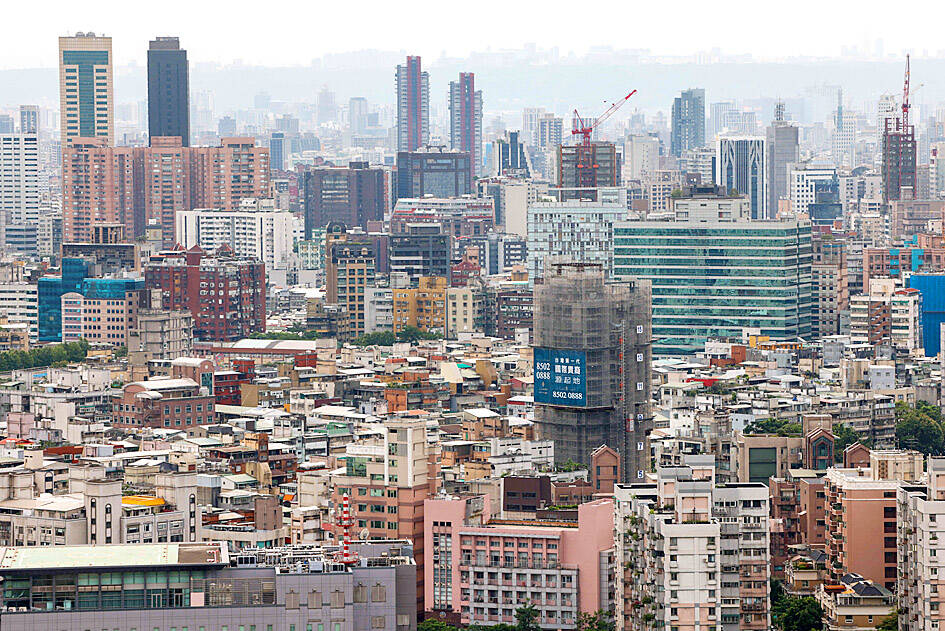
Photo: Ann Wang, Reuters
The weakness stands in stark contrast to Taiwan’s equity market, where the benchmark TAIEX surged past the 40,000-point mark during the same period, generating abundant liquidity that in previous cycles often spilled into property markets, the publication said.
“Historically, strong gains in equities tended to fuel housing demand,” My Housing Monthly research director and spokesman Chen Ping-chen (陳炳辰) said.
He cited 2019, when Taiwan stocks reclaimed the 10,000-point level and helped ignite a housing boom, particularly in Hsinchu City, where buyers lined up for presale projects.
A similar pattern re-emerged in 2024 after the TAIEX climbed above 20,000 points, with some residential developments selling out shortly after launch, Chen said.
However, this time, the property market has moved in the opposite direction.
Strict mortgage lending standards adopted by banks, coupled with the central bank’s ongoing effort to rein in speculative activity, have significantly dampened sentiment in the housing market, Chen said.
Weak buyer demand and rising unsold inventory have further discouraged developers from bringing new projects to market, he said.
Although Taiwan’s stock market repeatedly hit record highs over the past two years, developers have maintained a cautious stance as financing conditions remain tight.
Developers have shown particularly little appetite for large-scale launches in Taipei, where elevated housing prices have amplified market risks.
In New Taipei City, several projects were brought to market after repeated delays, underscoring the pressure facing builders, Chen said.
One exception emerged in Taipei’s Neihu District (內湖), where a small-scale project sold out quickly, largely due to its limited supply of just 14 units and a shortage of competing new developments in the area.
The isolated case should not be interpreted as evidence of a broader market recovery, Chen said.
Still, several large-scale projects are expected to enter the market later this year in central districts of Taipei and New Taipei City. While those developments benefit from prime locations and established developer brands, their sizable scale could add to inventory pressure in an already sluggish market, Chen said.
Shares of contract chipmaker Taiwan Semiconductor Manufacturing Co (TSMC, 台積電) came under pressure yesterday after a report that Apple Inc is looking to shift some orders from the Taiwanese company to Intel Corp. TSMC shares fell NT$55, or 2.4 percent, to close at NT$2,235 on the local main board, Taiwan Stock Exchange data showed. Despite the losses, TSMC is expected to continue to benefit from sound fundamentals, as it maintains a lead over its peers in high-end process development, analysts said. “The selling was a knee-jerk reaction to an Intel-Apple report over the weekend,” Mega International Investment Services Corp (兆豐國際投顧) analyst Alex Huang
Taiwan Semiconductor Manufacturing Co (TSMC, 台積電) is expected to remain Apple Inc’s primary chip manufacturing partner despite reports that Apple could shift some orders to Intel Corp, industry experts said yesterday. The comments came after The Wall Street Journal reported on Friday that Apple and Intel had reached a preliminary agreement following more than a year of negotiations for Intel to manufacture some chips for Apple devices. Taiwan Institute of Economic Research (台灣經濟研究院) economist Arisa Liu (劉佩真) said TSMC’s advanced packaging technologies, including integrated fan-out and chip-on-wafer-on-substrate, remain critical to the performance of Apple’s A-series and M-series chips. She said Intel and Samsung
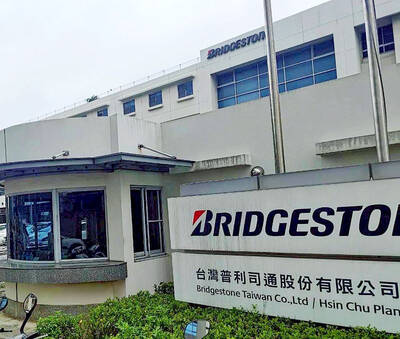
TRANSITION: With the closure, the company would reorganize its Taiwanese unit to a sales and service-focused model, Bridgestone said Bridgestone Corp yesterday announced it would cease manufacturing operations at its tire plant in Hsinchu County’s Hukou Township (湖口), affecting more than 500 workers. Bridgestone Taiwan Co (台灣普利司通) said in a statement that the decision was based on the Tokyo-based tire maker’s adjustments to its global operational strategy and long-term market development considerations. The Taiwanese unit would be reorganized as part of the closure, effective yesterday, and all related production activities would be concluded, the statement said. Under the plan, Bridgestone would continue to deepen its presence in the Taiwanese market, while transitioning to a sales and service-focused business model, it added. The Hsinchu
Taiwan Semiconductor Manufacturing Co (TSMC, 台積電) has approved a capital budget of US$31.28 billion for production expansion to meet long-term development needs during the artificial intelligence (AI) boom. The company’s board meeting yesterday approved the capital appropriation plan for purposes such as the installation of advanced technology capacity and fab construction, the world’s largest contract chipmaker said in a statement. At an earnings conference last month, TSMC forecast that its capital expenditure for this year would be at the higher end of the US$52 billion to US$56 billion range it forecast in January in response to robust demand for 5G, AI and


 RSS
RSS