


Hon Hai Precision Industry Co (鴻海精密) yesterday reported a stronger-than-expected increase in quarterly profit, highlighting sustained spending on hardware essential for artificial intelligence (AI).
Net profit for the first quarter of this year rose 19 percent year-on-year to NT$49.92 billion (US$1.58 billion), while analysts on average expected NT$48.4 billion.
Operating profit was NT$75.6 billion, surging 63 percent from a year earlier, the company said.
Photo: Cheng I-Hwa, AFP
Earnings per share reached NT$3.56, up from NT$3.03 last year, while gross margin hit 6.18 percent and operating margin stood at 3.57 percent, it said.
Net profit and operating profit were record highs for the first quarter, Hon Hai rotating chief executive officer Michael Chiang (蔣集恆) told an earnings conference.
Revenue in the first quarter rose 29 percent year-on-year to NT$2.12 trillion, the highest for the same period, company data showed.
“AI demand continues to grow at a rapid pace,” and for the second quarter “year-on-year growth is expected to be strong,” Chiang said.
Hon Hai, also known as Foxconn Technology Group (富士康科技集團), has established itself as a key AI hardware player by assembling servers that house Nvidia Corp accelerators. The company also derives a significant chunk of sales from assembling Apple Inc’s iPhones and MacBooks, and is in position to benefit from any positive reception for the latest iPhone 17 product family.
Cloud and networking products — including AI servers — remained the company’s largest revenue contributor in the first quarter, accounting for 48 percent of its revenue, while smart consumer electronics contributed 33 percent, Hon Hai said.
Computing products, and components and other products, made of 14 percent and 5 percent of the revenue respectively, it said.
Copackaged optic switches are scheduled to enter mass production in the third quarter, with annual shipments expected to reach tens of thousands of units, Chang said.
Based on current visibility, shipments are projected to grow multifold next year, he said.
In addition to switch design and assembly, the company said it would continue to improve its capabilities in key components such as optical modules, optoelectronic integration, cables, connectors, high-speed transmission and power management.
For AI rack shipments, the company expects to maintain high double-digit growth in the second quarter, it said.
For the full year, AI rack shipments are projected to more than double, with quarterly volumes increasing sequentially as customer projects progress, it added.
In robotics, the company’s humanoid robots and collaborative robots have already been introduced at US manufacturing sites in the second quarter, adding that operational data would be collected to support subsequent model optimization and large-scale deployment.
The company expects capital expenditure this year to rise more than 30 percent from last year’s NT$174 billion, with investments primarily focused on regional manufacturing deployment, automation implementation and the upgrading of core capacity, it said.
However, Chiang cautioned that “the international political and economic landscape [is] still evolving rapidly,” with factors such as raw material costs and supply chain adjustments potentially impacting the industry.
“We remain cautiously optimistic about this year,” thanks to the company’s “relatively solid operational resilience,” he said.

Cairo’s new monorail slices across the city skyline, running above the familiar chaos of blaring horns and aging buses’ exhaust fumes that mark rush hour below. The US$4.5 billion monorail, opened this month, is among Egypt’s most prominent new transport projects, part of a debt-funded infrastructure drive criticized for sapping state finances while bringing limited benefits to most of the country’s 109 million people. “It feels like you’re in a different country,” said Ramy Sayed, a restaurant manager, aboard a driverless Innovia 300 train. “No noise, no traffic, we’re not used to this.” The eastern line runs 56km from the bustling middle-class

Taiwanese firms have increased investment in the Philippines in recent years as Manila’s ties with Washington deepen and global supply chains continue to shift away from China, an expert at the Chung-Hua Institution for Economic Research (CIER, 中華經濟研究院) said yesterday. The Philippines had not been among Taiwanese investors’ top choices in Southeast Asia, CIER Taiwan ASEAN Studies Center director Kristy Hsu (徐遵慈) said at a seminar in Taipei. However, Taiwan’s investment in the country has grown significantly since the COVID-19 pandemic, reaching US $257 million last year, a high in recent years, she said. Although Taiwan’s total investment in the Philippines still lags
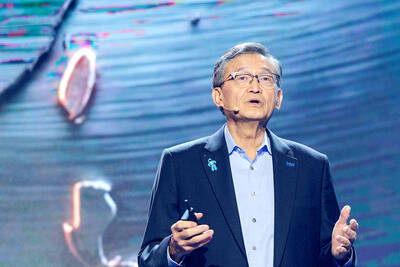
Intel Corp regards Taiwan Semiconductor Manufacturing Co (TSMC, 台積電) as a longstanding partner, as the US chipmaker would continue outsourcing production of advanced chips to TSMC, Intel chief executive officer Lip-Bu Tan (陳立武) said yesterday. “I don’t look at people as competitors. I look at the collaboration... Nvidia is also, you know, a good friend,” Tan told a news conference following his keynote speech at the Computex trade show in Taipei. “It’s a very trusted partnership for us... We are a big, top customer for them, and we’re going to continue doing that,” he said, referring to TSMC, the world’s largest foundry

Artificial intelligence (AI) agents would supplant smartphones as the center of people’s digital lives, fundamentally reshaping personal devices and driving a major computing upgrade cycle, Qualcomm Inc CEO Cristiano Amon said yesterday. In his keynote speech for this year’s Computex trade show in Taipei, Amon said that the rise of "agentic AI" — AI systems capable of reasoning, planning and carrying out tasks autonomously — would transform how people interact with technology across phones, PCs, vehicles and wearable devices. Describing the technology as the next major evolution in computing, Amon said that "2026 is the year of agents.” For decades, smartphones have sat


 RSS
RSS