


Monthly wages in Taiwan’s industrial and service sectors continued to rise in March, driven by strong demand for artificial intelligence (AI) and electronics, which pushed bonuses and overtime pay to their highest levels in years, the Directorate-General of Budget, Accounting and Statistics (DGBAS) said yesterday.
Regular monthly wages averaged NT$48,768, up 2.6 percent from a year earlier, the agency said.
Total compensation, including bonuses and overtime pay, rose 4.4 percent to NT$57,509, their fastest growth in 16 years, it said.
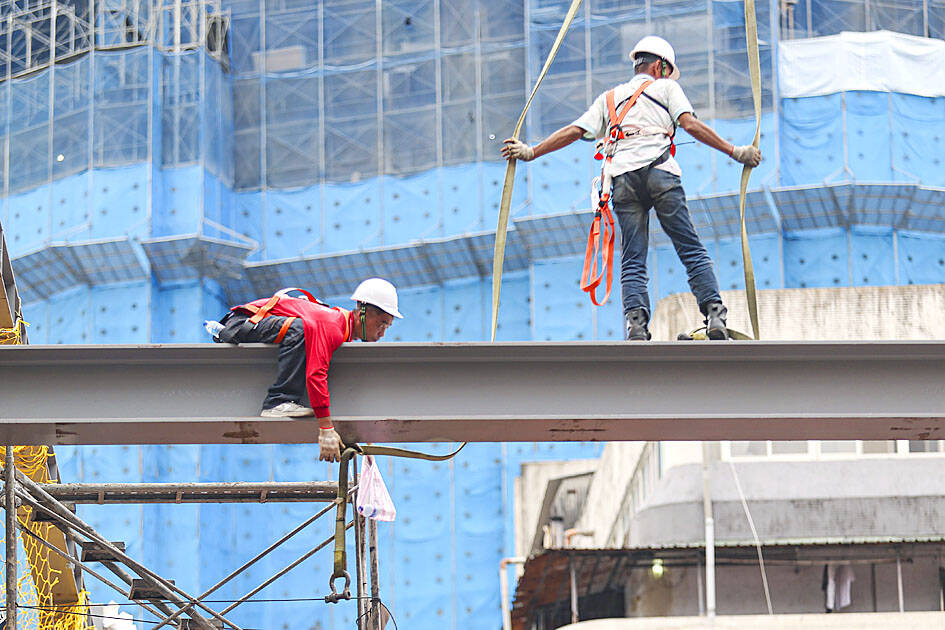
Photo: CNA
“The ongoing AI boom has fueled strong business for Taiwan’s electronic components suppliers, driving higher overtime pay and bonuses, which in turn lifted overall compensation,” DGBAS Census Department Deputy Director Tan Wen-ling (譚文玲) said.
While average wages were lifted by higher earners, median monthly pay rose at a steadier pace, reaching NT$39,220, up 2.9 percent from a year earlier, DGBAS data showed.
By industry, average regular monthly wages in the January-to-March period were highest in publishing, audiovisual and information services at NT$70,562, followed closely by financial and insurance services at NT$70,319, and professional, scientific and technical services at NT$59,273, the data showed.
At the lower end, accommodation and food services averaged NT$34,524, while other services stood at NT$37,172.
Strength in technology-related sectors was also evident in working hours.
Manufacturing overtime averaged 17.1 hours per month in the first quarter, the highest for the period in 22 years, the DGBAS said.
Within that segment, electronics component manufacturing reached 28.6 overtime hours per month — the highest first-quarter level on record — highlighting sustained demand from AI and advanced computing supply chains, it said.
However, traditional industries continued to face headwinds from weak global demand and excess capacity, with employment in sectors such as textiles, chemicals and metals remaining lower than a year earlier, pointing to an uneven recovery across the economy, the agency said.
After adjusting for inflation, real regular wages rose 1.45 percent in the first quarter, the strongest gain for the period in 11 years, while real total compensation increased 1.98 percent, the fastest pace in eight years, it said.
Both measures remained in positive territory, indicating that inflation has not fully eroded wage gains, DGBAS said.
Still, income distribution data underscore a widening gap between higher and lower-paid workers, with the share of employees earning below the average wage rising to 69.95 percent in the first quarter, a record high, it said.
Tan attributed the divergence to outsized gains in high-tech sectors, where strong profitability has driven wages and bonuses well above levels in the broader economy.
The surge has lifted overall averages, while leaving a large share of workers in other industries below that benchmark, she said.

Cairo’s new monorail slices across the city skyline, running above the familiar chaos of blaring horns and aging buses’ exhaust fumes that mark rush hour below. The US$4.5 billion monorail, opened this month, is among Egypt’s most prominent new transport projects, part of a debt-funded infrastructure drive criticized for sapping state finances while bringing limited benefits to most of the country’s 109 million people. “It feels like you’re in a different country,” said Ramy Sayed, a restaurant manager, aboard a driverless Innovia 300 train. “No noise, no traffic, we’re not used to this.” The eastern line runs 56km from the bustling middle-class
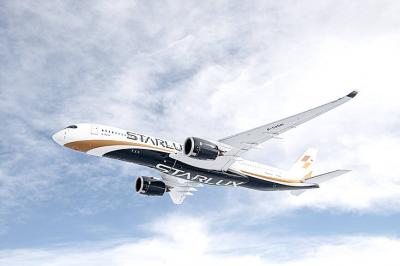
Starlux Airlines Co (星宇航空) today unveiled a long-haul network expansion plan at a shareholders’ meeting in Taipei, including direct flights to Barcelona, Spain, and Zurich, Switzerland, as well as a service connecting Taipei, Sydney and New Zealand. Starlux is to become the first Taiwanese carrier to offer non-stop services to the two European cities, while the inaugural oceanic route is expected to expand transit opportunities within the Australia-New Zealand market, Starlux said. Flight services to Chicago, Dallas, Washington and New York are under evaluation, the airline added. Prior to the shareholders’ meeting, the airline earlier this year announced that it would be

Taiwanese prosecutors suspect that three people successfully smuggled at least one shipment of Nvidia Corp artificial intelligence (AI) chips to China after first exporting them to Japan, people familiar with the matter said. The trio was detained last week by the Keelung District Prosecutors’ Office for allegedly falsifying documents related to exports of Super Micro Computer Inc servers containing advanced Nvidia chips, which the US has barred from sale to China without a license from Washington. The move marked Taiwan’s first public crackdown on AI chip diversion after years of pressure from the US to take a more active role in curtailing
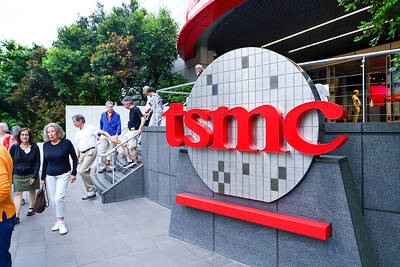
Taiwan Semiconductor Manufacturing Co (TSMC, 台積電) employee bonuses are likely to grow more than 30 percent this year, in line with the past few years as the company’s profits continue to set new records, an anonymous source cited TSMC chairman C.C. Wei (魏哲家) as saying yesterday. TSMC, the world’s largest contract chipmaker, is committed to taking care of its workers, the source said, citing Wei’s meeting with employees yesterday morning. Wei also expressed gratitude to employees for their contribution to the company’s improving bottom line, the source added. Since 2023, TSMC’s employee bonuses have grown at an annual rate of


 RSS
RSS