


Apple Inc has held exploratory discussions about using Intel Corp and Samsung Electronics Co to produce the main processors for its devices, a move that would offer a secondary option beyond longtime partner Taiwan Semiconductor Manufacturing Co (TSMC, 台積電).
The iPhone and iPad maker has had early-stage talks with Intel about enlisting the company’s chipmaking services, according to people familiar with the deliberations. Meanwhile, Apple executives have made visits to a Samsung plant under development in Texas that will also make advanced chips.
Neither effort has resulted in any orders so far, and the work with both suppliers remains preliminary, according to the people, who asked not to be identified because the talks are private. Apple has concerns about using non-TSMC technology and may not ultimately move forward with another partner, the people added.
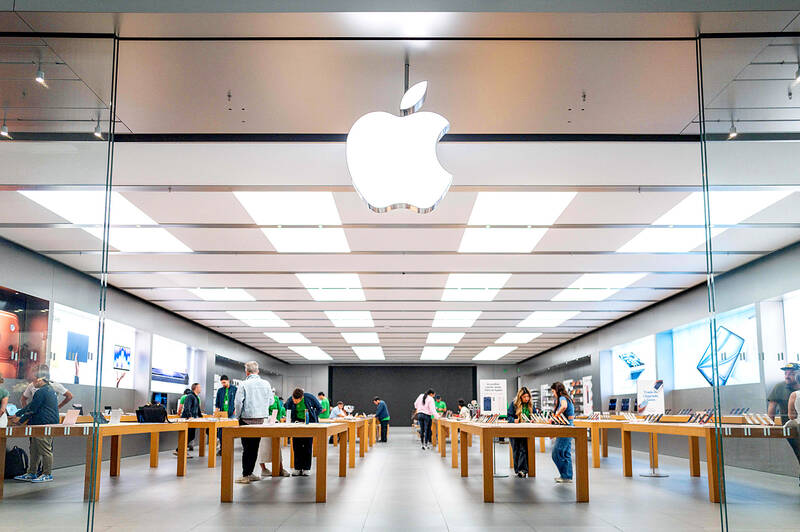
Photo: Getty Images via AFP
Spokespeople for Apple, Intel, Samsung and TSMC declined to comment.
For more than a decade, Apple has designed the main processors, known as system-on-a-chip (SoC), that power its devices and relied on TSMC to build them using the most advanced production processes in Taiwan. The latest iPhones and Macs use what is known as the 3-nanometer fabrication node.
But not even Apple, one of the largest purchasers of silicon, is immune to supply-chain disruptions. Recent shortages have been driven by the massive build-out of artificial intelligence (AI) data centers and higher-than-anticipated demand for Macs suitable for running AI models locally. That, in part, highlights the need for Apple to consider additional suppliers.
Apple executives discussed the problem during the company’s quarterly earnings call last week, saying that a lack of chips for the iPhone and Mac was constraining growth. “We have less flexibility in the supply chain than we normally would,” Apple chief executive officer Tim Cook said.
But finding backup suppliers is no easy feat. Intel and Samsung can’t reliably offer the type of production and scale that has turned TSMC into the dominant made-to-order chip manufacturer — and one of Apple’s most critical supply-chain partners.
Discussions with both companies started before the latest shortages took hold. Beyond helping shore up supply, there’s another potential benefit to working with Intel. A partnership could help Apple’s relationship with US President Donald Trump’s administration, some executives believe. The White House brokered an unconventional deal to invest in Intel last year and views the chipmaker as a national champion.
Samsung is already working on building more peripheral components for the iPhone and other products, including ones for managing device power, Apple said earlier.
Apple prefers to have at least two suppliers for any major component, giving it leverage in pricing negotiations and protection from supplier disruptions. For instance, it relies on several different manufacturers for the screens used across its product lineup.
Cook, who was instrumental in building its global supply chain, has long cautioned about relying on a single geography for critical components. Production in Taiwan carries particular risks because China sees the self-governing island as part of its territory.
As far back as 2022, Cook told employees in an all-hands meeting that “regardless of what you may feel and think, 60 percent coming out of anywhere is probably not a strategic position,” referring to chip production concentrated in Taiwan.
Since then, Apple has worked closely with TSMC to help expand operations in Phoenix, where the supplier now produces a limited number of chips for Apple from a single plant. It’s ramping up work quickly for Apple, which said it will get 100 million chips from Arizona this year.
That number would only cover a sliver of Apple’s overall annual device shipments, and executives remain concerned about potential disruptions to supply if China were to invade Taiwan.
Like other tech companies, Apple also is contending with shortages of memory chips. But Cook said that finding enough main processors — the SoCs — is a bigger challenge right now.
“The primary constraint is the availability of the advanced nodes our SoCs are produced on, not memory,” Cook said during the earnings call. That’s making it harder for Apple to satisfy demand for products like the Mac mini and Mac Studio, he said.
“I believe it will take several months to reach supply-demand balance,” he said.
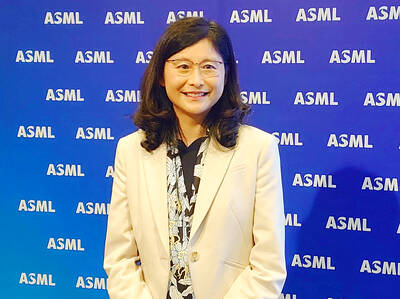
Netherlands-based semiconductor equipment supplier ASML Holding NV yesterday said that it is planning to hire an additional 1,000 people in Taiwan this year in response to growing demand from clients. ASML had previously planned to recruit 600 people this year, but that the plan has been adjusted upward, ASML vice president and ASML Taiwan general manager Grace Wang (汪佳慧) told reporters. ASML has a workforce of more than 4,500 in Taiwan, accounting for about 10 percent of its global total, Wang said. This year’s recruitment campaign would focus on adding people in the customer support, manufacturing and supply chain domains to assist ASML
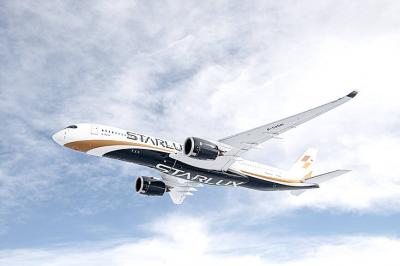
Starlux Airlines Co (星宇航空) today unveiled a long-haul network expansion plan at a shareholders’ meeting in Taipei, including direct flights to Barcelona, Spain, and Zurich, Switzerland, as well as a service connecting Taipei, Sydney and New Zealand. Starlux is to become the first Taiwanese carrier to offer non-stop services to the two European cities, while the inaugural oceanic route is expected to expand transit opportunities within the Australia-New Zealand market, Starlux said. Flight services to Chicago, Dallas, Washington and New York are under evaluation, the airline added. Prior to the shareholders’ meeting, the airline earlier this year announced that it would be
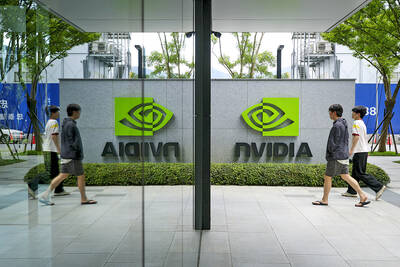
UNDER MICROSCOPE: Taiwan detained three people who allegedly conspired to buy servers in Taiwan and export them using fraudulent documentation, prosecutors said Nvidia Corp chief executive officer Jensen Huang (黃仁勳) on Saturday urged Super Micro Computer Inc to tighten up on compliance after Taiwan detained three people this week for allegedly making fraudulent declarations about artificial intelligence (AI) servers made by its US partner. The development marked the nation’s first crackdown on semiconductor smuggling, which grew after the US slapped restrictions on exports of high-end chips such as Nvidia AI accelerators to China. Nvidia is “rigorous” in explaining regulations to all of its partners, Huang told reporters after arriving in Taipei. “Ultimately Super Micro has to run their own company,” he said in response to
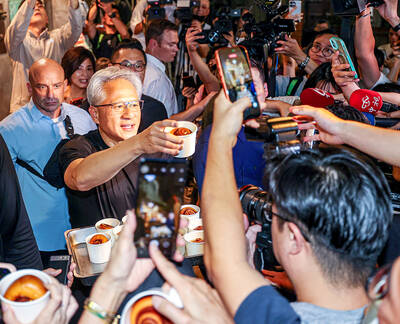
Nvidia Corp yesterday announced that CEO Jensen Huang (黃仁勳) would attend an employee meeting in Taipei tomorrow to celebrate the launch of the company’s Taiwan headquarters project. Huang would attend a gathering at the site of Nvidia’s planned headquarters in Beitou Shilin Technology Park (北投士林科技園區), the company said in a statement. After arriving in Taiwan on Saturday last week, Huang told reporters that he plans to meet with Quanta Computer Inc (廣達) chairman Barry Lam (林百里) and Taiwan Semiconductor Manufacturing Co (TSMC, 台積電) chairman C.C. Wei (魏哲家), and would attend the groundbreaking ceremony for Nvidia’s Taiwan headquarters tomorrow. Nvidia has not yet applied


 RSS
RSS