


The Federal Communications Commission (FCC) on Thursday voted unanimously to advance a proposal to bar all Chinese laboratories from testing electronic devices such as smartphones, cameras and computers for use in the US.
The US agency says about 75 percent of all US electronics are tested in China and it plans to adopt a streamlined approval process for devices tested in US laboratories or laboratories in nations not posing national security risks.
In a separate 3-0 vote, the commission advanced a proposal to bar China Mobile Ltd (中國移動), China Telecom Corp (中國電信) and China Unicom Hong Kong Ltd (中國聯通) from operating data centers in the US, and could ban telecoms from interconnecting with companies on its national security “Covered List.”
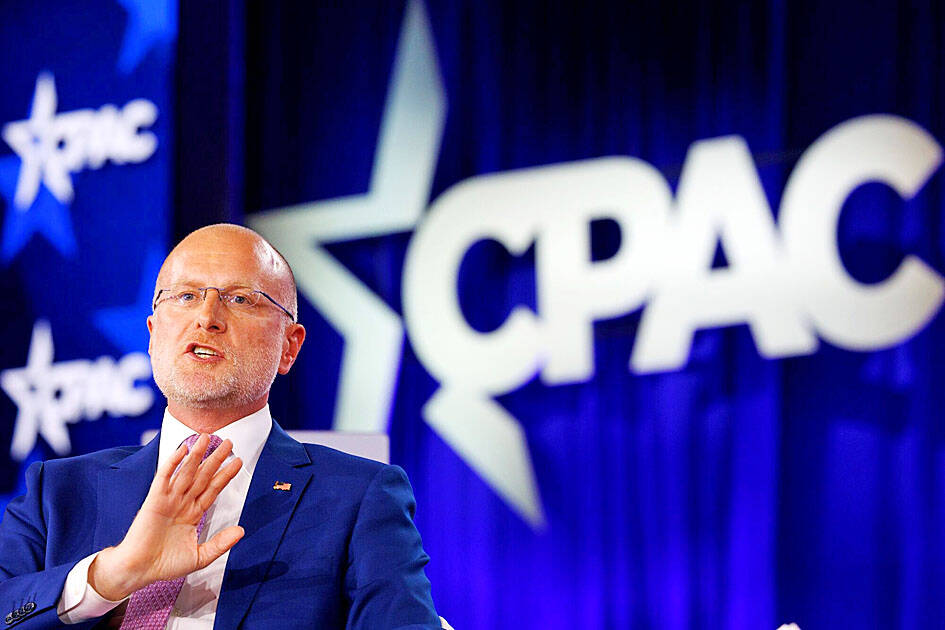
Photo: Bloomberg
Previously, the FCC barred the three companies from operating in the US.
The FCC said it was also considering barring interconnection with companies that own data centers or points of presence at US Internet exchange points, extending restrictions to some affiliates of listed firms, and prohibiting interconnection with carriers using equipment from suppliers on the national security list including Huawei Technologies Co (華為) and ZTE Corp (中興).
FCC Chairman Brendan Carr said the commission is considering a series of actions “to secure our networks from these bad actors, including limiting their interconnection ability.”
The moves build on previous actions to clamp down on Beijing, including earlier this month a proposal to ban the import of equipment from Chinese manufacturers on the Covered List, after barring approvals of new models by those companies in 2022.
The FCC in October last year moved to revoke the ability of HKT (香港電訊), a leading Hong Kong telecom and subsidiary of PCCW Corp (電訊盈科), to operate in the US In December, it banned the import of all new models of Chinese drones, and last month it banned imports of new models of Chinese-made consumer routers, the boxes connecting computers, phones, and smart devices to the Internet.
In response China yesterday slammed the proposals, saying that they undermine bilateral trade relations.
The Chinese Ministry of Commerce said that the restrictions would “seriously undermine the international economic and trade order,” vowing to hit back if they are implemented.
“If the US insists on going down the wrong path, China will resolutely take necessary measures to firmly safeguard the legitimate rights and interests of Chinese enterprises,” it said in a statement.
It accused the FCC of repeatedly introducing restrictive measures toward Chinese products and companies.
“These ... undermine the hard-won stability in China-US economic and trade relations ... and run counter to the consensus reached by the two heads of state,” the statement added.
Additional reporting by AFP
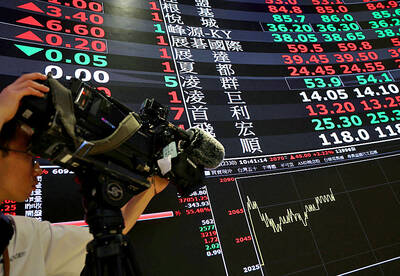
After several years flying high as Asia’s best Nvidia Corp proxy, Taiwan Semiconductor Manufacturing Co (TSMC, 台積電) is increasingly vying with other artificial intelligence (AI) stocks for investor attention. Stock traders are chasing a wider array of beneficiaries as mainstream usage of AI creates demand for hardware beyond the most-advanced chips TSMC makes for Nvidia. Subthemes from the deepening memory crunch to advances in robotics are also luring bids. At the same time, investment caps on single stocks are pushing funds to diversify, while retail investors long familiar with TSMC through its US depositary receipts are being offered a broader set of
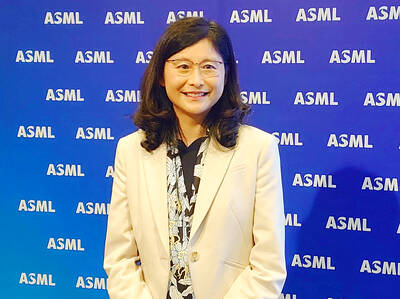
Netherlands-based semiconductor equipment supplier ASML Holding NV yesterday said that it is planning to hire an additional 1,000 people in Taiwan this year in response to growing demand from clients. ASML had previously planned to recruit 600 people this year, but that the plan has been adjusted upward, ASML vice president and ASML Taiwan general manager Grace Wang (汪佳慧) told reporters. ASML has a workforce of more than 4,500 in Taiwan, accounting for about 10 percent of its global total, Wang said. This year’s recruitment campaign would focus on adding people in the customer support, manufacturing and supply chain domains to assist ASML
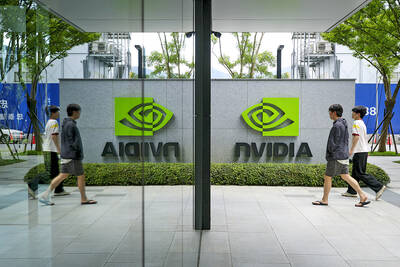
UNDER MICROSCOPE: Taiwan detained three people who allegedly conspired to buy servers in Taiwan and export them using fraudulent documentation, prosecutors said Nvidia Corp chief executive officer Jensen Huang (黃仁勳) on Saturday urged Super Micro Computer Inc to tighten up on compliance after Taiwan detained three people this week for allegedly making fraudulent declarations about artificial intelligence (AI) servers made by its US partner. The development marked the nation’s first crackdown on semiconductor smuggling, which grew after the US slapped restrictions on exports of high-end chips such as Nvidia AI accelerators to China. Nvidia is “rigorous” in explaining regulations to all of its partners, Huang told reporters after arriving in Taipei. “Ultimately Super Micro has to run their own company,” he said in response to

Nvidia Corp yesterday announced that CEO Jensen Huang (黃仁勳) would attend an employee meeting in Taipei tomorrow to celebrate the launch of the company’s Taiwan headquarters project. Huang would attend a gathering at the site of Nvidia’s planned headquarters in Beitou Shilin Technology Park (北投士林科技園區), the company said in a statement. After arriving in Taiwan on Saturday last week, Huang told reporters that he plans to meet with Quanta Computer Inc (廣達) chairman Barry Lam (林百里) and Taiwan Semiconductor Manufacturing Co (TSMC, 台積電) chairman C.C. Wei (魏哲家), and would attend the groundbreaking ceremony for Nvidia’s Taiwan headquarters tomorrow. Nvidia has not yet applied


 RSS
RSS