


Washington on Thursday unveiled measures aimed at preventing Chinese developers from improperly using leading US artificial intelligence (AI) models to build a rival generation of chatbots, marking the first major response to Silicon Valley companies’ complaints that China is piggybacking on their success.
In a memo, the White House Office of Science and Technology Policy said it would promote wider information sharing by US-based developers and increase efforts to help the industry detect unauthorized extraction of their AI models. The US government would also work with industry to determine how to rein in such abuses and hold bad actors accountable.
“There is nothing innovative about systematically extracting and copying the innovations of American industry, and there is nothing open about supposedly open models that are derived from acts of malicious exploitation,” White House Science and Technology Policy Director Michael Kratsios said in the memo.
Photo: AFP
The planned measures represent the most significant US effort so far to rein in a practice known as distillation, where AI developers train systems using results from a parent AI model to create similar capabilities in a new one at a far lower cost. Models made in this way avoid expenses from both research and the costly AI processors needed for original model training.
While tolerated for training smaller, less-advanced systems, distillation contravenes AI companies’ terms of use when it is employed to replicate a cutting-edge AI model without permission.
The White House in its memo clarified that the US supports a vibrant open-source ecosystem, but added that distillation aimed at undermining US research and development investments is unacceptable.
The broader effort to crack down on unauthorized distillation seeks to address a growing concern among US companies, including OpenAI, Anthropic PBC and Alphabet Inc’s Google, that output from their models is being wrongfully used by Chinese rivals such as DeepSeek (深度求索), Moonshot and MiniMax (稀宇科技) to develop products far more cheaply and with fewer safety guardrails.
The Office of Science and Technology Policy defines wrongful “industrial-scale” distillation as when foreign entities, primarily based in China, deploy “tens of thousands” of proxy accounts to access leading models and bombard them with queries deliberately aimed at extracting proprietary information that can be used to clone some of the model’s capabilities.
Though using so-called jail-breaking techniques can result in a nearly-free open-weight Chinese model that mimics a closed-weight US version, the statement warns that unauthorized actors can strip safety protocols through this method, resulting in models that are neither neutral nor truthful.
“Foreign entities who build their AI capabilities on such fragile foundations should have little confidence in the integrity and reliability of the models they produce,” Kratsios said in the memo.
Top US developers are widely viewed as still being ahead of their Chinese rivals in terms of AI capabilities. Yet at least three US firms have begun to raise the alarm that adversarial distillation poses a risk to their businesses and started sharing information with each other on unauthorized extraction of their models’ output. The US government would now join that effort, with a focus on informing companies about the tactics and actors involved.
Many models made by Chinese companies are open source and largely free for customers to use. That poses an economic challenge for US AI firms that have kept their systems proprietary, betting that users would pay for access and help offset the hundreds of billions of dollars the firms have spent on data centers and other infrastructure.
US officials estimate that illicit extraction of results is costing Silicon Valley billions of dollars in annual profit, a person familiar with the findings said.
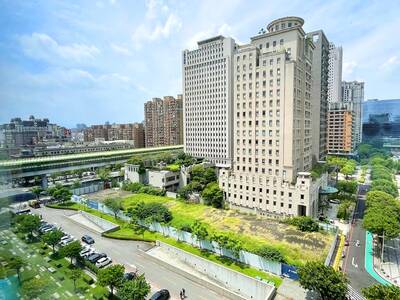
Taichung reported the steepest fall in completed home prices among the six special municipalities in the first quarter of this year, data compiled by Taiwan Realty Co (台灣房屋) showed yesterday. From January through last month, the average transaction price for completed homes in Taichung fell 8 percent from a year earlier to NT$299,000 (US$9,483) per ping (3.3m²), said Taiwan Realty, which compiled the data based on the government’s price registration platform. The decline could be attributed to many home buyers choosing relatively affordable used homes to live in themselves, instead of newly built homes in the city’s prime property market, Taiwan Realty
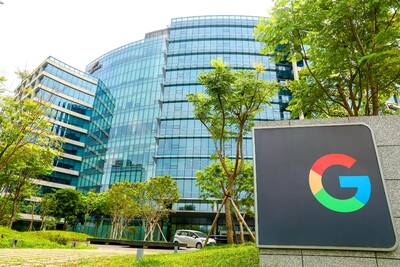
The government yesterday approved applications by Alphabet Inc’s Google to invest NT$27.08 billion (US$859.98 million) in Taiwan, the Ministry of Economic Affairs said in a statement. The Department of Investment Review approved two investments proposed by Google, with much of the funds to be used for data processing and electronic information supply services, as well as inventory procurement businesses in the semiconductor field, the ministry said. It marks the second consecutive year that Google has applied to increase its investment in Taiwan. Google plans to infuse NT$25.34 billion into Charter Investments Ltd (特許投資顧問) through its Singapore-based subsidiary Fructan Holdings Singapore Pte Ltd, and

JET JUICE: The war on Iran’s secondary effects have seen fuel prices skyrocket, knocking flight schedules down to earth in return as airlines struggle with costs Airline passengers should brace for more irritation in the next few months as carriers worldwide cancel flights and ground planes to cope with stratospheric increases in jet-fuel prices. Dutch flag carrier KLM is the latest company to cut its schedule, saying on Thursday that it would scrap 80 return flights at Amsterdam’s Schiphol Airport in the coming month. That puts it in the same league as United Airlines Holdings Inc, Deutsche Lufthansa AG and Cathay Pacific Airways Ltd, which have all pruned itineraries to mitigate costs. Global capacity for next month has been reduced by about 3 percentage points, with all

The US said it plans to help build a first-of-its-kind industrial hub in the Philippines to boost production of inputs crucial to US supply chains. The 4,000-acre hub is intended to be “a purpose-built platform for allied manufacturing” and “an investment acceleration hub where the specific industrial activities are shaped by market demand,” the US Department of State said on Thursday. The project — touted as an “economic security zone” — would be within the Luzon Economic Corridor, a flagship economic project backed by the US and Japan on the main Philippine island. The project was also described as “the first artificial intelligence


 RSS
RSS