


Reverse mortgage lending in Taiwan is accelerating as more elderly homeowners tap rising property values to fund their retirement, signaling that the once-niche financial product is entering a faster growth phase.
The trend comes as Taiwan rapidly moves toward becoming a “super-aged” society — when at least 20 percent of the population is aged 65 or older — increasing pressure on households to secure stable retirement income.
Sixteen domestic banks had approved 10,663 reverse mortgage loans totaling NT$62.8 billion (US$1.99 billion) as of the end of the first quarter of this year, with new approvals hitting a record pace, despite the business typically slowing early in the year, Financial Supervisory Commission data showed.
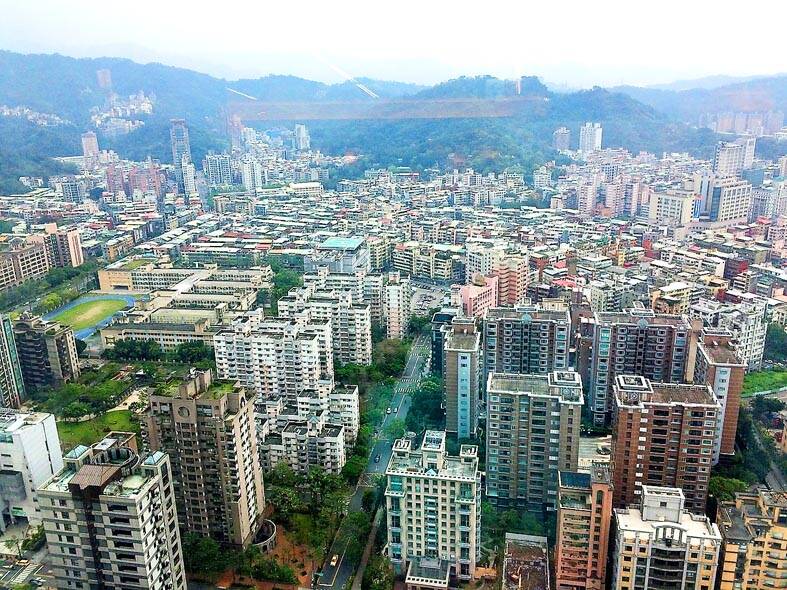
Photo: Kelson Wang, Taipei Times
In the January-to-March period, lenders approved 323 loans totaling NT$2.36 billion — the highest number for the same period on record.
Since the program’s launch in 2015, reverse mortgage lending had expanded at a moderate pace.
From 2015 to 2024, annual approvals ranged from about 760 to 1,200, with loan volume of NT$4.5 billion to NT$6.5 billion — equivalent to about 200 to 300 loans totaling NT$1.2 billion to NT$1.6 billion per quarter.
The pace began to pick up last year as quarterly approvals consistently exceeded 300 cases and loan volume surpassed NT$2 billion.
Bankers attribute the acceleration to growing public acceptance of the product, rising awareness among older households about planning their retirement income and persistently high housing prices that boost borrowing capacity.
Rising property values in the Taipei area illustrate the effect. If a home’s valuation increases from NT$20 million to NT$24 million, the available loan amount would rise by about NT$2.4 million under a typical 60 percent loan-to-value ratio.
The reverse mortgage lending business remains heavily concentrated among state-controlled lenders.
In the first quarter of this year, six government-controlled banks — Taiwan Cooperative Bank Ltd (合庫銀行), Land Bank of Taiwan Co (土地銀行), First Commercial Bank Co (第一銀行), Hua Nan Commercial Bank Ltd (華南銀行), Bank of Taiwan Co (台灣銀行) and Mega International Commercial Bank Co (兆豐銀行) — accounted for 319 newly approved loans, or 98 percent of the total.
Their combined loan volume reached NT$2.33 billion, representing about 98 percent of the market.
Taiwan Cooperative Bank alone added NT$742 million across 113 loans during the quarter, contributing to more than one-third of new business.
Policy support could further boost demand, as the government is promoting “all-age finance” initiatives this year, with reverse mortgages positioned as a key tool for retirement financial planning, bank executives said.
Under a potential framework, loan proceeds could be paid directly to long-term care institutions if borrowers use such services, helping reduce misuse risks, while improving the efficiency of fund allocation.

Cairo’s new monorail slices across the city skyline, running above the familiar chaos of blaring horns and aging buses’ exhaust fumes that mark rush hour below. The US$4.5 billion monorail, opened this month, is among Egypt’s most prominent new transport projects, part of a debt-funded infrastructure drive criticized for sapping state finances while bringing limited benefits to most of the country’s 109 million people. “It feels like you’re in a different country,” said Ramy Sayed, a restaurant manager, aboard a driverless Innovia 300 train. “No noise, no traffic, we’re not used to this.” The eastern line runs 56km from the bustling middle-class
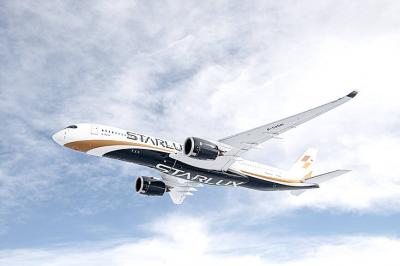
Starlux Airlines Co (星宇航空) today unveiled a long-haul network expansion plan at a shareholders’ meeting in Taipei, including direct flights to Barcelona, Spain, and Zurich, Switzerland, as well as a service connecting Taipei, Sydney and New Zealand. Starlux is to become the first Taiwanese carrier to offer non-stop services to the two European cities, while the inaugural oceanic route is expected to expand transit opportunities within the Australia-New Zealand market, Starlux said. Flight services to Chicago, Dallas, Washington and New York are under evaluation, the airline added. Prior to the shareholders’ meeting, the airline earlier this year announced that it would be

Taiwanese prosecutors suspect that three people successfully smuggled at least one shipment of Nvidia Corp artificial intelligence (AI) chips to China after first exporting them to Japan, people familiar with the matter said. The trio was detained last week by the Keelung District Prosecutors’ Office for allegedly falsifying documents related to exports of Super Micro Computer Inc servers containing advanced Nvidia chips, which the US has barred from sale to China without a license from Washington. The move marked Taiwan’s first public crackdown on AI chip diversion after years of pressure from the US to take a more active role in curtailing

Taiwan Semiconductor Manufacturing Co (TSMC, 台積電) employee bonuses are likely to grow more than 30 percent this year, in line with the past few years as the company’s profits continue to set new records, an anonymous source cited TSMC chairman C.C. Wei (魏哲家) as saying yesterday. TSMC, the world’s largest contract chipmaker, is committed to taking care of its workers, the source said, citing Wei’s meeting with employees yesterday morning. Wei also expressed gratitude to employees for their contribution to the company’s improving bottom line, the source added. Since 2023, TSMC’s employee bonuses have grown at an annual rate of


 RSS
RSS