


Regulators across Asia are stepping up scrutiny of cybersecurity risks in their financial systems, as concerns over Anthropic PBC’s latest artificial intelligence (AI) model Claude Mythos spread.
Singapore’s financial regulator is urging banks to plug holes, while South Korea’s government agencies have met to review and discuss how to respond to the risks. In Australia, authorities expect lenders to be vigilant to ensure clients are not put at risk by inadequate controls.
The actions around the region reflect rising global concern over Mythos as regulators discuss with financial firms how they are handling the cybersecurity risks raised by the model, which has so far been given only a limited release. Anthropic held back a wider release after finding the model was capable of discovering security holes that have gone undetected for years, fueling alarm about a potential new era of cybersecurity attacks.
Photo: Reuters
The South Korea Financial Supervisory Service last week convened an emergency meeting with industry organizations to discuss issues related to Mythos, people familiar with the matter said.
The talks focused on exchanging current knowledge on security levels related to Mythos and how to respond to such circumstances to ensure system stability, the people said, asking not to be identified discussing confidential matters.
As there is still a lot of uncertainty, the discussion focused on understanding the current situation, they said.
A special committee on security and relevant authorities in South Korea also met last week to take stock of the rapid changes that are fundamentally transforming the cybersecurity landscape, with suggestions including setting up an AI-based real-time defense system.
“We have entered an era where AI, not humans, holds the initiative in hacking,” South Korean Special Committee on Security chairman Lee Won-tae said. “It is clear that if we fail to adapt all our existing security policies to the pace of technological evolution, security will ultimately become an obstacle to the AI transformation and our leap toward becoming an AI powerhouse.”
Meanwhile, a spokesperson for the Australian Securities and Investments Commission said that while new technologies can have benefits, they have also led to cyberrisks escalating in scale and sophistication.
The commission expects financial services licensees to be “on the front foot every day” on having sufficient safeguards, they added.
The securities watchdog said it engages closely with other regulators, government agencies and the financial sector to understand and respond to changing technologies, similar to the approach being taken by the country’s prudential regulator.
Elsewhere, the Monetary Authority of Singapore is coordinating with the Singaporean Cyber Security Agency to bolster defenses at critical infrastructure operators including banks, a spokesperson said.
“Financial institutions need to redouble efforts to strengthen their security defenses, proactively identify and close vulnerabilities, and raise vigilance on cyber hygiene, including timely security patching,” the spokesperson said.
Advances in AI would “accelerate the discovery and exploitation of software vulnerabilities in IT [information technology] systems,” they added.
The Singaporean Cyber Security Agency on Wednesday last week published an advisory warning of similar risks, without naming Mythos directly.
See editorial on page 8

Cairo’s new monorail slices across the city skyline, running above the familiar chaos of blaring horns and aging buses’ exhaust fumes that mark rush hour below. The US$4.5 billion monorail, opened this month, is among Egypt’s most prominent new transport projects, part of a debt-funded infrastructure drive criticized for sapping state finances while bringing limited benefits to most of the country’s 109 million people. “It feels like you’re in a different country,” said Ramy Sayed, a restaurant manager, aboard a driverless Innovia 300 train. “No noise, no traffic, we’re not used to this.” The eastern line runs 56km from the bustling middle-class

Taiwanese firms have increased investment in the Philippines in recent years as Manila’s ties with Washington deepen and global supply chains continue to shift away from China, an expert at the Chung-Hua Institution for Economic Research (CIER, 中華經濟研究院) said yesterday. The Philippines had not been among Taiwanese investors’ top choices in Southeast Asia, CIER Taiwan ASEAN Studies Center director Kristy Hsu (徐遵慈) said at a seminar in Taipei. However, Taiwan’s investment in the country has grown significantly since the COVID-19 pandemic, reaching US $257 million last year, a high in recent years, she said. Although Taiwan’s total investment in the Philippines still lags
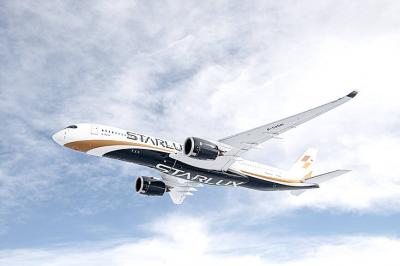
Starlux Airlines Co (星宇航空) today unveiled a long-haul network expansion plan at a shareholders’ meeting in Taipei, including direct flights to Barcelona, Spain, and Zurich, Switzerland, as well as a service connecting Taipei, Sydney and New Zealand. Starlux is to become the first Taiwanese carrier to offer non-stop services to the two European cities, while the inaugural oceanic route is expected to expand transit opportunities within the Australia-New Zealand market, Starlux said. Flight services to Chicago, Dallas, Washington and New York are under evaluation, the airline added. Prior to the shareholders’ meeting, the airline earlier this year announced that it would be
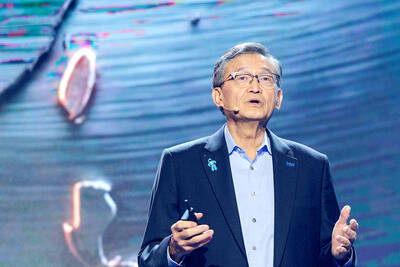
Intel Corp regards Taiwan Semiconductor Manufacturing Co (TSMC, 台積電) as a longstanding partner, as the US chipmaker would continue outsourcing production of advanced chips to TSMC, Intel chief executive officer Lip-Bu Tan (陳立武) said yesterday. “I don’t look at people as competitors. I look at the collaboration... Nvidia is also, you know, a good friend,” Tan told a news conference following his keynote speech at the Computex trade show in Taipei. “It’s a very trusted partnership for us... We are a big, top customer for them, and we’re going to continue doing that,” he said, referring to TSMC, the world’s largest foundry


 RSS
RSS