


Taiwanese stocks yesterday rose to a new record as investors returned to the pre-Iran war trading theme of chasing artificial intelligence (AI) shares amid hopes for easing tensions in the Middle East.
The TAIEX yesterday closed up 838.83 points, or 2.37 percent, at 36,296.12, boosted by index heavyweight Taiwan Semiconductor Manufacturing Co (TSMC, 台積電), which rose 2.37 percent to a new high of NT$2,055. Meanwhile, the New Taiwan dollar rose NT$0.095 to close at NT$31.69 against the US dollar.
Other Asian stocks also moved higher yesterday, tracking Wall Street gains, with Japan’s Nikkei 225 rising 2.43 percent to 57,877.39, while South Korea’s KOSPI jumped 2.74 percent to 5,967.75 after briefly topping 6,000 intraday. Hong Kong’s Hang Seng Index rose 0.7 percent, while the Shanghai Composite Index climbed 1 percent and Australia’s S&P/ASX 200 gained 0.5 percent.
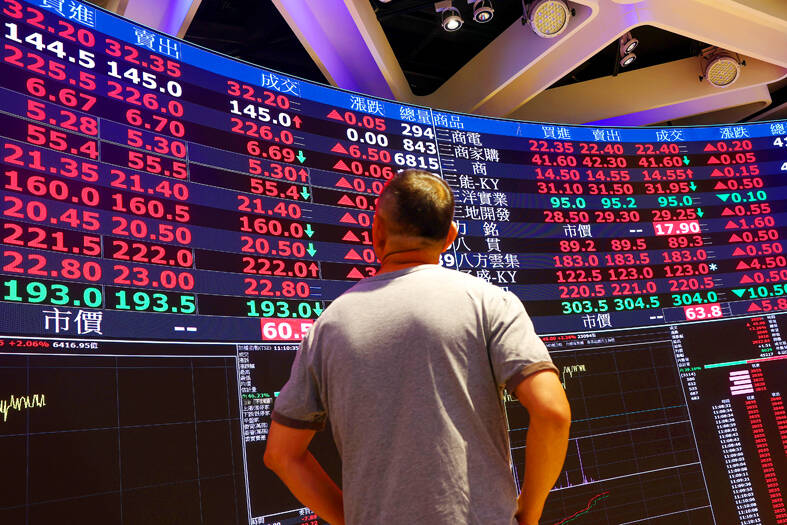
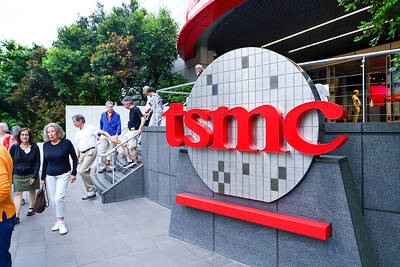
Photo: CNA
Taiwan’s benchmark has gained 25.32 percent so far this year, outpacing the MSCI Asia Pacific Index’s nearly 10 percent increase. The latest advance helped the TAIEX erase all its losses since the war started at the end of February, when global AI stocks were battered due to concerns about soaring energy costs and supply disruptions.
Singaporean equities have also erased their declines, while China is less than 1 percent away, Japan within 2 percent, Australia and Hong Kong about 3 percent, and South Korea about 4.4 percent below prewar levels.
Hopes of a US-Iran deal were raised after US President Donald Trump said overnight that Tehran had “called” to say “they would like to work to a deal,” prompting buying from investors in the region, including Taiwan, Moore Securities Investment Consulting Co (摩爾投顧) analyst Adam Lin (林漢偉) said.
“With the TAIEX repeatedly hitting highs, many investors believed the worst of the impact from the Middle East tensions is over,” Lin said. “As long as crude oil prices turn stable, the US markets continue to move higher and the local index will follow.”
As signs are emerging that another round of ceasefire negotiations could be under way, confidence is building in financial markets that a deal remains within reach and that energy flows will stabilize, allowing investors to refocus on growth and corporate earnings.
“As the Iran deal hopes improve, markets will refocus on earnings growth and AI,” Syfe Pte Ltd investment head Ritesh Ganeriwal said. “Taiwan will continue to benefit given its dominant position in the AI supply chain.”
TSMC’s gains came after the sole chipmaker for Nvidia Corp’s advanced AI accelerators reported a 35.1 percent annual increase in first-quarter revenue last week, suggesting global AI chip demand remained intact during the first weeks of the Iran war.
Revenue for the first three months of the year rose to NT$1.13 trillion, a record high. TSMC is scheduled to report full first-quarter earnings on tomorrow.
“With the rapid growth trajectories we are seeing from Anthropic, OpenAI and other leading AI developers, many of those doubts have faded,” M&G Investments Asian equities portfolio manager Vikas Pershad said. “Key bottlenecks have tightened meaningfully, and many of the most critical points in the value chain continue to sit in Taiwan.”
Additional reporting by CNA
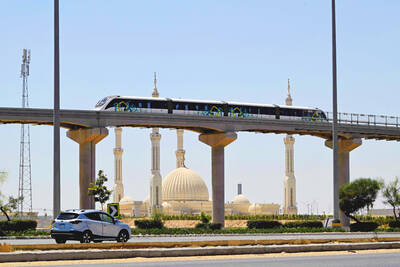
Cairo’s new monorail slices across the city skyline, running above the familiar chaos of blaring horns and aging buses’ exhaust fumes that mark rush hour below. The US$4.5 billion monorail, opened this month, is among Egypt’s most prominent new transport projects, part of a debt-funded infrastructure drive criticized for sapping state finances while bringing limited benefits to most of the country’s 109 million people. “It feels like you’re in a different country,” said Ramy Sayed, a restaurant manager, aboard a driverless Innovia 300 train. “No noise, no traffic, we’re not used to this.” The eastern line runs 56km from the bustling middle-class
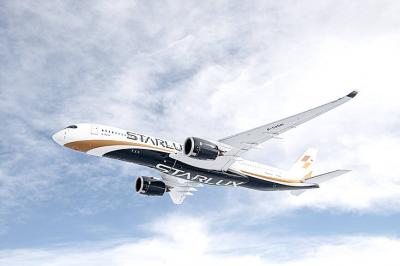
Starlux Airlines Co (星宇航空) today unveiled a long-haul network expansion plan at a shareholders’ meeting in Taipei, including direct flights to Barcelona, Spain, and Zurich, Switzerland, as well as a service connecting Taipei, Sydney and New Zealand. Starlux is to become the first Taiwanese carrier to offer non-stop services to the two European cities, while the inaugural oceanic route is expected to expand transit opportunities within the Australia-New Zealand market, Starlux said. Flight services to Chicago, Dallas, Washington and New York are under evaluation, the airline added. Prior to the shareholders’ meeting, the airline earlier this year announced that it would be
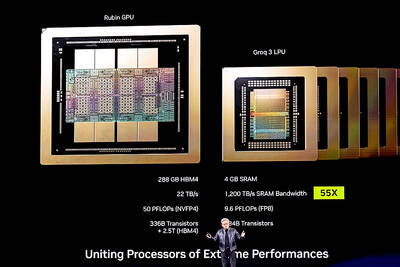
Taiwanese prosecutors suspect that three people successfully smuggled at least one shipment of Nvidia Corp artificial intelligence (AI) chips to China after first exporting them to Japan, people familiar with the matter said. The trio was detained last week by the Keelung District Prosecutors’ Office for allegedly falsifying documents related to exports of Super Micro Computer Inc servers containing advanced Nvidia chips, which the US has barred from sale to China without a license from Washington. The move marked Taiwan’s first public crackdown on AI chip diversion after years of pressure from the US to take a more active role in curtailing
Taiwan Semiconductor Manufacturing Co (TSMC, 台積電) employee bonuses are likely to grow more than 30 percent this year, in line with the past few years as the company’s profits continue to set new records, an anonymous source cited TSMC chairman C.C. Wei (魏哲家) as saying yesterday. TSMC, the world’s largest contract chipmaker, is committed to taking care of its workers, the source said, citing Wei’s meeting with employees yesterday morning. Wei also expressed gratitude to employees for their contribution to the company’s improving bottom line, the source added. Since 2023, TSMC’s employee bonuses have grown at an annual rate of


 RSS
RSS