


Lawmakers yesterday engaged in a feverish debate during a meeting of the legislature’s Transportation Committee over whether the ban on tour group travel to China should be lifted. The debate followed remarks by Shanghai Vice Mayor Hua Yuan (華源) at the Taipei-Shanghai Twin-City Forum in Taipei on Tuesday.
The Ministry of Transportation and Communications was invited to give a report and discuss the possible reopening of cross-strait tourism.
Chinese Nationalist Party (KMT) and Taiwan People’s Party (TPP) legislators argued in favor of lifting the ban on group tours to China and providing reciprocal access to group tours from China, while Democratic Progressive Party (DPP) legislators accused the KMT and TPP of being scared to stand up to China on this issue.

Photo: Tsai Yun-rong, Taipei Times
If the People’s Republic of China (PRC) were to release definitive plans, Taiwan would begin serious discussions and enquiries into lifting the ban, Minister of Transportation and Communications Chen Shi-kai (陳世凱) said yesterday.
However, it must first ensure the safety of Taiwanese citizens, due to previous incidents of Taiwanese being detained or having phones searched in China, Chen said.
Taiwan allows independent tourists to travel from Taiwan to China. It temporarily relaxed restrictions on group travel from March to May, before banning them again in June. However, those who had already booked group trips before June were permitted to go ahead with their travel plans, with 230,000 having traveled as of October, Chen said.
Meanwhile, China has upheld restrictions on independent and group travel of Chinese citizens to Taiwan, except for those who have applied for official permission. Although residents from Fujian Province have been granted permission to travel in tour groups via ferry to the Taiwanese islands of Kinmen and Matsu, visitors have remained low, with only 32,000 Chinese visitors to Taiwan recorded through October, Chen added.
The national tourism industry has expressed hope that the group travel ban to China would be lifted. However, the number of travelers from Taiwan to China compared with from China to Taiwan clearly shows who ought to make the first move, DPP Legislator Lin Chun-hsien (林俊憲) said.
Democratic countries such as Taiwan are ruled by law, whereas China is not, so China can enforce arbitrary travel bans for political reasons whenever it wants, causing losses to Taiwan’s domestic tourism industry, DPP Legislator Tsai Chi-chang (蔡其昌) said.
The Tourism Administration should warn operators that the Chinese tourism business is filled with risks, and they should limit investment and resources to prevent losses, Tsai said.

A magnitude 6.1 earthquake struck off the coast of Yilan County at 8:39pm tonight, the Central Weather Administration (CWA) said, with no immediate reports of damage or injuries. The epicenter was 38.7km east-northeast of Yilan County Hall at a focal depth of 98.3km, the CWA’s Seismological Center said. The quake’s maximum intensity, which gauges the actual physical effect of a seismic event, was a level 4 on Taiwan’s 7-tier intensity scale, the center said. That intensity level was recorded in Yilan County’s Nanao Township (南澳), Hsinchu County’s Guansi Township (關西), Nantou County’s Hehuanshan (合歡山) and Hualien County’s Yanliao (鹽寮). An intensity of 3 was
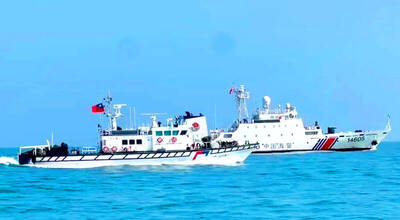
Instead of focusing solely on the threat of a full-scale military invasion, the US and its allies must prepare for a potential Chinese “quarantine” of Taiwan enforced through customs inspections, Stanford University Hoover fellow Eyck Freymann said in a Foreign Affairs article published on Wednesday. China could use various “gray zone” tactics in “reconfiguring the regional and ultimately the global economic order without a war,” said Freymann, who is also a nonresident research fellow at the US Naval War College. China might seize control of Taiwan’s links to the outside world by requiring all flights and ships entering or leaving Taiwan
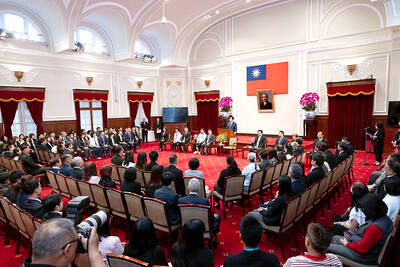
The next minimum wage hike is expected to exceed NT$30,000, President William Lai (賴清德) said yesterday during an award ceremony honoring “model workers,” including migrant workers, at the Presidential Office ahead of Workers’ Day today. Lai said he wished to thank the awardees on behalf of the nation and extend his most sincere respect for their hard work, on which Taiwan’s prosperity has been built. Lai specifically thanked 10 migrant workers selected for the award, saying that although they left their home countries to further their own goals, their efforts have benefited Taiwan as well. The nation’s industrial sector and small businesses lay
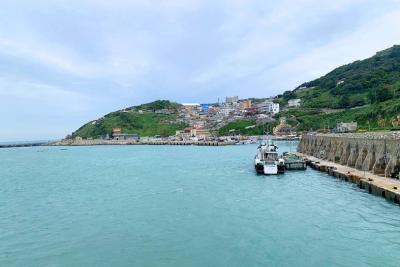
Taiwan has activated backup communications for its northernmost territory, the remote and strategically located island of Dongyin (東引), after poor weather conditions apparently shifted the wreckage of a ship onto an undersea cable causing it to break. The vulnerability of undersea communication cables linking Taiwan with its outlying islands has been a persistent cause of concern for Taipei, whose government has on several occasions blamed Chinese ships for intentionally causing damage. Dongyin, home to about 1,500 people, sits in a strategic position at the top of the Taiwan Strait and the island has a heavy military presence. It does not have an


 RSS
RSS