


The government has launched an “affordable plastic bag” program to stabilize local supply, as heightened Middle East tensions have caused fluctuations in the petrochemical raw materials market and led to supply constraints for some materials and higher prices, Minister of Economic Affairs Kung Ming-hsin (龔明鑫) said yesterday.
Under the program, state-run CPC Corp, Taiwan (CPC, 台灣中油) would allocate 5,000 tonnes of additional ethylene to produce affordable plastic bags to meet demands from local shopping areas, night markets and consumers, Kung said after meeting representatives from 30 local commercial districts at the ministry in Taipei.
CPC on Wednesday last week started to supply the 5,000 tonnes of additional ethylene from the No. 4 naphtha cracker in Kaohsiung to Formosa Plastics Corp (台灣塑膠) to produce polyethylene, which would be supplied to manufacturers of plastic bags.
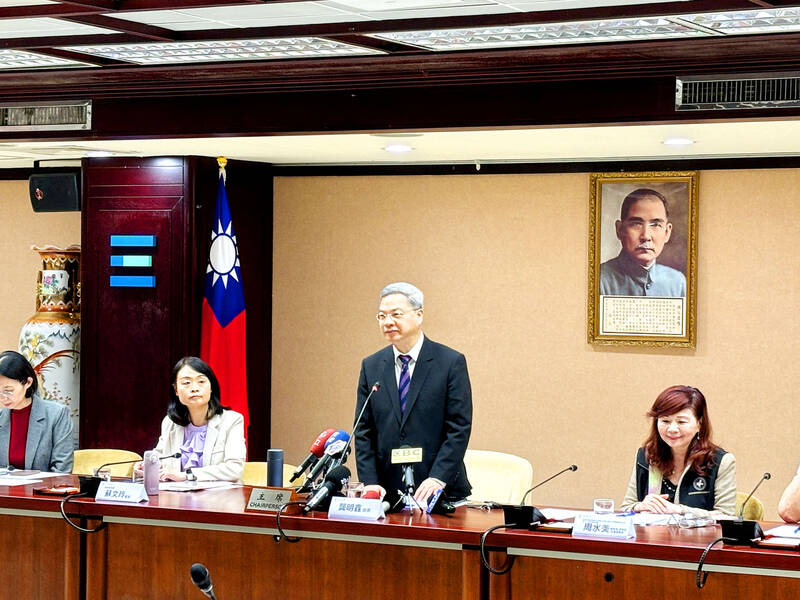
Photo: CNA
Upstream ethylene production by CPC is expected to increase to 79,000 tonnes this month from 60,000 tonnes last month and reach 90,000 tonnes next month, the Ministry of Economic Affairs said.
As for the supply of midstream polyethylene, the ministry said that CPC would increase production from 22,000 tonnes last month to 27,500 tonnes this month, with a further increase next month.
The ministry expects the higher output of such materials to help stabilize plastic bag supply and prices, Kung said.
While no fixed reference prices would be set for plastic bags, suppliers are expected to reflect CPC’s material costs within a reasonable range to prevent inappropriate price manipulation, Kung said.
The ministry has reviewed distribution channels nationwide and activated response measures to stabilize inventories at major retail chains and ensure stable consumer access, he said.
Commercial district representatives said during the meeting that plastic bag supply remains broadly stable, but shortages and rising prices have been reported in some retail channels, rural areas and for some specialized products.
Chiayi City Commercial District Development Association head Liu Ching-tsung (劉慶宗) said shortages appear more severe in southern Taiwan, with shelves still empty at major plastic bag suppliers.
Commonly used plastic bags — including smaller bags and inner bags — are in particularly short supply, he said.
While commercial district representatives gave their support to the government’s plastic bag program to ease panic buying, they also suggested that the government introduce incentive measures to encourage consumers to reduce use of plastic bags, bring their own shopping bags or practice recycling amid the current shortage, which would help balance people’s needs with environmental sustainability.

Cairo’s new monorail slices across the city skyline, running above the familiar chaos of blaring horns and aging buses’ exhaust fumes that mark rush hour below. The US$4.5 billion monorail, opened this month, is among Egypt’s most prominent new transport projects, part of a debt-funded infrastructure drive criticized for sapping state finances while bringing limited benefits to most of the country’s 109 million people. “It feels like you’re in a different country,” said Ramy Sayed, a restaurant manager, aboard a driverless Innovia 300 train. “No noise, no traffic, we’re not used to this.” The eastern line runs 56km from the bustling middle-class

Taiwanese firms have increased investment in the Philippines in recent years as Manila’s ties with Washington deepen and global supply chains continue to shift away from China, an expert at the Chung-Hua Institution for Economic Research (CIER, 中華經濟研究院) said yesterday. The Philippines had not been among Taiwanese investors’ top choices in Southeast Asia, CIER Taiwan ASEAN Studies Center director Kristy Hsu (徐遵慈) said at a seminar in Taipei. However, Taiwan’s investment in the country has grown significantly since the COVID-19 pandemic, reaching US $257 million last year, a high in recent years, she said. Although Taiwan’s total investment in the Philippines still lags
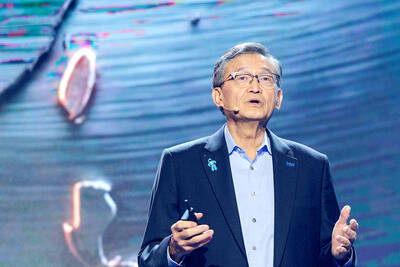
Intel Corp regards Taiwan Semiconductor Manufacturing Co (TSMC, 台積電) as a longstanding partner, as the US chipmaker would continue outsourcing production of advanced chips to TSMC, Intel chief executive officer Lip-Bu Tan (陳立武) said yesterday. “I don’t look at people as competitors. I look at the collaboration... Nvidia is also, you know, a good friend,” Tan told a news conference following his keynote speech at the Computex trade show in Taipei. “It’s a very trusted partnership for us... We are a big, top customer for them, and we’re going to continue doing that,” he said, referring to TSMC, the world’s largest foundry

Artificial intelligence (AI) agents would supplant smartphones as the center of people’s digital lives, fundamentally reshaping personal devices and driving a major computing upgrade cycle, Qualcomm Inc CEO Cristiano Amon said yesterday. In his keynote speech for this year’s Computex trade show in Taipei, Amon said that the rise of "agentic AI" — AI systems capable of reasoning, planning and carrying out tasks autonomously — would transform how people interact with technology across phones, PCs, vehicles and wearable devices. Describing the technology as the next major evolution in computing, Amon said that "2026 is the year of agents.” For decades, smartphones have sat


 RSS
RSS