


US President Donald Trump on Thursday ordered 100 percent tariffs on certain branded pharmaceutical imports, and overhauled steel, aluminum and copper duties as his administration sought to move on from the collapse of the broad global tariffs that he announced exactly a year earlier.
The new tranche of tariffs is aimed partly at rebuilding duties lost when the US Supreme Court struck them down in February, but they drew criticism from some business groups for adding potential new cost pressures at a time when the war on Iran has spiked energy prices for consumers.
In a new proclamation revealing the results of a long-awaited national security investigation into pharmaceutical imports, Trump said foreign manufacturers of patented products must agree to make deals with the US government to cut prescription-drug prices and commit to moving production to the US.
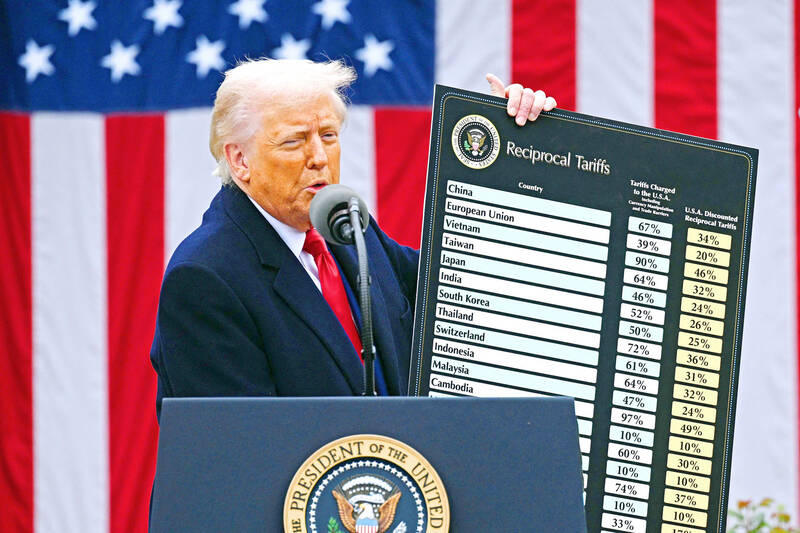
Photo: AFP
They must do both to avoid tariffs altogether and would face a 20 percent tariff if they simply move some manufacturing to the US, an administration official said.
Those who do neither would face a 100 percent duty.
The tariffs would not apply to drug imports from all countries. Branded drug tariffs would be capped at 15 percent under trade deals with the EU, Japan, South Korea and Switzerland.
The US and Britain also finalized a separate pharmaceuticals tariff deal that guarantees zero tariffs on British-made pharmaceuticals for at least three years as Britain builds out production in the US.
An administration official said that large pharmaceutical companies would have 120 days to comply before the 100 percent tariff rates begin, and smaller producers would have 180 days.
Trump also issued a separate metals tariff proclamation that halved the duty rate to 25 percent on many derivative products made with steel, aluminum and copper, and dropped them altogether on products with minimal metals content.
The move kept in place the 50 percent duty on commodity imports of steel, aluminum and copper, but the official said that the Trump administration would now apply this rate to the US sales price of the metals and not the declared import value, which the official said had often been kept artificially low.
The metals changes are aimed at simplifying an overly complicated tariff regime that gave importers headaches in trying to determine the value of the metal content of thousands of derivative products, from tractor parts to stainless steel sinks and railroad equipment.
Products with minimal metals content of less than 15 percent by weight, such as a dental floss container with a tiny steel cutter blade, would no longer be subject to the tariffs.
The White House also said it would cut duties on certain metal-intensive industrial and power-grid equipment to 15 percent from 50 percent through next year to aid a broad industrial and data-center buildout.
The change in the metals tariffs would be effective just after midnight on Monday, the order said.
The changes came on the one-year anniversary of Trump’s “Liberation Day” announcements of “reciprocal tariffs” ranging from 10 percent to 50 percent on imports from all trading partners and even some uninhabited islands.
The tariffs under the International Emergency Economic Powers Act commenced months of retaliation from China, trade negotiations with other countries and court challenges from importers.
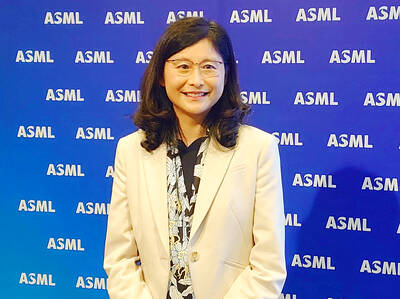
Netherlands-based semiconductor equipment supplier ASML Holding NV yesterday said that it is planning to hire an additional 1,000 people in Taiwan this year in response to growing demand from clients. ASML had previously planned to recruit 600 people this year, but that the plan has been adjusted upward, ASML vice president and ASML Taiwan general manager Grace Wang (汪佳慧) told reporters. ASML has a workforce of more than 4,500 in Taiwan, accounting for about 10 percent of its global total, Wang said. This year’s recruitment campaign would focus on adding people in the customer support, manufacturing and supply chain domains to assist ASML
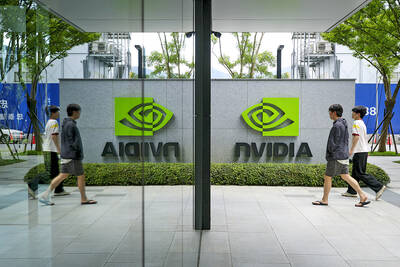
UNDER MICROSCOPE: Taiwan detained three people who allegedly conspired to buy servers in Taiwan and export them using fraudulent documentation, prosecutors said Nvidia Corp chief executive officer Jensen Huang (黃仁勳) on Saturday urged Super Micro Computer Inc to tighten up on compliance after Taiwan detained three people this week for allegedly making fraudulent declarations about artificial intelligence (AI) servers made by its US partner. The development marked the nation’s first crackdown on semiconductor smuggling, which grew after the US slapped restrictions on exports of high-end chips such as Nvidia AI accelerators to China. Nvidia is “rigorous” in explaining regulations to all of its partners, Huang told reporters after arriving in Taipei. “Ultimately Super Micro has to run their own company,” he said in response to
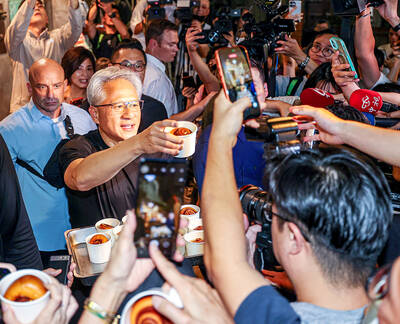
Nvidia Corp yesterday announced that CEO Jensen Huang (黃仁勳) would attend an employee meeting in Taipei tomorrow to celebrate the launch of the company’s Taiwan headquarters project. Huang would attend a gathering at the site of Nvidia’s planned headquarters in Beitou Shilin Technology Park (北投士林科技園區), the company said in a statement. After arriving in Taiwan on Saturday last week, Huang told reporters that he plans to meet with Quanta Computer Inc (廣達) chairman Barry Lam (林百里) and Taiwan Semiconductor Manufacturing Co (TSMC, 台積電) chairman C.C. Wei (魏哲家), and would attend the groundbreaking ceremony for Nvidia’s Taiwan headquarters tomorrow. Nvidia has not yet applied
Huawei Technologies Co (華為) said it has come up with a new pathway to shorten its gap with industry leader Taiwan Semiconductor Manufacturing Co (TSMC, 台積電), potentially achieving a breakthrough in making advanced semiconductors without cutting-edge equipment. Right now there is about a five-year gap between what TSMC is capable of and what Huawei, together with its manufacturing partner Semiconductor Manufacturing International Corp (中芯), can produce. Huawei is to start making 1.4-nanometer chips by 2031 with its own “LogicFolding” technology, Huawei semiconductor chief He Tingbo (何庭波) said in a rare public appearance during a chip conference yesterday, while TSMC has


 RSS
RSS