


A fund focusing on smaller Taiwanese firms in the artificial intelligence (AI) supply chain has emerged as a big winner, with a diversified strategy helping it weather the volatility that has rattled the industry over the past year.
The Nomura Taiwan High Tech Fund run by George Hsieh (謝文雄) has outperformed 99 percent of its peers and returned 164 percent in the last 12 months. Despite the war in Iran, it has gained 29 percent so far this year, versus a 9.5 percent increase for the benchmark TAIEX.
By betting on firms that Hsieh said occupy different stages of the AI supply chain, the fund has mitigated its risk exposure. A fact sheet shows nine of its top 10 holdings — ranging from packaging to circuit board specialists — each have a market value below US$25 billion.
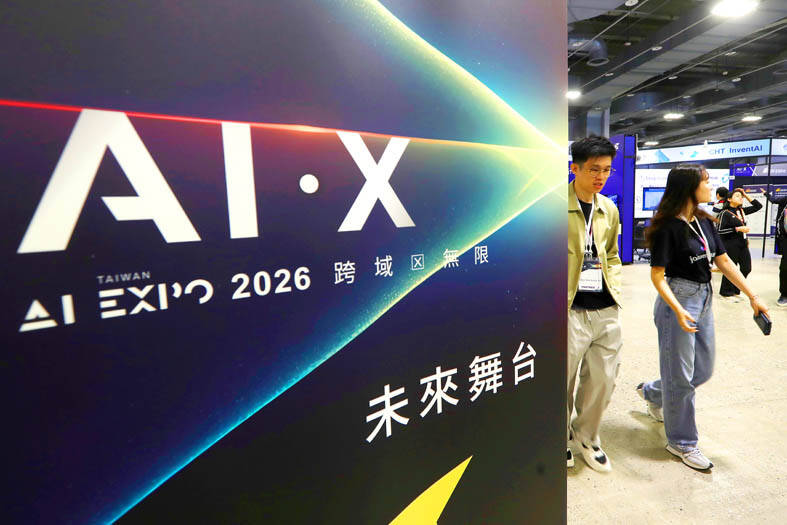
Photo: Chiang Ying-ying, AP
The US$1.4 trillion-strong chip giant Taiwan Semiconductor Manufacturing Co (台積電) carries the second-biggest weighting in the portfolio.
“Some companies hold a near-monopoly status, specifically within niche fields like AI servers or advanced components, allowing them to consistently capture the lion’s share of the market,” Hsieh said, adding that such Taiwanese firms “actually began factoring in these potential risks some time ago.”
The resilience of the fund, which had NT$12.6 billion (US$394.38 million) assets as of the end of February, shows the benefits of a strategy that avoids heavy concentration on a particular group of industry players. The crowded trade in chipmakers has been especially vulnerable in recent months, battered by concerns over issues from high spending levels to valuations and elevated energy costs following the Iran war.
“There’s a severe shortage of capacity” for components such as advanced processing nodes and packaging technologies, “because you have to depend on those to achieve these massive multiples” of AI firms, Hsieh said.
Vast demand for memory chips from AI data centers in turn spurs growth in other sectors that supply parts to chipmakers, multiplying growth across all layers of the AI supply chain, he said.
Among the fund’s top holdings are circuit-board producers Unimicron Technology Corp (欣興電子) and Nan Ya Printed Circuit Board Corp (南亞電路板), packaging services provider Powertech Technology Inc (力成科技), USB drive maker Phison Electronics Corp (群聯電子), as well as semiconductor tester Chunghwa Precision Test Tech Co (中華精測).
The fund has been adjusting its holdings in such companies and plans to increase them if the industry’s demand dynamics remain robust while valuations become cheaper, Hsieh said.
The fund has also outperformed 94 percent of its peers in the past five years, delivering a return of 32 percent.
However, if the Middle East conflict extends beyond three to four months, Taiwanese tech firms would not be immune to reduced profit margins, as the nation might restrict the supply of power or chemicals, Hsieh said.
Still, he expects demand for such firms’ products to remain robust in the long term.
“We anticipate that once the external environment stabilizes — for instance, if peace talks commence or these geopolitical factors subside — the stock prices that had previously dipped will rebound,” he added.
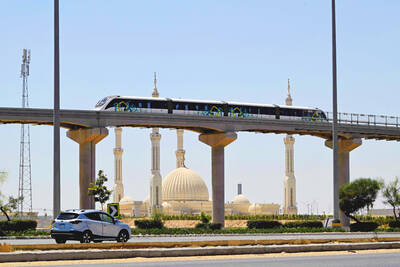
Cairo’s new monorail slices across the city skyline, running above the familiar chaos of blaring horns and aging buses’ exhaust fumes that mark rush hour below. The US$4.5 billion monorail, opened this month, is among Egypt’s most prominent new transport projects, part of a debt-funded infrastructure drive criticized for sapping state finances while bringing limited benefits to most of the country’s 109 million people. “It feels like you’re in a different country,” said Ramy Sayed, a restaurant manager, aboard a driverless Innovia 300 train. “No noise, no traffic, we’re not used to this.” The eastern line runs 56km from the bustling middle-class

Taiwanese firms have increased investment in the Philippines in recent years as Manila’s ties with Washington deepen and global supply chains continue to shift away from China, an expert at the Chung-Hua Institution for Economic Research (CIER, 中華經濟研究院) said yesterday. The Philippines had not been among Taiwanese investors’ top choices in Southeast Asia, CIER Taiwan ASEAN Studies Center director Kristy Hsu (徐遵慈) said at a seminar in Taipei. However, Taiwan’s investment in the country has grown significantly since the COVID-19 pandemic, reaching US $257 million last year, a high in recent years, she said. Although Taiwan’s total investment in the Philippines still lags
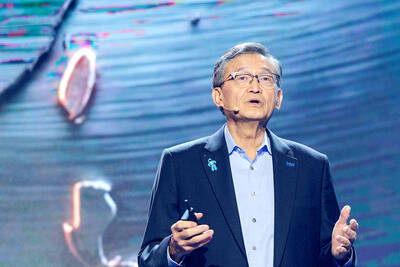
Intel Corp regards Taiwan Semiconductor Manufacturing Co (TSMC, 台積電) as a longstanding partner, as the US chipmaker would continue outsourcing production of advanced chips to TSMC, Intel chief executive officer Lip-Bu Tan (陳立武) said yesterday. “I don’t look at people as competitors. I look at the collaboration... Nvidia is also, you know, a good friend,” Tan told a news conference following his keynote speech at the Computex trade show in Taipei. “It’s a very trusted partnership for us... We are a big, top customer for them, and we’re going to continue doing that,” he said, referring to TSMC, the world’s largest foundry
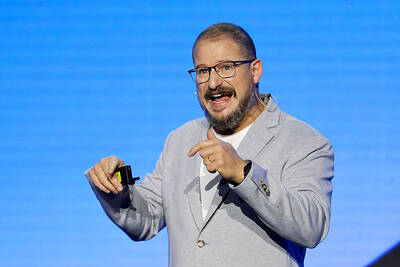
Artificial intelligence (AI) agents would supplant smartphones as the center of people’s digital lives, fundamentally reshaping personal devices and driving a major computing upgrade cycle, Qualcomm Inc CEO Cristiano Amon said yesterday. In his keynote speech for this year’s Computex trade show in Taipei, Amon said that the rise of "agentic AI" — AI systems capable of reasoning, planning and carrying out tasks autonomously — would transform how people interact with technology across phones, PCs, vehicles and wearable devices. Describing the technology as the next major evolution in computing, Amon said that "2026 is the year of agents.” For decades, smartphones have sat


 RSS
RSS