


A Democratic Progressive Party (DPP) lawmaker yesterday called for a government probe into Formosa Petrochemical Corp (FPCC, 台塑石化) over suspected output cuts and possible stockpiling of key petrochemical feedstocks amid a plastics shortage in Taiwan.
At a news conference, DPP Legislator Chung Chia-pin (鍾佳濱) said Formosa Plastics Corp’s (FPC, 台塑) polyolefin division reduced supply to downstream clients twice last month and raised prices, citing upstream constraints in ethylene and propylene.
The division notified customers on March 2 that supply would be halved, citing planned production cuts by upstream supplier FPCC, just days after tensions in the Middle East escalated, he said.
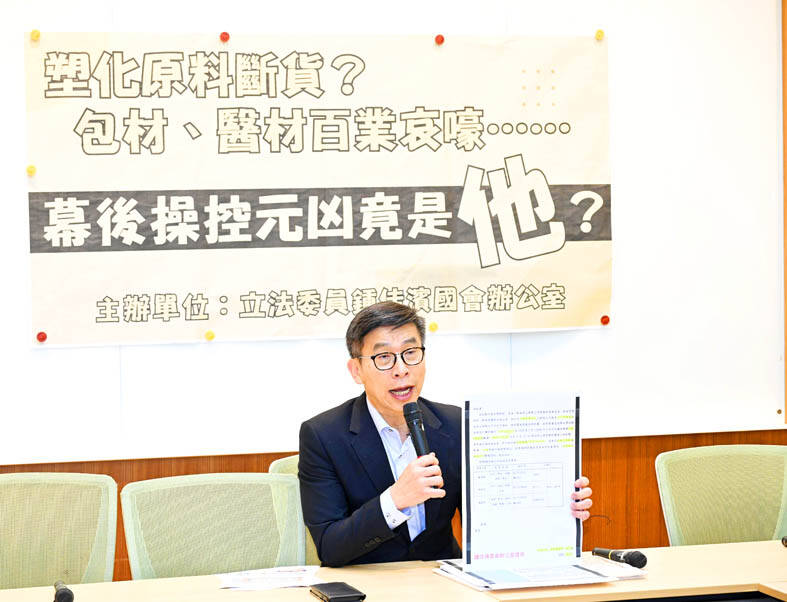
Photo: Peter Lo, Taipei Times
Chung questioned the timing of the move, saying such an early and steep reduction could have triggered panic buying and driven up prices.
Another notice on March 10 cut supply further to 25 percent of the already-contracted volumes and raised prices by NT$10.5 per kilogram, with the remaining quota to be released depending on market conditions, he said.
The company was creating artificial shortages to drive up prices, potentially contravening Article 251 of the Criminal Code on hoarding, Chung said, adding that the situation had affected CPC Corp, Taiwan (CPC, 台灣中油), which suspended orders for some solvent chemicals from March 10.
FPCC and FPC rejected the allegations, saying price increases were driven by surging upstream costs amid disruptions in the Middle East.
CPC said its ethylene contract price jumped 46 percent last month from US$792 to US$1,155 per tonne, while its average polyethylene price increase was about NT$6.75 per kilogram (or about US$210 per tonne), adding that it had absorbed part of the cost to ease pressure on domestic users.
The company said it also supplied more polyethylene to domestic customers last month than in previous months and maintained full deliveries despite a roughly 10 percent drop in ethylene output caused by feedstock shortages.
Both companies said they would cooperate with any investigation and denied engaging in hoarding or price manipulation.
Investigation Bureau Deputy Director-General Wu Fu-mei (吳富梅) during a legislative committee session said authorities would look into the matter if production cuts were found to have caused shortages or constituted market manipulation.

Shares of contract chipmaker Taiwan Semiconductor Manufacturing Co (TSMC, 台積電) came under pressure yesterday after a report that Apple Inc is looking to shift some orders from the Taiwanese company to Intel Corp. TSMC shares fell NT$55, or 2.4 percent, to close at NT$2,235 on the local main board, Taiwan Stock Exchange data showed. Despite the losses, TSMC is expected to continue to benefit from sound fundamentals, as it maintains a lead over its peers in high-end process development, analysts said. “The selling was a knee-jerk reaction to an Intel-Apple report over the weekend,” Mega International Investment Services Corp (兆豐國際投顧) analyst Alex Huang
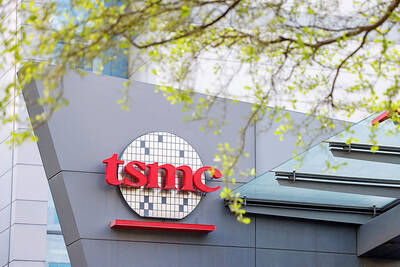
Taiwan Semiconductor Manufacturing Co (TSMC, 台積電) is expected to remain Apple Inc’s primary chip manufacturing partner despite reports that Apple could shift some orders to Intel Corp, industry experts said yesterday. The comments came after The Wall Street Journal reported on Friday that Apple and Intel had reached a preliminary agreement following more than a year of negotiations for Intel to manufacture some chips for Apple devices. Taiwan Institute of Economic Research (台灣經濟研究院) economist Arisa Liu (劉佩真) said TSMC’s advanced packaging technologies, including integrated fan-out and chip-on-wafer-on-substrate, remain critical to the performance of Apple’s A-series and M-series chips. She said Intel and Samsung
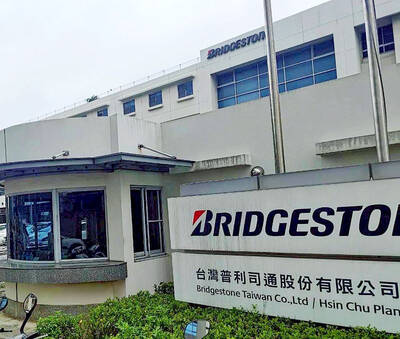
TRANSITION: With the closure, the company would reorganize its Taiwanese unit to a sales and service-focused model, Bridgestone said Bridgestone Corp yesterday announced it would cease manufacturing operations at its tire plant in Hsinchu County’s Hukou Township (湖口), affecting more than 500 workers. Bridgestone Taiwan Co (台灣普利司通) said in a statement that the decision was based on the Tokyo-based tire maker’s adjustments to its global operational strategy and long-term market development considerations. The Taiwanese unit would be reorganized as part of the closure, effective yesterday, and all related production activities would be concluded, the statement said. Under the plan, Bridgestone would continue to deepen its presence in the Taiwanese market, while transitioning to a sales and service-focused business model, it added. The Hsinchu

Taiwan Semiconductor Manufacturing Co (TSMC, 台積電) has approved a capital budget of US$31.28 billion for production expansion to meet long-term development needs during the artificial intelligence (AI) boom. The company’s board meeting yesterday approved the capital appropriation plan for purposes such as the installation of advanced technology capacity and fab construction, the world’s largest contract chipmaker said in a statement. At an earnings conference last month, TSMC forecast that its capital expenditure for this year would be at the higher end of the US$52 billion to US$56 billion range it forecast in January in response to robust demand for 5G, AI and


 RSS
RSS