


In India’s rapidly growing economy, millions of newly affluent consumers are fuelling demand for luxury goods from the likes of Louis Vuitton, Chanel and Dior. However, getting to a store can be a problem — there are not that many of them.
With nearly 1.5 billion people and an economy growing more than 6 percent, India is expanding faster than China, the luxury industry’s growth engine for more than a decade.
However, top brands are struggling to expand amid a severe shortage of high-quality retail space. India only has three true luxury malls: two in New Delhi — the Emporio and the Chanakya, owned by real estate developer DLF, and the Jio World Plaza in Mumbai, owned by the Reliance conglomerate.
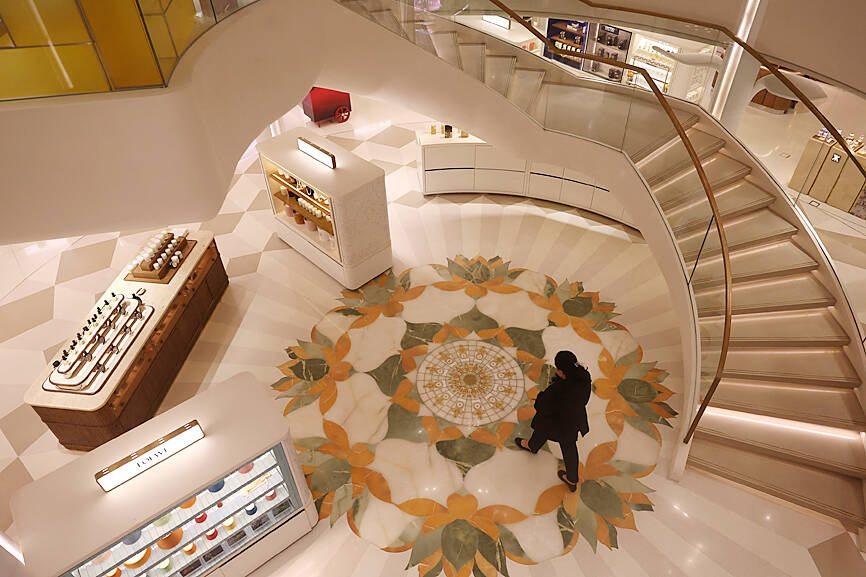
Photo: Reuters
“We have regular requests from the parent companies — from LVMH Group, from Kering, from Richemont — to give them more space for the brands they want to get into India,” said Saurabh Bharara, head of luxury malls at DLF.
“We have top 15 brands that are ready to enter India, if we give them space tomorrow,” he said, but added there was “zero availability” right now.
DLF is planning an expansion of the Emporio, which would double its leasable space of 160,000 square feet but is unlikely to come online before the end of 2028.
LVMH, Kering and Richemont declined to comment.
India ranks fourth globally in the number of individuals with wealth above US$100 million, behind the US, China and Japan, according to Knight Frank’s Wealth Report 2025.
It has a rapidly growing middle class. However, India’s luxury goods market was estimated at just US$12.1 billion last year, less than 3 percent of China’s, according to Euromonitor data reviewed by Reuters.
“Quality real estate is the single largest stumbling block,” said R. Satyajit, CEO of international brands at Aditya Birla Fashion and Retail. The firm opened a franchise of France’s famed department store Galeries Lafayette in Mumbai in November, affording 200 foreign brands an entry into India.
Four luxury-focused malls, including the expansion of the Emporio, are being planned, although all are expected to take years before opening. Of the other three, one is in Mumbai, another in Hyderabad, and one in Gurgaon, part of the National Capital Region near New Delhi.
That has given hope to the likes of Chanel’s managing director, Amit Goyal, who said although “there are currently only a few luxury malls in the country, several promising projects are in development,” adding that a store in Mumbai is a near-term priority for the brand.
Some high-end labels have set up shop in less exclusive but still premium malls. Encouraged by what it calls a young, confident Indian Gen-Z population, luxury sneaker brand Golden Goose has opened three stores in New Delhi, Bengaluru and Mumbai.
The shortage of high-end mall space has resulted in notable gaps in India’s luxury market. Several leading brands such as Patek Philippe and Loro Piana have no physical stores in India.
Prada has no fashion stores and only one beauty store, while Chanel has just one fashion store and seven fragrance and beauty boutiques.
In China, by contrast, Prada has 14 fashion stores while Chanel has 18. It is not uncommon for brands to have 40-50 stores in China, including Louis Vuitton and Gucci.
Even if a label is willing to forgo ultra-high-end spaces characterised by large column-free stores, high ceilings and ample parking, options remain limited.
India has only about 10.2 million square meters of grade-A mall stock, compared with more than 37.2 million square meters in China and about 65 million square meters in the US, said property consultancy Anarock.
Opening branded stores on high streets is not seen as an attractive business proposition, given Indian cities’ problems with cleanliness and pollution.
Given the hurdles, some brands prefer to enter India through franchise agreements with the retail arms of conglomerates Reliance, Aditya Birla Group and Tata Group, which act as gateways to the market, providing store networks and capital.
Developers face a chicken-and-egg problem.
Securing funding can be a struggle without firm commitments from brands. However, that does “not flow in until such a time as the project is near completion,” said Rajneesh Mahajan, CEO of Inorbit Malls, part of property firm K. Raheja Corp, which is developing a luxury mall in Hyderabad.
Luxury players must also grapple with import duties of 35 to 40 percent that have traditionally pushed wealthy Indian shoppers toward Paris, Dubai and Singapore.
Some brands are content to take their time.
Prada family scion Lorenzo Bertelli said that India is the only major new market the group is analyzing, but a decision on how to enter, which would involve offices for corporate operations, could take three to five years.
“So when you want to open one store, you also have a plan, not just for one store, but for more than one store because you have a lot of other cost attached to it,” he said.
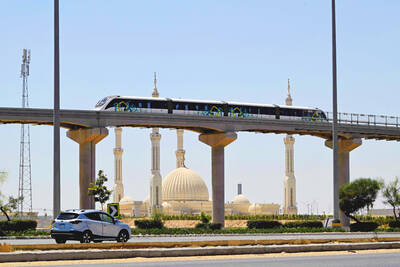
Cairo’s new monorail slices across the city skyline, running above the familiar chaos of blaring horns and aging buses’ exhaust fumes that mark rush hour below. The US$4.5 billion monorail, opened this month, is among Egypt’s most prominent new transport projects, part of a debt-funded infrastructure drive criticized for sapping state finances while bringing limited benefits to most of the country’s 109 million people. “It feels like you’re in a different country,” said Ramy Sayed, a restaurant manager, aboard a driverless Innovia 300 train. “No noise, no traffic, we’re not used to this.” The eastern line runs 56km from the bustling middle-class
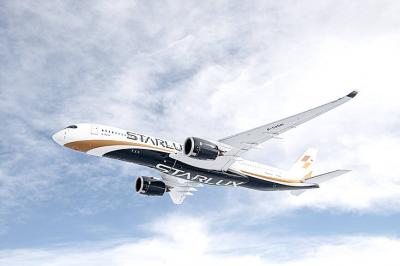
Starlux Airlines Co (星宇航空) today unveiled a long-haul network expansion plan at a shareholders’ meeting in Taipei, including direct flights to Barcelona, Spain, and Zurich, Switzerland, as well as a service connecting Taipei, Sydney and New Zealand. Starlux is to become the first Taiwanese carrier to offer non-stop services to the two European cities, while the inaugural oceanic route is expected to expand transit opportunities within the Australia-New Zealand market, Starlux said. Flight services to Chicago, Dallas, Washington and New York are under evaluation, the airline added. Prior to the shareholders’ meeting, the airline earlier this year announced that it would be

Taiwanese prosecutors suspect that three people successfully smuggled at least one shipment of Nvidia Corp artificial intelligence (AI) chips to China after first exporting them to Japan, people familiar with the matter said. The trio was detained last week by the Keelung District Prosecutors’ Office for allegedly falsifying documents related to exports of Super Micro Computer Inc servers containing advanced Nvidia chips, which the US has barred from sale to China without a license from Washington. The move marked Taiwan’s first public crackdown on AI chip diversion after years of pressure from the US to take a more active role in curtailing
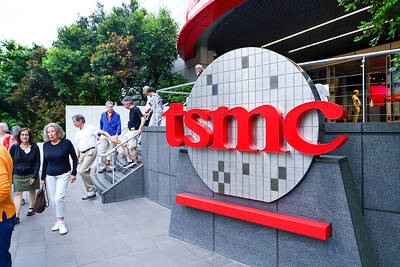
Taiwan Semiconductor Manufacturing Co (TSMC, 台積電) employee bonuses are likely to grow more than 30 percent this year, in line with the past few years as the company’s profits continue to set new records, an anonymous source cited TSMC chairman C.C. Wei (魏哲家) as saying yesterday. TSMC, the world’s largest contract chipmaker, is committed to taking care of its workers, the source said, citing Wei’s meeting with employees yesterday morning. Wei also expressed gratitude to employees for their contribution to the company’s improving bottom line, the source added. Since 2023, TSMC’s employee bonuses have grown at an annual rate of


 RSS
RSS