


A federal jury in California on Friday ruled that tech tycoon Elon Musk misled Twitter shareholders, driving down the company’s share price as he was poised to buy it in a US$44 billion deal.
The verdict in the class-action securities lawsuit means the world’s richest person could be ordered to pay billions of dollars, according to damages calculated by jurors.
Minutes after the judgement was announced, the entrepreneur’s lawyers told reporters that their client will appeal the decision, characterizing it as a “setback.”
Photo: Reuters
After a three-week trial in a San Francisco federal court — which included in-person testimony from Musk — the jury found that two tweets posted in May 2022 by the Tesla and SpaceX chief executive officer contained false statements responsible for a plunge in Twitter’s share price.
Investor Giuseppe Pampena had filed the suit on behalf of people who sold Twitter shares between the middle of May and early October 2022.
Musk acquired the social media platform in late October 2022 and later renamed it X.
Photo: Reuters
Jurors agreed that Musk violated a securities rule that bars false and misleading statements that sink a stock price, in this case that of Twitter, the verdict form showed.
An attorney for the plaintiffs estimated the damages at about US$2.6 billion.
Musk, who has a near-constant presence on X, did not immediately react to the verdict.
The judgement marks a rare legal defeat for Musk, often dubbed “Teflon Elon” for his ability to emerge unscathed from lawsuits he is expected to lose.
His lawyers reminded reporters of that track record, saying that a Texas court cleared him just that same day in a separate defamation case.
In 2023, a jury in the same San Francisco federal court cleared him within hours of similar charges brought by Tesla shareholders, following his 2018 tweets claiming he had the funding to take the automaker private.
The Twitter stock price complaint accused Musk of driving down the social media company’s stock price to gain leverage to renegotiate the purchase price or get out of the deal completely, causing people who sold shares to lose money.
Musk tweeted at one point during the process that the acquisition deal was temporarily on hold until Twitter executives could prove that the percentage of “bots” — accounts run by software instead of real users — was as low as the social media platform claimed.
The plaintiffs said that the statements were part of a scheme designed to pressure the board of directors into accepting a price lower than his initial offer — at a time when Tesla’s share price was falling, meaning Musk would have to sell more of his shares to finance the deal.
Musk abandoned his effort to get out of buying Twitter in late 2022 after the company took him to court to uphold the contract.
Musk has since merged the social media platform with his artificial intelligence startup xAI and his private space exploration firm SpaceX.
Forbes magazine early this month estimated Musk’s net worth at US$839 billion, a figure based primarily on his stakes in his portfolio of companies including Tesla and SpaceX.
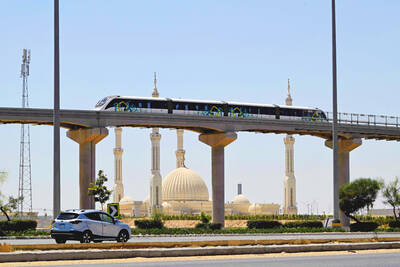
Cairo’s new monorail slices across the city skyline, running above the familiar chaos of blaring horns and aging buses’ exhaust fumes that mark rush hour below. The US$4.5 billion monorail, opened this month, is among Egypt’s most prominent new transport projects, part of a debt-funded infrastructure drive criticized for sapping state finances while bringing limited benefits to most of the country’s 109 million people. “It feels like you’re in a different country,” said Ramy Sayed, a restaurant manager, aboard a driverless Innovia 300 train. “No noise, no traffic, we’re not used to this.” The eastern line runs 56km from the bustling middle-class
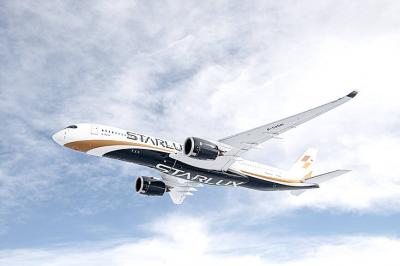
Starlux Airlines Co (星宇航空) today unveiled a long-haul network expansion plan at a shareholders’ meeting in Taipei, including direct flights to Barcelona, Spain, and Zurich, Switzerland, as well as a service connecting Taipei, Sydney and New Zealand. Starlux is to become the first Taiwanese carrier to offer non-stop services to the two European cities, while the inaugural oceanic route is expected to expand transit opportunities within the Australia-New Zealand market, Starlux said. Flight services to Chicago, Dallas, Washington and New York are under evaluation, the airline added. Prior to the shareholders’ meeting, the airline earlier this year announced that it would be

Taiwanese prosecutors suspect that three people successfully smuggled at least one shipment of Nvidia Corp artificial intelligence (AI) chips to China after first exporting them to Japan, people familiar with the matter said. The trio was detained last week by the Keelung District Prosecutors’ Office for allegedly falsifying documents related to exports of Super Micro Computer Inc servers containing advanced Nvidia chips, which the US has barred from sale to China without a license from Washington. The move marked Taiwan’s first public crackdown on AI chip diversion after years of pressure from the US to take a more active role in curtailing
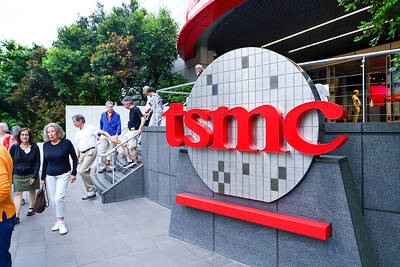
Taiwan Semiconductor Manufacturing Co (TSMC, 台積電) employee bonuses are likely to grow more than 30 percent this year, in line with the past few years as the company’s profits continue to set new records, an anonymous source cited TSMC chairman C.C. Wei (魏哲家) as saying yesterday. TSMC, the world’s largest contract chipmaker, is committed to taking care of its workers, the source said, citing Wei’s meeting with employees yesterday morning. Wei also expressed gratitude to employees for their contribution to the company’s improving bottom line, the source added. Since 2023, TSMC’s employee bonuses have grown at an annual rate of


 RSS
RSS