


Tesla is looking to buy equipment worth US$2.9 billion for manufacturing solar panels and cells from Chinese suppliers including Suzhou Maxwell Technologies (蘇州邁為科技), two people familiar with the matter said, as chief executive officer Elon Musk aims to add 100 gigawatts (GW) of solar capacity in the US.
Musk said in January that solar power could meet all of the electricity needs of the US — including the ever-increasing demand from a growing number of data centers.
Job postings on Tesla’s Web site said it aims to deploy 100GW of “solar manufacturing from raw materials on American soil before the end of 2028.”
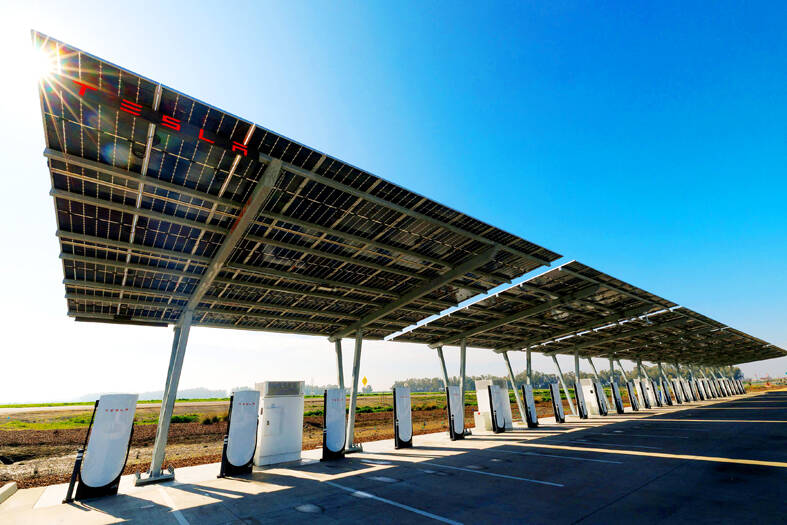
Photo: Reuters
Suzhou Maxwell Technologies, the world’s biggest producer of screen-printing equipment used to make solar cells, is among the leading candidates to supply machinery for the project and has been seeking export approval from China’s Ministry of Commerce, according to the two people and a third person.
The sources declined to be named because the information is not public.
Other potential suppliers include Shenzhen S.C New Energy Technology (深圳市捷佳偉創能源) and Laplace Renewable Energy Technology (拉普拉斯可再生能源科技), the first two people said.
Some of the estimated 20 billion yuan (US$2.9 billion) of equipment, including screen-printing production lines, would require export approval from Chinese regulators, according to the people.
It was not immediately clear how much of the equipment would require approval or how long it would take.
The Chinese companies were told to deliver the equipment before this autumn, the three people said, with two saying it would be shipped to Texas.
Musk plans to build the solar capacity mainly for use by Tesla, although some would be used to power SpaceX satellites, the people said.
The potential order highlights one issue for the US as it looks to reduce its dependence on China — reviving US manufacturing still requires some degree of trade with the world’s second-largest economy.
An order from Tesla would mark a big boost for Chinese producers of solar manufacturing equipment, which have struggled with weak demand because of a domestic production glut.
Meanwhile, the US solar market is heavily protected by tariffs aimed at curbing imports of cheaper panels and cells from China and Southeast Asia, where many Chinese producers operate subsidiaries.
However, solar manufacturing equipment was excluded from tariffs by former US president Joe Biden in 2024 at the urging of US solar panel makers who argued they had nowhere else to buy the machines needed to set up domestic factories. That exemption has been extended by US President Donald Trump, and the US has been pushing to create its own solar supply chain to reduce its dependence on Chinese companies.
Musk has criticized tariff barriers as making the economics of deploying solar in the US “artificially high,” when the country is facing a critical power shortage driven by a surge in demand from artificial intelligence data centers and manufacturing.
Setting up 100GW of solar manufacturing in a couple of years would be a staggering feat, and Musk is known for making big promises on ambitious timelines that often do not pan out.
Overall, the US had 1,300GW of capacity to generate electricity as of 2024, according to a report published last year by the American Public Power Association. Out of that, only 10 percent, or 135GW, was solar-powered.
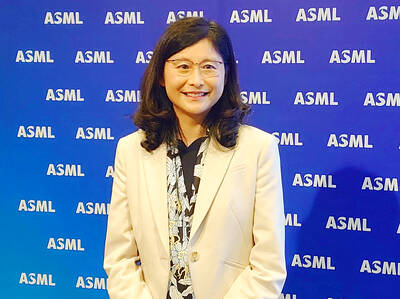
Netherlands-based semiconductor equipment supplier ASML Holding NV yesterday said that it is planning to hire an additional 1,000 people in Taiwan this year in response to growing demand from clients. ASML had previously planned to recruit 600 people this year, but that the plan has been adjusted upward, ASML vice president and ASML Taiwan general manager Grace Wang (汪佳慧) told reporters. ASML has a workforce of more than 4,500 in Taiwan, accounting for about 10 percent of its global total, Wang said. This year’s recruitment campaign would focus on adding people in the customer support, manufacturing and supply chain domains to assist ASML
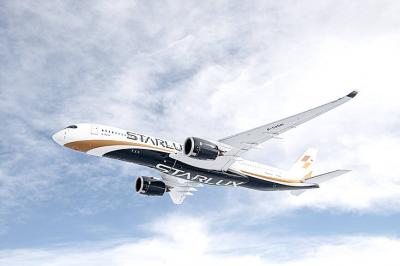
Starlux Airlines Co (星宇航空) today unveiled a long-haul network expansion plan at a shareholders’ meeting in Taipei, including direct flights to Barcelona, Spain, and Zurich, Switzerland, as well as a service connecting Taipei, Sydney and New Zealand. Starlux is to become the first Taiwanese carrier to offer non-stop services to the two European cities, while the inaugural oceanic route is expected to expand transit opportunities within the Australia-New Zealand market, Starlux said. Flight services to Chicago, Dallas, Washington and New York are under evaluation, the airline added. Prior to the shareholders’ meeting, the airline earlier this year announced that it would be
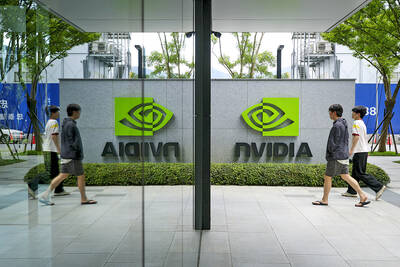
UNDER MICROSCOPE: Taiwan detained three people who allegedly conspired to buy servers in Taiwan and export them using fraudulent documentation, prosecutors said Nvidia Corp chief executive officer Jensen Huang (黃仁勳) on Saturday urged Super Micro Computer Inc to tighten up on compliance after Taiwan detained three people this week for allegedly making fraudulent declarations about artificial intelligence (AI) servers made by its US partner. The development marked the nation’s first crackdown on semiconductor smuggling, which grew after the US slapped restrictions on exports of high-end chips such as Nvidia AI accelerators to China. Nvidia is “rigorous” in explaining regulations to all of its partners, Huang told reporters after arriving in Taipei. “Ultimately Super Micro has to run their own company,” he said in response to
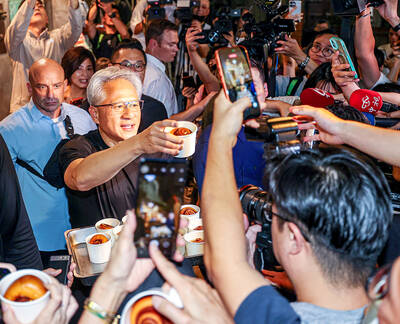
Nvidia Corp yesterday announced that CEO Jensen Huang (黃仁勳) would attend an employee meeting in Taipei tomorrow to celebrate the launch of the company’s Taiwan headquarters project. Huang would attend a gathering at the site of Nvidia’s planned headquarters in Beitou Shilin Technology Park (北投士林科技園區), the company said in a statement. After arriving in Taiwan on Saturday last week, Huang told reporters that he plans to meet with Quanta Computer Inc (廣達) chairman Barry Lam (林百里) and Taiwan Semiconductor Manufacturing Co (TSMC, 台積電) chairman C.C. Wei (魏哲家), and would attend the groundbreaking ceremony for Nvidia’s Taiwan headquarters tomorrow. Nvidia has not yet applied


 RSS
RSS