


China Steel Corp (CSC, 中鋼), the nation’s largest steelmaker, yesterday hiked prices for all products for domestic delivery next month and next quarter to reflect rising material costs due to the conflict in the Middle East and improving steel demand.
The Kaohsiung-based company raised prices by NT$1,000 to NT$1,200 across the board, the largest price increase in nearly 17 months.
CSC attributed rising steelmaking costs to Middle East tensions, improving market momentum and active restocking by downstream clients to the price hikes, matching the global steel price uptrends, CSC said in a statement.
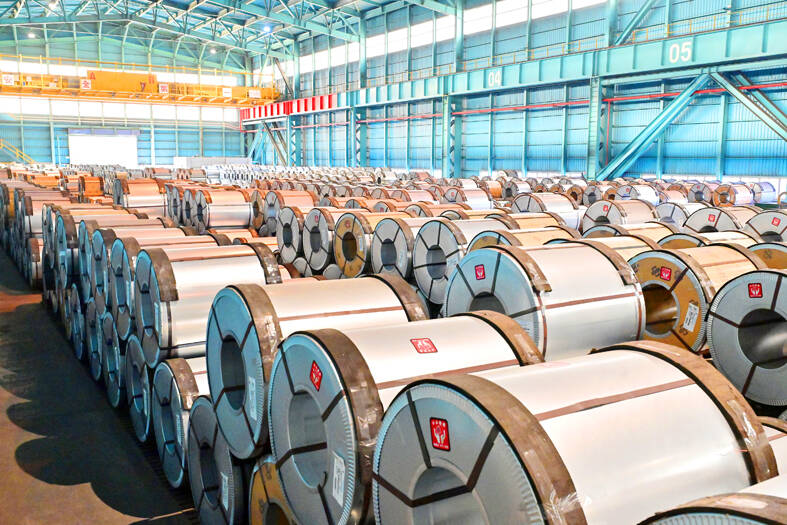
Photo courtesy of China Steel Corp
Tensions in the Middle East have pushed up crude oil prices past US$100 per barrel, driving up shipping and energy costs, and lifting commodity prices, CSC said.
Iron ore prices have risen to about US$110 per tonne, while coking coal prices have climbed to between US$220 and US$230 per tonne, the company said.
On the supply side, China’s dual controls on carbon emissions and intensity, along with restrictions on high energy-consuming and high-emission projects, have accelerated the phase-out of outdated capacity, CSC said.
Crude steel output in China in the first two months of the year declined by about 3.6 percent year-on-year, it said.
Global steel prices trended up as US steelmaker Nucor Corp raised hot-rolled steel prices by US$60 to US$70 per tonne, marking the ninth consecutive week and bringing steel to above US$1,100, the highest level in nearly two years, it said.
In Europe, steel prices went up by US$70 to US$80 to US$800 per tonne, while Japanese steelmakers raised domestic prices by about ¥10,000 (US$63) per tonne for the second quarter, CSC said.
China’s Baoshan Iron & Steel Co (寶鋼) has increased April domestic prices by 200 yuan (US$29) per tonne, bringing cumulative gains since January to 400 yuan, indicating a continued upward trend in global steel markets, it said.
To reflect higher steelmaking costs and align with international and domestic price trends, CSC decided to raise prices across all products for next month and the second quarter, it said.
Next month, prices for hot-rolled steel plates and coils, hot-rolled coils and cold-rolled coils would increase by NT$1,200 per tonne. Electro-galvanized coils, hot-dip galvanized steel coils for construction and coating, hot-dip galvanized steel coils for home appliances, as well as electrical steel coils, would rise by NT$1,000 per tonne, CSC said.
For the second quarter, prices of various types of steel and coils as well as steel used in automobiles, would rise NT$1,000 across the board, the steelmaker said.
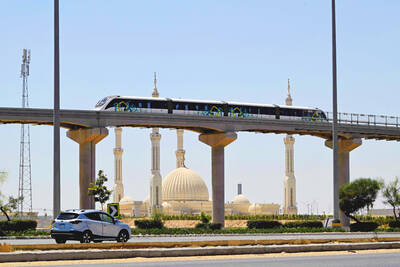
Cairo’s new monorail slices across the city skyline, running above the familiar chaos of blaring horns and aging buses’ exhaust fumes that mark rush hour below. The US$4.5 billion monorail, opened this month, is among Egypt’s most prominent new transport projects, part of a debt-funded infrastructure drive criticized for sapping state finances while bringing limited benefits to most of the country’s 109 million people. “It feels like you’re in a different country,” said Ramy Sayed, a restaurant manager, aboard a driverless Innovia 300 train. “No noise, no traffic, we’re not used to this.” The eastern line runs 56km from the bustling middle-class
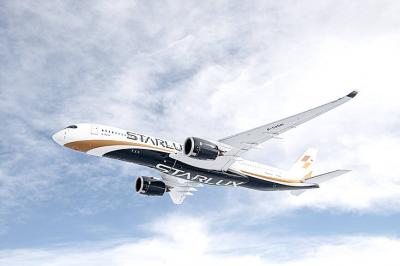
Starlux Airlines Co (星宇航空) today unveiled a long-haul network expansion plan at a shareholders’ meeting in Taipei, including direct flights to Barcelona, Spain, and Zurich, Switzerland, as well as a service connecting Taipei, Sydney and New Zealand. Starlux is to become the first Taiwanese carrier to offer non-stop services to the two European cities, while the inaugural oceanic route is expected to expand transit opportunities within the Australia-New Zealand market, Starlux said. Flight services to Chicago, Dallas, Washington and New York are under evaluation, the airline added. Prior to the shareholders’ meeting, the airline earlier this year announced that it would be

Taiwanese prosecutors suspect that three people successfully smuggled at least one shipment of Nvidia Corp artificial intelligence (AI) chips to China after first exporting them to Japan, people familiar with the matter said. The trio was detained last week by the Keelung District Prosecutors’ Office for allegedly falsifying documents related to exports of Super Micro Computer Inc servers containing advanced Nvidia chips, which the US has barred from sale to China without a license from Washington. The move marked Taiwan’s first public crackdown on AI chip diversion after years of pressure from the US to take a more active role in curtailing
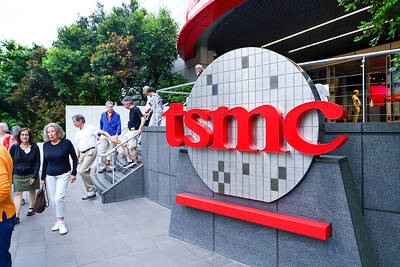
Taiwan Semiconductor Manufacturing Co (TSMC, 台積電) employee bonuses are likely to grow more than 30 percent this year, in line with the past few years as the company’s profits continue to set new records, an anonymous source cited TSMC chairman C.C. Wei (魏哲家) as saying yesterday. TSMC, the world’s largest contract chipmaker, is committed to taking care of its workers, the source said, citing Wei’s meeting with employees yesterday morning. Wei also expressed gratitude to employees for their contribution to the company’s improving bottom line, the source added. Since 2023, TSMC’s employee bonuses have grown at an annual rate of


 RSS
RSS