


State-run oil supplier CPC Corp, Taiwan (CPC, 台灣中油) has absorbed about NT$3.3 billion (US$100 million) in fuel costs over the past two weeks to help stabilize domestic prices amid Middle East tensions, Vice Minister of Economic Affairs Lai Chien-hsin (賴建信) said yesterday.
The government has prioritized price stability as global energy supplies face disruptions from the conflict, Lai said at a meeting of the legislature’s Education and Culture Committee in Taipei.
Under a price-stabilization mechanism, CPC absorbs at least 60 percent of cost increases while keeping domestic fuel prices among the lowest in neighboring markets, he said.
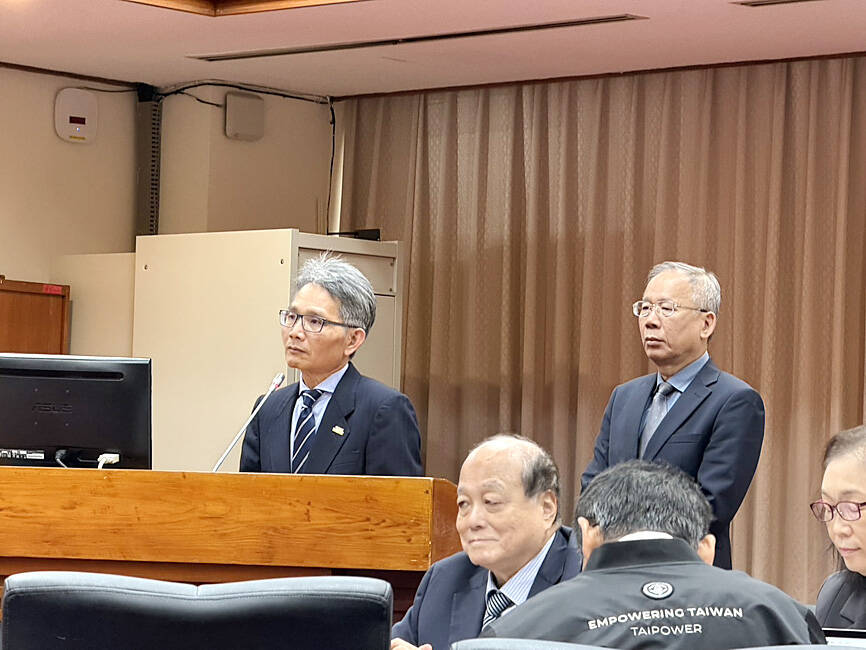
Photo: Lin Jing-hua, Taipei Times
The government has also expanded fuel tax cuts to 50 percent, lowering gasoline and diesel taxes to NT$3.415 and NT$1.995 per liter, respectively, according to the Ministry of Economic Affairs.
Lai said the ministry would continue to monitor developments closely and assist CPC with financing arrangements if needed, as global oil prices remain volatile.
On liquefied petroleum gas (LPG), Lai said Taiwan’s imports of bottled gas have not been impacted by the blockade of the Strait of Hormuz, with supplies remaining stable.
LPG is sold on the free market, with suppliers including CPC and Formosa Petrochemical Corp (台塑石化). The Energy Administration maintains regular communication with industry players to help stabilize prices and monitors supply and demand to prevent hoarding or distribution disruptions, he added.
Separately, Minister of Agriculture Chen Junne-jih (陳駿季) said Taiwan currently has sufficient fertilizer raw material inventories to last between six and eight months, including supplies already in transit.
Taiwan sources fertilizer materials from multiple regions, including Southeast Asia and Australia, reducing reliance on the Middle East.
Nitrogen fertilizer supplies are expected to last until August, potash until October, and phosphate rock until December, Chen added.
However, higher shipping costs could push up fertilizer prices. If that happens, the government will absorb the price difference to ease the burden on farmers, he said.
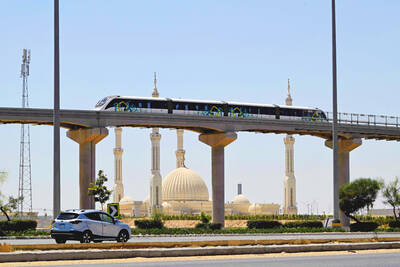
Cairo’s new monorail slices across the city skyline, running above the familiar chaos of blaring horns and aging buses’ exhaust fumes that mark rush hour below. The US$4.5 billion monorail, opened this month, is among Egypt’s most prominent new transport projects, part of a debt-funded infrastructure drive criticized for sapping state finances while bringing limited benefits to most of the country’s 109 million people. “It feels like you’re in a different country,” said Ramy Sayed, a restaurant manager, aboard a driverless Innovia 300 train. “No noise, no traffic, we’re not used to this.” The eastern line runs 56km from the bustling middle-class
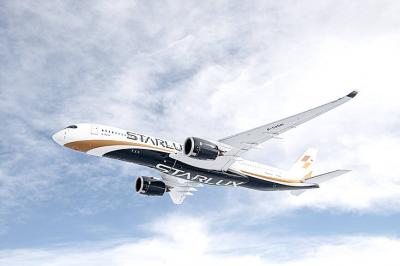
Starlux Airlines Co (星宇航空) today unveiled a long-haul network expansion plan at a shareholders’ meeting in Taipei, including direct flights to Barcelona, Spain, and Zurich, Switzerland, as well as a service connecting Taipei, Sydney and New Zealand. Starlux is to become the first Taiwanese carrier to offer non-stop services to the two European cities, while the inaugural oceanic route is expected to expand transit opportunities within the Australia-New Zealand market, Starlux said. Flight services to Chicago, Dallas, Washington and New York are under evaluation, the airline added. Prior to the shareholders’ meeting, the airline earlier this year announced that it would be

Taiwanese firms have increased investment in the Philippines in recent years as Manila’s ties with Washington deepen and global supply chains continue to shift away from China, an expert at the Chung-Hua Institution for Economic Research (CIER, 中華經濟研究院) said yesterday. The Philippines had not been among Taiwanese investors’ top choices in Southeast Asia, CIER Taiwan ASEAN Studies Center director Kristy Hsu (徐遵慈) said at a seminar in Taipei. However, Taiwan’s investment in the country has grown significantly since the COVID-19 pandemic, reaching US $257 million last year, a high in recent years, she said. Although Taiwan’s total investment in the Philippines still lags

Taiwanese prosecutors suspect that three people successfully smuggled at least one shipment of Nvidia Corp artificial intelligence (AI) chips to China after first exporting them to Japan, people familiar with the matter said. The trio was detained last week by the Keelung District Prosecutors’ Office for allegedly falsifying documents related to exports of Super Micro Computer Inc servers containing advanced Nvidia chips, which the US has barred from sale to China without a license from Washington. The move marked Taiwan’s first public crackdown on AI chip diversion after years of pressure from the US to take a more active role in curtailing


 RSS
RSS